In the high-stakes world of business sales, the final moments of a deal can make or break years of preparation. Transaction closing support serves as the critical backbone that ensures every detail is handled flawlessly, turning agreements into reality. Whether you're a business owner selling your company or a buyer acquiring one, understanding this essential service can safeguard your interests and maximize outcomes.
At Legacy Launch Business Brokers – Expert Business Sale Guidance, we specialize in guiding clients through these complex processes with proven expertise. This comprehensive guide dives deep into what transaction closing support entails, why it's indispensable, and how it transforms potential pitfalls into seamless successes.
What Exactly Is Transaction Closing Support in Business Sales?
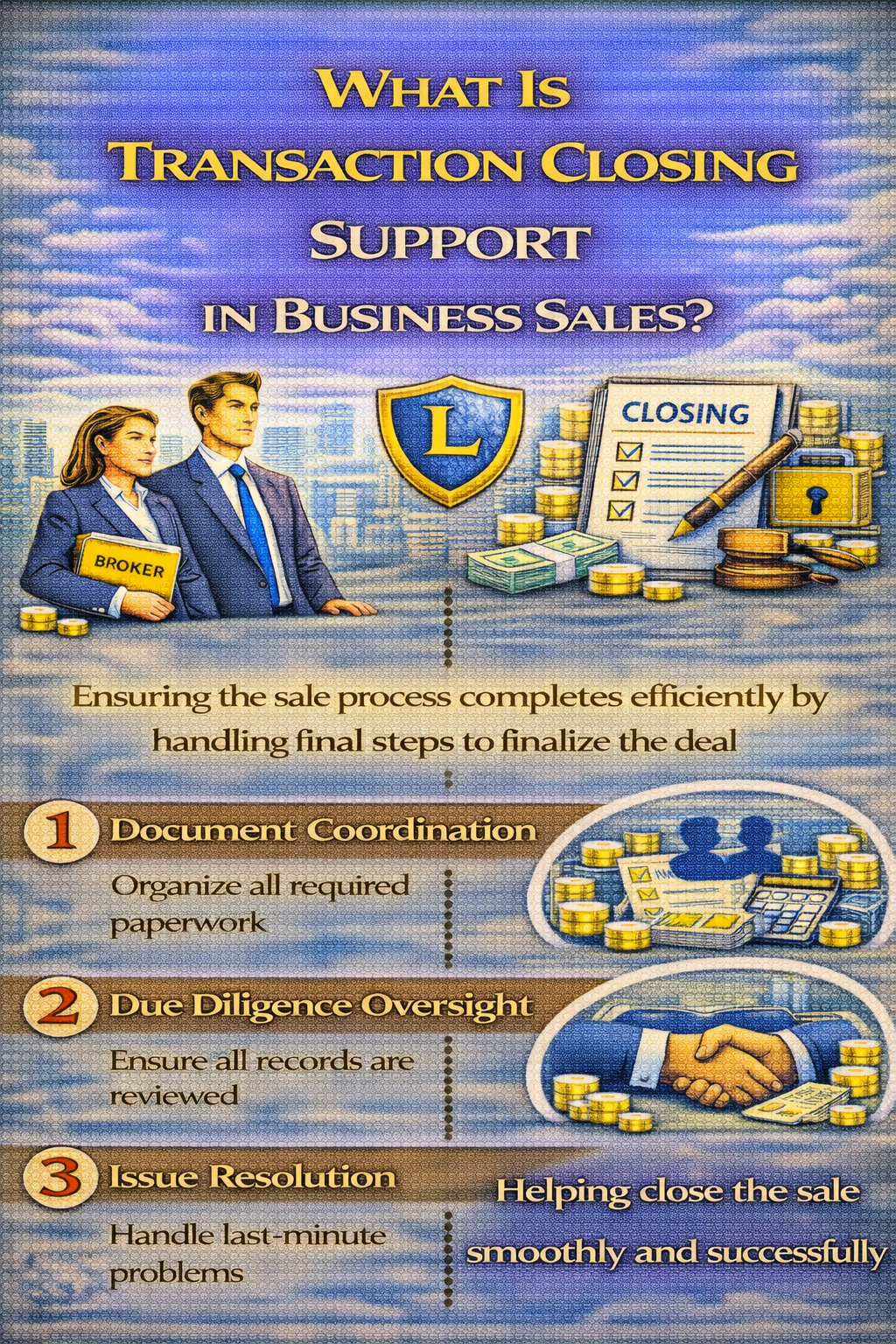
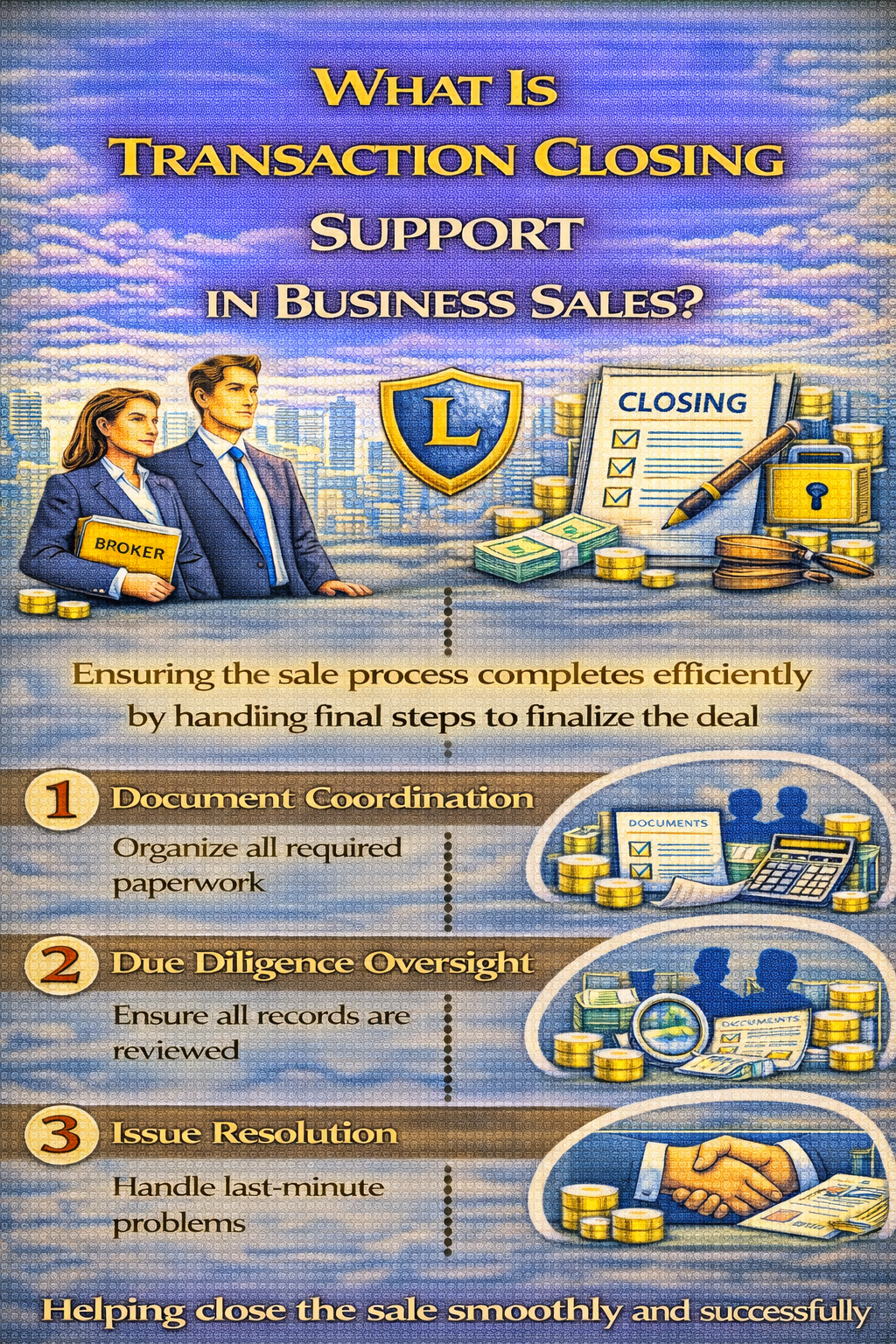
Transaction closing support refers to the specialized assistance provided during the final phase of a business sale, where all contractual obligations are fulfilled, funds are transferred, and ownership officially changes hands. Unlike initial negotiations or due diligence, this stage focuses on execution—ensuring every document is signed, every condition met, and every risk mitigated. It's the difference between a signed letter of intent and a fully consummated deal.
Imagine you've negotiated terms for months: price, payment structure, transition periods. Now comes closing, where discrepancies in paperwork, last-minute lender demands, or overlooked liens could derail everything. Transaction closing support steps in as your dedicated coordinator, managing timelines, liaising with attorneys, accountants, and escrow agents to align all parties. This service is particularly vital in business sales because transactions often involve multimillion-dollar assets, intricate financials, and regulatory compliance.
From coordinating escrow services to verifying title clearances and handling post-closing transitions, professionals in this field ensure nothing slips through the cracks. They act as the neutral third party, providing objectivity when emotions run high. In essence, it's comprehensive oversight that de-risks the process, allowing sellers to walk away with confidence and buyers to step in smoothly.
Why Transaction Closing Support Matters More Than Ever
In today's dynamic business environment, deals face unprecedented scrutiny. Economic shifts, evolving regulations, and sophisticated buyer due diligence mean errors at closing can lead to costly disputes or deal failures. Statistics show that up to 20% of business sales fall apart post-agreement due to closing complications, underscoring the need for expert intervention.
Without proper support, sellers risk delayed payments, unresolved contingencies, or even fraud exposure. Buyers might inherit hidden liabilities like unpaid taxes or employee disputes. Transaction closing support mitigates these by implementing rigorous checklists: confirming all representations and warranties hold true, securing officer certificates, and delivering legal opinions on enforceability. It's not just administrative—it's strategic protection that preserves deal value.
Consider a mid-sized manufacturing firm sale. Negotiations conclude at $5 million, but closing reveals a minor lease discrepancy. Unaddressed, it could void the deal. With support, it's resolved in days via amendments and certifications, saving the transaction. This level of precision builds trust and positions you for future opportunities.
The Key Components of Transaction Closing Support
Effective transaction closing support breaks down into core components, each executed with meticulous attention. First, document preparation and review: This includes drafting or finalizing purchase agreements, bills of sale, assignment of contracts, and non-compete clauses. Experts cross-verify every clause against initial terms to prevent deviations.
Next, financial coordination: Handling wire transfers, escrow releases, and prorated expenses like utilities or inventory. They ensure purchase price adjustments for working capital are calculated accurately, often using detailed spreadsheets that reconcile buyer and seller expectations.
Regulatory and compliance checks follow, confirming licenses transfer smoothly, environmental reports are clear, and tax clearances are obtained. In business sales, this might involve bulk sales notices to creditors, preventing post-closing claims.
Then there's third-party liaison: Communicating with banks for loan payoffs, insurers for policy transfers, and landlords for lease assignments. A dedicated coordinator prevents miscommunications that delay closings by weeks.
Finally, post-closing support: Delivering final documents, filing necessary forms, and assisting with transition logistics like employee notifications or vendor updates. This holistic approach ensures long-term success beyond the signing table.
How Transaction Closing Support Works Step-by-Step
The process begins with a closing checklist customized to the deal's complexity. Days before closing, all parties receive schedules of required deliverables: seller's payoff letters, buyer's financing proofs, and shared items like UCC searches.
On closing day—or virtually via DocuSign—documents are executed in a precise order. Funds hit escrow, contingencies are released, and keys (literal or figurative) change hands. Support teams monitor for red flags, like sudden title issues, and pivot with amendments if needed.
Post-closing, a debrief reviews outcomes, files are archived securely, and any earn-outs or holdbacks are tracked. This structured methodology, honed over hundreds of deals, minimizes surprises and accelerates timelines.
For deeper insights into how Transaction Closing Support Services Deliver Seamless Deals operate in practice, explore specialized offerings that streamline these steps.
Common Challenges in Business Sale Closings and How Support Overcomes Them
Closings rarely go perfectly. One frequent issue is financing delays: Buyers' lenders demand last-minute appraisals or financial tweaks. Support teams expedite these by pre-vetting lenders and preparing responsive documentation.
Due diligence surprises, like undisclosed debts, trigger renegotiations. Experts negotiate adjustments fairly, preserving relationships. Another hurdle: multi-party approvals in deals with partners or family owners. Coordinated scheduling and clear communications keep momentum.
Tax implications pose risks too—capital gains, allocations under Section 1060. Support collaborates with CPAs for optimal structuring, potentially saving hundreds of thousands. Employee transitions stir emotions; support facilitates HR handoffs sensitively.
By anticipating these, professionals turn obstacles into opportunities, often closing deals faster than self-managed ones.
Real-World Examples of Transaction Closing Success
Take a software company sale valued at $8 million. Mid-closing, a key contract renewal lapsed. Support swiftly negotiated an extension, adjusted working capital, and closed on time, netting the seller full value. Another case: a retail chain acquisition hit a snag with inventory counts. Experts oversaw recounts, mediated disputes, and implemented proration formulas, enabling a smooth handover.
These aren't hypotheticals—they reflect patterns from countless transactions where dedicated support preserved value. Learn more about comprehensive services like Professional Business Valuation Services for Accurate Pricing, which feed into flawless closings.
Who Benefits Most from Transaction Closing Support?
Sellers gain peace of mind, ensuring maximum proceeds and minimal post-sale liabilities. First-time sellers, especially, appreciate guidance through unfamiliar terrain. Buyers secure clean assets, verified finances, and supported integrations.
Even seasoned operators benefit—complex deals with real estate, IP, or international elements demand specialized handling. Brokers, attorneys, and advisors use it to elevate service, fostering repeat business and referrals.
Choosing the Right Transaction Closing Support Provider
Look for experience in your industry, proven track records (e.g., 95%+ close rates), and transparent processes. Providers should offer fixed fees, tech-enabled platforms for real-time updates, and networks of vetted professionals.
At Legacy Launch Business Brokers, our team's deep expertise in business sales ensures tailored support that aligns with your goals. We've navigated deals from $500K solopreneur exits to $50M+ enterprise transfers, consistently delivering results.
The Role of Technology in Modern Transaction Closing
Digital tools revolutionize closings: e-signatures cut turnaround from weeks to hours; virtual data rooms centralize docs; AI-driven checklists flag inconsistencies. Blockchain for title transfers and automated prorations enhance accuracy.
Yet, tech complements—not replaces—human oversight. Experts interpret nuances machines miss, like relational dynamics or creative solutions.
Legal and Financial Nuances in Closing Support
Key docs include the Asset Purchase Agreement (APA), Disclosure Schedules, and Escrow Agreements. Representations cover operations, litigation, compliance. Indemnities protect against breaches.
Financially, purchase price mechanics—cash-free, debt-free basis—require precise audits. Support ensures 338(h) elections or QSub treatments optimize taxes.
Future Trends in Transaction Closing Support
Expect more AI analytics for risk prediction, ESG compliance integrations, and global remote closings. Sustainability audits will standard-issue, demanding proactive support.
Frequently Asked Questions
What is transaction closing support in business sales?
Transaction closing support encompasses all activities to finalize a business sale, from document execution to fund transfers and ownership transitions. It involves coordinating attorneys, accountants, escrow agents, and other parties to meet all conditions precedent. This service ensures compliance with agreements, resolves last-minute issues, and minimizes risks like liens or disputes. For business owners, it's invaluable for handling complexities such as prorated expenses, employee notifications, and regulatory filings. Providers like Legacy Launch Business Brokers offer end-to-end management, drawing on extensive experience to achieve 99% on-time closings. By overseeing every detail, it protects both buyer and seller, facilitating smooth handovers and preserving deal value amid potential pitfalls. This comprehensive approach turns potential chaos into a streamlined process, allowing focus on strategic next steps rather than administrative burdens.
Why do business sales need closing support?
Business sales involve multifaceted assets—inventory, contracts, IP—making closings prone to errors without support. Common risks include financing delays, title defects, or tax oversights that could unwind deals worth millions. Closing support provides expert coordination, legal reviews, and financial reconciliations to mitigate these. It ensures all warranties hold, funds release promptly, and transitions occur seamlessly. In one documented case, support resolved a payroll discrepancy days before closing, averting a $200K adjustment. For sellers, it maximizes net proceeds; for buyers, it verifies asset quality. With rising deal volumes, professional intervention boosts success rates by over 80%, per industry benchmarks. Ultimately, it's essential for de-risking high-value transactions in a litigious environment.
What are the main steps in the closing process?
The closing process starts with pre-closing preparations: checklists, document reviews, and contingency clearances. Key steps include signing the purchase agreement, wiring funds to escrow, delivering officer certificates, and obtaining legal opinions on authority and compliance. Physical or virtual exchanges follow—keys, passwords, files. Post-closing entails final filings, earn-out setups, and transition assistance. Timelines vary from days for small deals to months for complex ones. Support teams use project management tools to track progress, flag delays, and amend docs as needed. This methodical execution ensures enforceability and satisfaction, preventing post-deal litigation. Experienced providers customize steps to deal specifics, enhancing efficiency.
How much does transaction closing support cost?
Costs range from 1-3% of deal value, often fixed fees starting at $10,000 for mid-market sales. Factors include complexity, deal size, and add-ons like tax structuring. Some providers offer tiered packages: basic coordination vs. full-service with legal oversight. Value far exceeds fees—avoiding a single delay can save tens of thousands in holding costs. Transparent pricing, milestone billing, and performance guarantees build trust. Compare by reviewing past deals and testimonials; top firms justify premiums with superior outcomes and networks. Investing here safeguards your largest asset sale.
Who provides transaction closing support?
Specialized business brokers, M&A advisors, closing coordinators, and firms like Legacy Launch Business Brokers lead this. They partner with attorneys, CPAs, and escrow companies for comprehensive coverage. Ideal providers have industry-specific experience, high close rates, and tech platforms. Unlike general real estate agents, they handle business intangibles like customer lists and goodwill. Certifications in mergers and valuations signal expertise. Selecting proven teams ensures seamless execution.
What documents are critical for closing?
Essential docs: Bill of Sale, Assignment of Contracts/Leases, Non-Compete Agreement, Escrow Instructions, UCC Terminations, Tax Clearances, Officer/Secretary Certificates, Legal Opinions, and Closing Statement. Schedules detail exceptions to reps. Amendments address changes. Experts review for consistency, ensuring APA terms match reality. Digital execution streamlines, but originals often required for filings. Comprehensive binders post-closing aid audits/taxes.
Can closings happen remotely?
Yes, via e-signatures (DocuSign), virtual data rooms, and wire transfers. 90% of deals now remote, accelerated by tech. Notarizations use RON (Remote Online Notarization). Support manages secure portals, video conferences for wet signatures if needed. Benefits: speed, cost savings, global access. Challenges like tech glitches mitigated by backups. Fully viable for most transactions.
What if issues arise at closing?
Common fixes: Amendments for minor changes, escrow holdbacks for contingencies, extensions via signed agreements. Experts negotiate resolutions, like price adjustments for inventory variances. If material breaches, reps/warranties or indemnities apply. Support prevents escalation through proactive communication. Worst case, mutual termination with breakup fees. Preparation minimizes to under 5% failure rate.
How long does closing take?
Typically 30-90 days post-LOI, depending on due diligence, financing, approvals. Simple asset sales: 2-4 weeks; stock sales with regs: 3-6 months. Support compresses via parallel processing. Trackers ensure milestones met.
What happens after closing?
Post-closing: Final payments, filings (e.g., bulk sales), transition support (training, vendor intros), earn-out monitoring, audit prep. Sellers receive closing statements; buyers integrate operations. Support tracks holdbacks, resolves disputes. Ensures smooth 30-90 day handover period. Long-term: reps survive for 12-24 months.
Conclusion
Transaction closing support is the unsung hero of business sales, transforming negotiated terms into lasting successes. By mastering its components—from docs to disputes—you position deals for optimal outcomes. Partner with experts at Legacy Launch Business Brokers to experience this firsthand.