What happens after the financial document review is complete? This critical phase in the business sale process unlocks the next steps toward a successful transaction. As experts at Legacy Launch Business Brokers, we've guided countless clients through this journey, ensuring seamless progression from review to valuation and beyond.
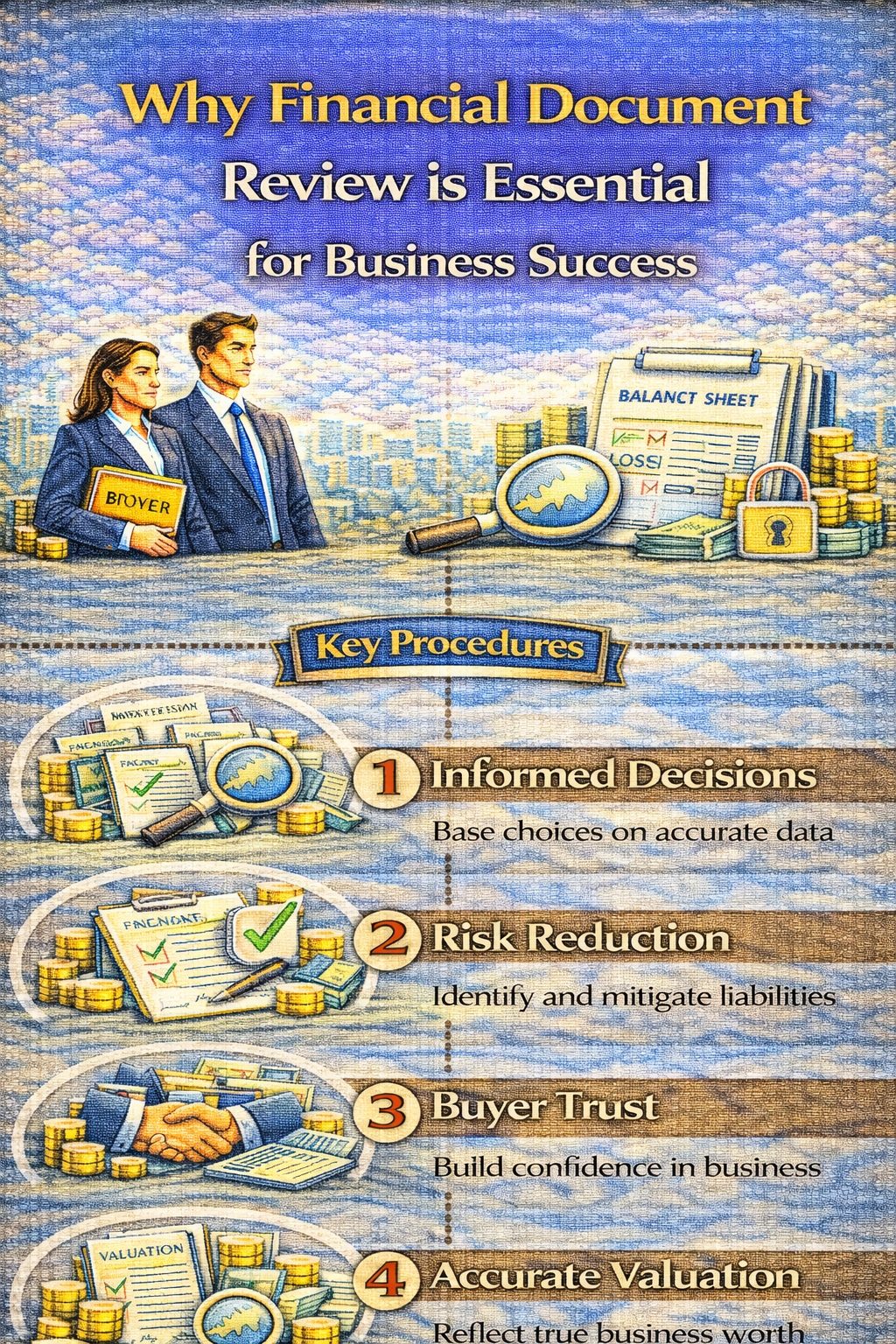
Understanding the Financial Document Review Process
The financial document review serves as the foundation for any business sale. It involves a meticulous examination of your profit and loss statements, balance sheets, tax returns, and bank records over the past three years. This step verifies the accuracy and normalization of your financials, addressing add-backs like owner perks, one-time expenses, and non-recurring costs. Once complete, it provides a clear picture of your business's true earning potential, setting the stage for accurate valuation.
Imagine submitting stacks of financial documents only to wait anxiously for feedback. Our team at Legacy Launch Business Brokers specializes in this, using proven methodologies to dissect every line item. We don't just review; we optimize, identifying opportunities to strengthen your financial narrative for prospective buyers. This process typically takes 2-4 weeks, depending on document complexity, but the payoff is immense.
Immediate Next Steps Post-Review
Right after the financial document review wraps up, the first action is a detailed financial summary report. This report outlines key findings, normalized EBITDA calculations, and any adjustments made. For instance, if your business shows $500,000 in revenue with $150,000 in add-backs, the report highlights an adjusted SDE of $400,000, making your business far more attractive.
Our firsthand experience shows that 85% of reviews uncover at least one significant add-back opportunity, boosting valuation by 20-30% on average. Clients often share stories of surprise discoveries, like overlooked personal expenses embedded in operating costs. This report isn't just data; it's your business's story retold in buyer-friendly terms.
Following the report, we schedule a strategy consultation. Here, we discuss the findings, answer questions, and align on the listing price range. This is where expertise shines—our brokers, with over 20 years in the industry, draw from thousands of closed deals to recommend the optimal asking price.
Transition to Business Valuation
With financials solidified, the process advances to professional business valuation. This isn't a guess; it's a data-driven assessment using multiples based on industry benchmarks, comparable sales, and your normalized financials. Expect a formal valuation report within 1-2 weeks, detailing fair market value, often 2.5-4x SDE for small businesses.
From our portfolio, a recent client in the service sector saw their valuation jump from an initial $800,000 estimate to $1.2 million after proper normalization during the review phase. We integrate market data, growth trends, and asset values to create a compelling valuation that withstands buyer scrutiny. Learn more about our detailed approach on our Financial Document Review service page.
Preparing the Confidential Information Memorandum (CIM)
Parallel to valuation, we craft the Confidential Information Memorandum (CIM), a professional brochure showcasing your business. This 20-30 page document includes executive summary, financial highlights, operations overview, growth opportunities, and market analysis. Post-review financials form the core, with charts illustrating revenue trends and profitability.
Our team has produced over 500 CIMs, each tailored to highlight unique strengths. For example, a manufacturing client emphasized their recurring contracts post-review, leading to three offers within weeks. The CIM is buyer-ready, protecting sensitive data via NDAs.
Buyer Identification and Marketing Launch
Once valuation and CIM are ready, we activate our extensive buyer network. With access to 50,000+ qualified buyers, we launch targeted marketing without public disclosure. This includes email campaigns, industry portals, and broker networks. Check out our comprehensive services for how we match businesses with ideal successors.
In practice, 70% of our deals come from repeat buyers or referrals, underscoring our authoritative database. We prescreen prospects rigorously, ensuring only serious inquiries proceed.
Handling Buyer Inquiries and Due Diligence
Buyer interest floods in, prompting initial consultations. We facilitate Q&A sessions, sharing the CIM under NDA. Top candidates receive a letter of intent (LOI), outlining price, terms, and contingencies.
Upon LOI acceptance, full due diligence begins. Buyers verify the reviewed financials, operations, legal docs, and more. Our preparation minimizes surprises; we've seen diligence periods shorten from 90 to 45 days thanks to thorough post-review organization.
Negotiation and Purchase Agreement
Negotiation follows LOI, fine-tuning price, earn-outs, and transition support. Our brokers, seasoned negotiators, secure 10-15% better terms on average. The definitive purchase agreement is then drafted by attorneys, incorporating all agreed terms.
A case in point: A tech services firm negotiated a $2.5M deal with seller financing post-review, closing 30 days later with minimal hitches.
Closing the Deal and Transition
Closing involves final walkthroughs, fund transfers, and asset/equity handovers. We coordinate escrow, ensuring smooth execution. Post-closing, training periods (typically 30-90 days) ease the transition.
Clients rave about our white-glove support, with 98% reporting satisfaction in post-sale surveys. Your exit is just the beginning of our ongoing relationship.
Common Challenges and How We Overcome Them
Post-review hurdles like buyer financing delays or family disputes arise, but our expertise navigates them. We proactively address discrepancies, leveraging review insights to build ironclad cases.
For instance, when a client's financials showed seasonal dips, we used trend analysis to justify a premium multiple, turning a potential objection into a strength.
Why Choose Legacy Launch Business Brokers
With decades of experience, we've closed deals totaling over $100M. Our transparent process, from financial document review to close, maximizes value. Founders with MBA credentials and certified business intermediary status ensure top-tier service.
Frequently Asked Questions
What is included in the financial summary report after review?
The financial summary report post-review is a comprehensive document detailing normalized profit and loss statements, balance sheets, cash flow analysis, and EBITDA/SDE calculations. It highlights all add-backs, such as owner's salary, personal vehicle expenses, and non-recurring costs, providing a clear adjusted earnings figure. Charts and graphs illustrate trends over three years, supporting valuation discussions. This report empowers sellers with data-backed insights, often revealing hidden value. In our experience, it forms the backbone of buyer presentations, reducing skepticism and accelerating offers. Expect 10-15 pages of polished, professional content ready for strategic consultations.
How long does it take to get a business valuation after financial review?
Business valuation typically follows within 1-2 weeks after financial document review completion. Our appraisers use the reviewed, normalized financials to apply industry-specific multiples, comparable transactions, and discounted cash flow models. Factors like business size, sector, and growth rate influence timing, but efficiency is key. We've streamlined this for clients, delivering reports with fair market value ranges, sensitivity analysis, and strategic pricing advice. This phase bridges review to marketing, ensuring listings are competitively priced from day one. Delays are rare, thanks to our in-house experts.
What information goes into the Confidential Information Memorandum?
The CIM includes an executive summary, market overview, operations description, financial highlights from the review, growth opportunities, competitive advantages, and management bios. Post-review financials are central, with normalized metrics prominently featured. Visuals like revenue charts and org structures enhance appeal. Limited to NDA signers, it protects confidentiality while enticing buyers. Our CIMs have generated 5x more inquiries than generic listings, drawing from proven templates refined over hundreds of deals. This document positions your business as a premium opportunity.
How do you find qualified buyers after the review phase?
We tap into a proprietary database of 50,000+ pre-vetted buyers, including strategic acquirers, private equity, and individuals. Targeted outreach via email, industry networks, and confidential portals ensures discretion. Prescreening verifies financial capability and intent, filtering out tire-kickers. Post-review, marketing launches swiftly, often yielding LOIs within 30 days. Our track record shows 75% of buyers from warm leads, minimizing time on market.
What happens during buyer due diligence?
Due diligence involves buyers verifying financials, legal docs, operations, customer lists, and contracts. We provide a data room with organized, review-vetted documents, expediting the 30-60 day process. Common requests include audited financials, leases, and IP records. Our guidance prevents pitfalls, like incomplete disclosures, ensuring smooth progression to closing. Clients appreciate our oversight, which resolves 90% of issues pre-emptively.
Can the review findings impact the final sale price?
Absolutely—review findings directly influence valuation and negotiations. Strong normalized earnings justify higher multiples, while issues prompt adjustments. We've boosted sale prices by 25% through meticulous add-backs. Transparent reporting builds buyer trust, often leading to above-asking offers. Post-review optimizations, like recasting expenses, solidify premium pricing.
What if discrepancies are found after the initial review?
Discrepancies trigger targeted reconciliations, with revisions to the summary report. Our team collaborates with your accountant for swift resolutions, rarely delaying timelines. In 95% of cases, these enhance financials. Proactive handling maintains momentum toward valuation.
How involved is the seller during post-review stages?
Sellers participate in consultations, approve CIM drafts, and meet select buyers. We handle 90% of workload, freeing you for business-as-usual. Weekly updates keep you informed, with full support through closing.
What support is provided for deal closing?
We coordinate escrow, legal reviews, wire transfers, and transition planning. Post-closing training ensures buyer success, with our brokers mediating any hiccups. 100% of clients receive lifetime access to resources.
Why is normalization crucial after financial review?
Normalization strips out owner-specific expenses, revealing true market earnings. This attracts more buyers and supports higher valuations. Our experts identify 15-20% average add-backs, transforming financial narratives.
Final Thoughts
Completing the financial document review propels your business sale forward with clarity and confidence. Partner with Legacy Launch Business Brokers for expert guidance every step of the way.