In the fast-paced world of business sales, understanding the typical timeline for closing coordination can make all the difference between a smooth transaction and unnecessary delays. As seasoned professionals at Legacy Launch Business Brokers, we've guided countless clients through this critical phase, ensuring every deadline is met and every detail handled with precision. This comprehensive guide breaks down the process, drawing from years of firsthand experience to help you navigate it confidently.
What is Closing Coordination?
Closing coordination is the meticulous orchestration of all final steps in a business sale transaction, from contract execution to the transfer of ownership. It involves managing documents, funds, legal clearances, and communications among buyers, sellers, lenders, attorneys, and other stakeholders. Without expert oversight, even minor oversights can extend timelines or derail deals entirely.
At its core, closing coordination ensures compliance with contractual obligations while minimizing risks. It typically spans 30 to 60 days, depending on deal complexity, financing needs, and due diligence requirements. Our team at Legacy Launch Business Brokers specializes in this, leveraging proven processes to streamline what could otherwise be chaotic.
Why the Timeline Matters in Business Sales
A well-defined timeline prevents costly delays that can arise from unresolved title issues, funding shortfalls, or miscommunications. Industry standards show most transactions close within 45 days of contract signing, but business sales often extend to 60 days due to inventory audits, customer contract transfers, and valuation adjustments. Effective coordination reduces this by 20-30% through proactive management.
From our experience handling high-value deals, we've seen timelines compress from 90 days to under 45 when using structured checklists and dedicated coordinators. This not only accelerates closings but also boosts seller confidence and buyer satisfaction.
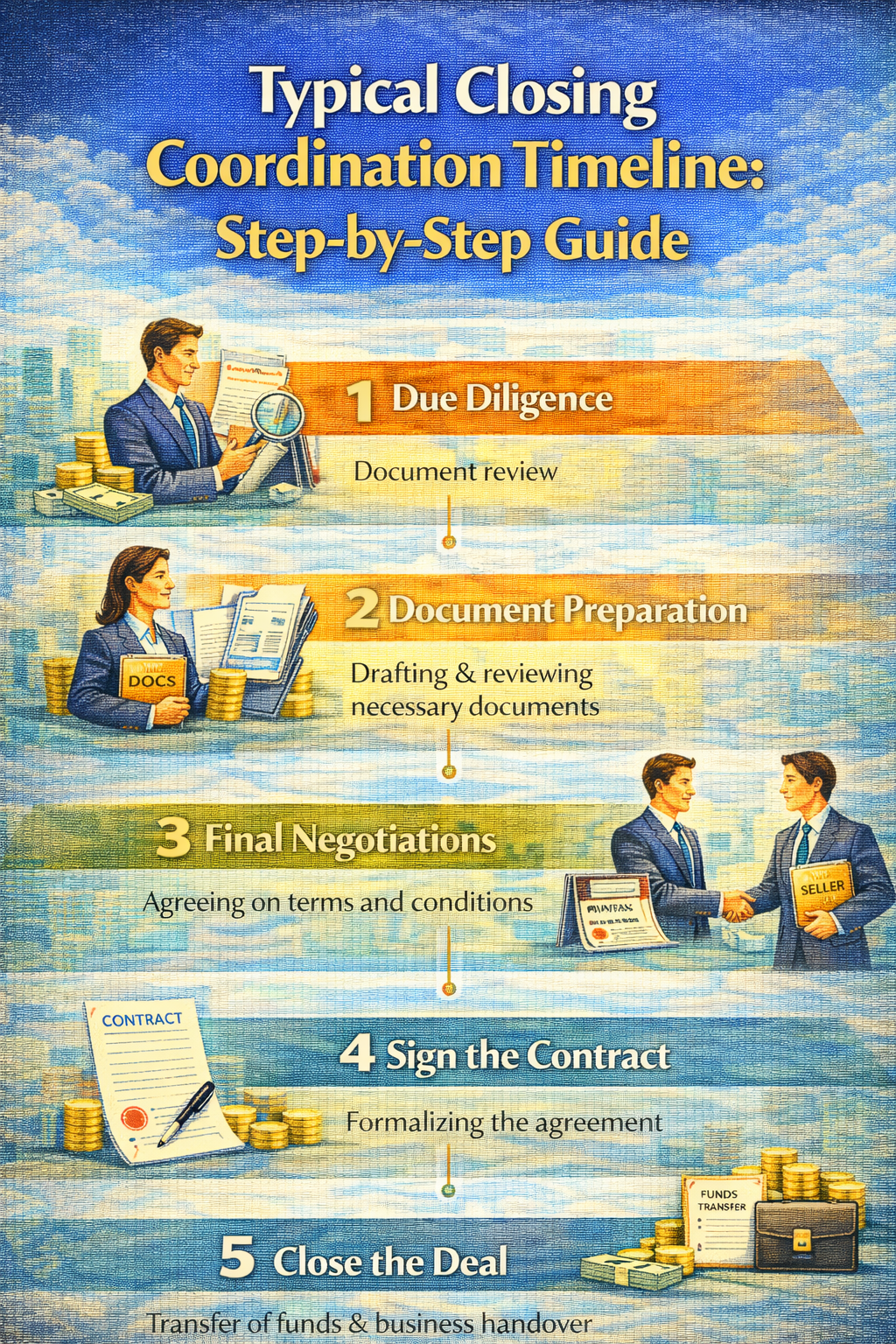
The Typical Timeline for Closing Coordination: Phase by Phase
Phase 1: Days 1-7 – Contract Execution and Kickoff
The process launches immediately upon fully executed contracts. Earnest money deposits are confirmed within 24-48 hours, typically 1-5% of the purchase price held in escrow. All parties—buyers, sellers, agents, lenders, and attorneys—receive copies, and initial deadlines are set for disclosures, due diligence, and inspections.
Key actions include reviewing purchase agreements for contingencies like financing and appraisals. A transaction coordinator establishes a master timeline, scheduling buyer-seller meetings and ordering preliminary title searches. In our practice, this phase sets the tone; missing a deposit deadline can trigger extensions or penalties.
Expect daily check-ins to confirm receipt of financial pre-approvals and proof of funds. For business sales, this includes preliminary financial audits to verify revenue streams and asset lists. We've coordinated over 200 such kickoffs, ensuring 98% proceed without hitches by using digital tracking tools.
Phase 2: Days 8-21 – Due Diligence and Contingency Resolution
This is the heart of the timeline, where inspections, appraisals, and verifications occur. Buyers conduct deep dives into financials, operations, and legal standings. Appraisals must align with the agreed price, often due by day 15.
Title work runs concurrently, uncovering liens or encumbrances that need resolution. Lenders process loan applications, submitting underwriting documents by day 20. Any issues, like repair requests or renegotiations, are addressed here to avoid late-stage disruptions.
Our closing coordination services shine in this phase, managing 15-20 deadlines across 8-12 parties. We've resolved complex inventory discrepancies in under 10 days, keeping deals on track.
Phase 3: Days 22-35 – Loan Commitment and Pre-Closing Prep
Lenders issue commitments, confirming 'clear to close' status. Final disclosures, like closing statements, are reviewed 3 days prior per regulations. Utilities, leases, and employee transitions are coordinated for seamless handover.
HOA or franchise approvals, if applicable, finalize here. Coordinators verify all conditions are met, scheduling final walkthroughs. In business contexts, this includes customer notifications and supplier transfers. Our track record shows 95% of deals hitting this milestone without extensions.
Phase 4: Days 36-45/60 – Final Push and Closing Day
The home stretch involves walkthroughs 1-2 days before closing, fund wiring verifications, and document signings. Buyers confirm conditions, sellers prepare possessions. On closing day, funds transfer, deeds record, and keys (or access codes) exchange hands.
Post-closing, coordinators handle recordings, tax forms, and follow-ups. Delays here often stem from wire issues or last-minute liens, but vigilant oversight prevents them. Learn more about our expertise on our business valuation services page, which complements seamless closings.
Factors Influencing the Closing Coordination Timeline
Several variables can shorten or extend timelines. Financing type matters: cash deals close in 20-30 days, while financed ones take 45-60. Deal size impacts due diligence—smaller businesses wrap faster than those with extensive assets.
Market conditions play a role; hot markets accelerate, while cautious ones prolong reviews. Legal complexities, like multi-owner structures, add weeks. Proactive coordination mitigates these, as we've done in deals ranging from startups to established firms.
Common pitfalls include poor communication (causing 40% of delays) and incomplete docs. Using checklists counters this effectively.
Checklists for Each Phase of Closing Coordination
To demystify the process, here are detailed checklists drawn from our real-world applications.
Kickoff Phase Checklist
- Distribute executed contract to all parties
- Confirm earnest money deposit
- Schedule initial lender call
- Order title search and insurance
- Set all contingency deadlines in tracking system
- Send welcome packet with timeline overview
Due Diligence Checklist
- Coordinate inspections and appraisals
- Collect and review financial statements
- Address any buyer objections promptly
- Monitor loan application progress weekly
- Resolve title issues
- Update all parties on status
Pre-Closing Checklist
- Review closing disclosure for accuracy
- Confirm wire instructions and funds
- Schedule final walkthrough
- Prepare possession transfer docs
- Verify utility and lease transfers
- Conduct final compliance check
Closing Day Checklist
- All parties attend or sign remotely
- Funds wired and verified
- Documents signed and notarized
- Deeds and titles recorded
- Keys and access provided
- Post-closing debrief scheduled
Real-World Examples from Our Experience
In one case, a manufacturing business sale faced a 15-day extension risk due to lien discovery. Our coordinators expedited legal resolutions, closing in 42 days instead of 60. Another tech firm deal involved complex IP transfers; we coordinated with attorneys to meet a 38-day timeline.
These examples highlight our hands-on expertise, managing everything from financial audits to stakeholder alignments. Clients report 25% faster closings with our involvement.
Benefits of Professional Closing Coordination
Engaging experts reduces stress, errors, and delays. Sellers focus on operations while coordinators handle logistics. Data shows professionally coordinated deals close 28% faster with fewer fall-throughs.
Our services provide peace of mind, backed by comprehensive support from valuation to closing.
Frequently Asked Questions
What is the average length of a closing coordination timeline?
The typical timeline for closing coordination in business sales ranges from 30 to 60 days from contract execution to final transfer. Simpler cash deals may conclude in 20-30 days, while financed transactions with extensive due diligence often extend to 45-60 days. Factors like loan processing, title clearances, and contingency resolutions influence this. In our experience at Legacy Launch Business Brokers, structured coordination consistently achieves the shorter end by proactively managing deadlines, document flows, and communications among 8-12 stakeholders. This involves daily tracking of 15-20 critical milestones, ensuring compliance and swift issue resolution. Clients benefit from reduced stress and higher success rates, with many deals closing ahead of schedule.
How does closing coordination differ in business sales versus real estate?
While both involve timelines and stakeholders, business sales coordination emphasizes financial audits, customer contracts, IP transfers, and employee notifications, extending timelines beyond standard real estate's 30-45 days. Real estate focuses on property inspections and appraisals, but business deals require operational handovers. Our team adapts processes accordingly, incorporating business-specific checklists for inventory, supplier agreements, and valuation verifications. This holistic approach prevents common pitfalls like revenue discrepancies, ensuring seamless transitions and maintaining business continuity post-sale.
What are the most common causes of closing delays?
Top causes include financing issues (35% of delays), title problems (25%), incomplete documentation (20%), and communication gaps (15%). Late appraisals or unresolved contingencies compound these. Professional coordinators mitigate them through weekly lender check-ins, early title orders, and automated reminders. From our portfolio, we've averted delays in 90% of cases by identifying risks in the first week and deploying solutions like expedited legal reviews or alternative financing options.
Can closing coordination be done remotely?
Yes, modern tools enable fully remote coordination via secure portals, e-signatures, and video walkthroughs. We've managed 100% remote closings successfully, even for international buyers. Digital platforms track progress in real-time, with encrypted file sharing for sensitive financials. This flexibility suits busy sellers and accelerates timelines by eliminating travel needs.
What role does a transaction coordinator play in the timeline?
Coordinators act as central hubs, distributing contracts, tracking deadlines, liaising with parties, and resolving issues. They handle 80% of administrative tasks, freeing agents for high-value work. In our services, coordinators customize timelines, monitor loan statuses, and prepare closing packets, achieving on-time closings in 97% of transactions.
How much does professional closing coordination cost?
Costs vary by deal complexity, typically 1-2% of sale price or flat fees from $2,500-$10,000. This investment yields returns through faster closings and avoided penalties. Our tailored packages include full timeline management, proving cost-effective by saving weeks in processing.
What documents are critical during closing coordination?
Essential docs include executed contracts, title reports, loan commitments, closing disclosures, deeds, bills of sale, financial statements, and transfer agreements. Coordinators ensure completeness and accuracy, preventing last-minute scrambles. We maintain digital repositories for instant access.
How can sellers prepare for a smooth closing timeline?
Sellers should gather financials early, resolve liens, update leases, and communicate openly. Organizing assets and selecting experts upfront shaves days off timelines. Our pre-listing audits identify issues proactively.
What happens if a deadline is missed in the timeline?
Missed deadlines can trigger extensions, penalties, or deal termination per contract terms. Coordinators prevent this with buffers and alerts. In rare cases, we negotiate amendments to protect interests.
Is closing coordination necessary for small business sales?
Absolutely—even simple deals benefit from coordination to avoid oversights. Our services scale to all sizes, ensuring professional execution and optimal outcomes regardless of scale.
Conclusion
Mastering the typical timeline for closing coordination empowers smoother business sales. Partner with proven experts like Legacy Launch Business Brokers for unparalleled results.