In the complex world of business transactions, a thorough financial document review is essential for ensuring accuracy, compliance, and informed decision-making. Whether you're preparing to sell a business or simply maintaining financial health, understanding the key procedures can make all the difference. At Legacy Launch Business Brokers Expertise, we specialize in these critical processes to help business owners navigate their financial landscapes with confidence.
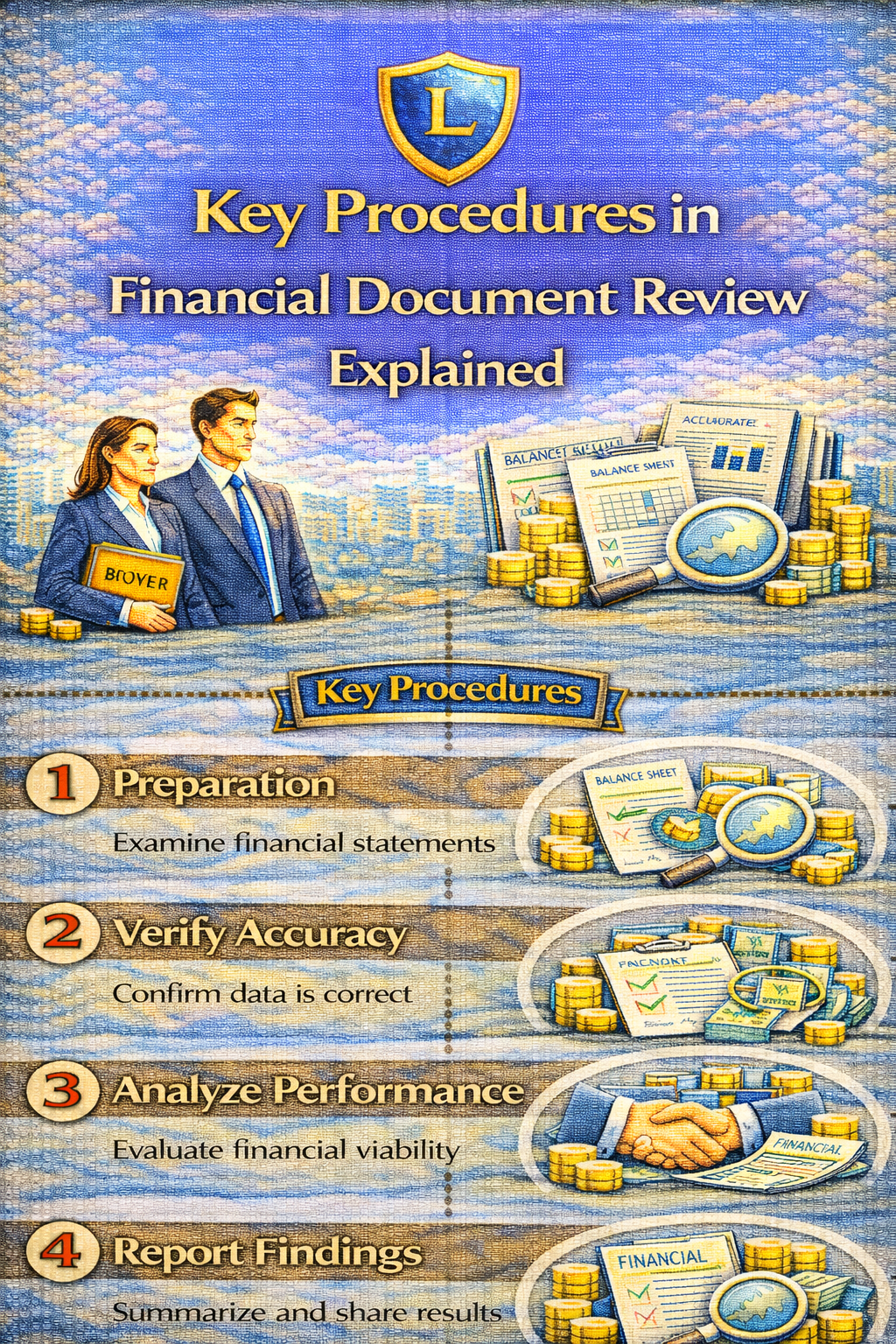
Why Financial Document Review Matters
Financial document review goes beyond mere number-crunching; it's a systematic evaluation that uncovers discrepancies, validates data integrity, and supports strategic decisions. This process is particularly vital in business sales, where buyers demand transparency and sellers need to maximize value. By meticulously examining financial records, you mitigate risks, enhance credibility, and position your business for success. Drawing from extensive experience in business brokerage, we've seen firsthand how a robust review can transform potential deal-breakers into smooth transactions.
The importance of this review cannot be overstated. Inaccurate financials can lead to undervaluation, legal issues, or failed deals. A comprehensive review ensures every figure tells the true story of your business's performance, profitability, and potential. It's the foundation upon which trust is built between buyers, sellers, and intermediaries.
Step-by-Step Key Procedures in Financial Document Review
Let's dive into the core procedures that define a world-class financial document review. These steps are derived from proven methodologies used by experts in the field, ensuring thoroughness and reliability.
Step 1: Gathering Essential Financial Documents
The first and most critical procedure is assembling all relevant financial documents. This includes profit and loss statements, balance sheets, tax returns, bank statements, accounts receivable and payable ledgers, payroll records, and any supporting documentation like invoices and receipts. Without a complete set, the review is incomplete.
Start by creating a checklist: compile three years of tax returns, monthly profit and loss statements normalized for one-time expenses, and detailed sales reports. Verify that all documents are current and match across sources. For instance, ensure bank reconciliations align with ledger entries. This step prevents gaps that could skew the overall picture. In our practice at Legacy Launch Business Brokers, we emphasize organizing these documents digitally for easy access and cross-referencing, saving hours of manual searching.
Consider categorizing documents into categories such as income-related, expense-related, asset/liability, and compliance files. Cross-check for duplicates or missing items. If you're dealing with a business sale, include customer lists, supplier contracts, and inventory valuations. This meticulous gathering sets the stage for accurate analysis.
Step 2: Verifying Document Authenticity and Completeness
Once gathered, scrutinize each document for authenticity. Check signatures, dates, and stamps on bank statements. Confirm that tax returns match filed versions with the relevant authorities. Look for alterations or inconsistencies in formats that might indicate tampering.
Completeness is key—ensure no periods are missing. For profit and loss statements, verify that every month's data is present and accounts for seasonal fluctuations. Use tools like reconciliation software to flag discrepancies automatically. A common pitfall is overlooking add-backs, such as owner's personal expenses that need normalization for true business profitability.
In practice, this involves tracing transactions from source documents to final statements. For example, match every deposit slip to bank entries and ledger postings. This procedure builds a verifiable chain of evidence, crucial for audits or sales due diligence.
Step 3: Reviewing Income Statements and Revenue Streams
Examine income statements line by line. Validate revenue recognition—did sales occur within the period reported? Trace top revenue sources to supporting invoices and contracts. Analyze trends: is growth organic or inflated by one-off events?
Calculate key metrics like gross margin and net profit margins. Compare against industry benchmarks to spot anomalies. For recurring revenue, verify customer contracts and retention rates. Discrepancies here, like unrecorded returns, can drastically alter perceived profitability.
Our experience shows that normalizing revenue by excluding non-recurring items provides a clearer picture for valuation. Detail every adjustment with documentation to maintain transparency.
Step 4: Analyzing Balance Sheets for Assets and Liabilities
The balance sheet offers a snapshot of financial health. Review assets for overvaluation—inventory should reflect net realizable value, not cost if impaired. Fixed assets need depreciation schedules verified against purchase records.
On the liability side, confirm all debts, loans, and contingent liabilities like pending lawsuits. Reconcile accounts payable against vendor statements. Equity sections must balance with retained earnings matching cumulative net income minus dividends.
Perform ratio analysis: current ratio, debt-to-equity, and quick ratio reveal liquidity and solvency. Flag any off-balance-sheet items that could hide true obligations.
Step 5: Scrutinizing Cash Flow Statements
Cash flow is the lifeblood of any business. Reconcile operating, investing, and financing activities. Ensure operating cash flow aligns with net income, adjusting for non-cash items like depreciation.
Trace major cash outflows to contracts or approvals. Identify patterns like consistent negative cash flow despite profits, signaling collection issues. Forecast future cash needs based on historical data to assess sustainability.
Step 6: Normalizing Financials and Add-Backs
Normalization adjusts financials to show true earning power. Identify owner's perks—personal vehicles, family salaries, non-essential travel—and add them back. Document each with receipts to justify.
Remove one-time expenses like legal fees from lawsuits. This creates an EBITDA figure reflective of ongoing operations. Buyers rely on this for valuation multiples.
Learn more about our specialized Financial Document Review Services that handle these adjustments expertly.
Step 7: Compliance and Regulatory Checks
Ensure adherence to accounting standards like GAAP. Review tax compliance, deferred taxes, and disclosures. Check for proper revenue recognition under ASC 606 and lease accounting under ASC 842.
Assess internal controls: segregation of duties, approval processes. Test for fraud risks like unauthorized transactions.
Step 8: Analytical Procedures and Trend Analysis
Apply analytics: ratio analysis, trend comparisons over years, variance analysis against budgets. Flag outliers—like expenses spiking 50% without explanation—for deeper investigation.
Use horizontal and vertical analysis to contextualize figures. Compare to peers for benchmarking.
Step 9: Subsequent Events and Contingencies Review
Examine post-period events impacting statements, like new contracts or losses. Disclose material contingencies.
Step 10: Reporting and Recommendations
Compile findings into a report: summary, discrepancies, adjustments, recommendations. Include visuals like charts for clarity. Present to stakeholders with actionable insights.
For more on our business preparation services, visit our Business Preparation Services Page.
Common Challenges and How to Overcome Them
Challenges include incomplete records, complex add-backs, and emotional attachments to personal expenses. Overcome by using checklists, engaging experts, and maintaining objectivity. Technology like AI-driven reconciliation tools speeds up processes while reducing errors.
In one case we handled, disorganized records hid $150,000 in add-backs, boosting valuation by 20%. Demonstrating our expertise at Legacy Launch Business Brokers.
Best Practices for Effective Financial Document Review
Best practices: start early, involve multiple reviewers, document everything, use standardized templates. Regularly perform internal reviews to stay prepared. Train staff on record-keeping.
Integrate software for automation: QuickBooks for tracking, Excel for analysis, audit tools for sampling.
Role of Professional Brokers in Financial Reviews
Professionals bring objectivity, experience, and networks. At Legacy Launch Business Brokers, our team of certified brokers with decades of experience conducts reviews that uncover hidden value and mitigate risks. We've facilitated hundreds of transactions, leveraging deep knowledge of financial nuances.
Our credentials include affiliations with top brokerage associations and a track record of successful exits. Trust us for transparent, thorough processes backed by proven results.
Frequently Asked Questions
What is a financial document review?
A financial document review is a detailed examination of a business's financial records, including profit and loss statements, balance sheets, tax returns, and supporting documents. The goal is to verify accuracy, identify discrepancies, normalize figures by adding back non-recurring or owner-specific expenses, and ensure compliance with accounting standards. This process is crucial for business owners preparing for sale, as it presents a true picture of profitability and financial health to potential buyers. It involves gathering documents, analytical procedures, trend analysis, and reporting findings. Professionals like those at Legacy Launch Business Brokers perform this to maximize business value, often revealing hidden add-backs that can significantly increase EBITDA. Expect the process to take weeks, depending on document volume, and result in a polished financial package ready for due diligence. This review not only aids sales but also improves internal operations by highlighting inefficiencies.
Why is normalizing financials important in document review?
Normalizing financials adjusts reported numbers to reflect the business's sustainable earning power, excluding one-time events, owner's personal expenses, and non-operational items. For example, adding back a personal vehicle lease or family member salaries shows what an owner-operator could achieve. This is vital for valuations, as buyers apply multiples to normalized EBITDA. Without it, financials may understate true performance, leading to lower offers. The procedure requires meticulous documentation—receipts, contracts—to defend adjustments during buyer scrutiny. In business sales, normalized statements can boost value by 15-30%. Experts categorize add-backs into discretionary (travel, perks), non-recurring (lawsuits), and market-rate adjustments (salaries). Legacy Launch Business Brokers excels in this, ensuring every adjustment is justifiable and transparent, building buyer trust and facilitating smoother transactions.
How long does a financial document review typically take?
The duration varies by business size and document readiness, typically 2-6 weeks. Small businesses with organized records may complete in 10-14 days, while larger ones with scattered files take longer. Steps include gathering (1 week), verification (1-2 weeks), analysis (1 week), and reporting (3-5 days). Delays occur from missing documents or complex normalizations. To expedite, prepare a checklist in advance and use digital tools. Professional services streamline this, as our team at Legacy Launch Business Brokers handles parallel reviews and automations, often finishing in under a month. Post-review, allow time for revisions based on findings. Regular monthly cleanups prevent last-minute rushes during sales prep.
What documents are needed for a full financial review?
Essential documents include three years of tax returns (personal and business), monthly profit and loss statements, balance sheets, cash flow statements, bank statements, accounts receivable/payable aging reports, payroll summaries, inventory lists, customer/supplier contracts, loan documents, and depreciation schedules. Supporting items: invoices, receipts for major expenses, and cash verification forms. For sales prep, add sales pipeline data and add-back schedules. Organize chronologically and categorize digitally. Verify completeness by tracing transactions end-to-end. Legacy Launch Business Brokers provides templates to ensure nothing is missed, turning chaos into clarity for accurate reviews.
How do you identify and handle add-backs?
Add-backs are non-essential expenses added back to EBITDA. Identify via expense reviews: flag personal (home office, vehicles), above-market salaries, one-offs (repairs, legal). Document with proofs like usage logs or comparables. Categorize as recurring or non-recurring. Handle by listing in a schedule with explanations and amounts. Common ones: 10-20% of expenses in small businesses. Pros validate to avoid disputes. Our brokers specialize, often uncovering overlooked items to enhance valuations significantly.
What role does cash flow analysis play?
Cash flow analysis verifies liquidity and sustainability, reconciling to income statements. Break into operating (core business), investing (assets), financing (loans). Flag negative operating cash despite profits, indicating receivables issues. Project future flows for working capital needs. Essential for sales, as buyers assess post-sale viability. Ratios like free cash flow yield insights. Integrate with forecasting for strategic planning.
How is compliance checked in financial reviews?
Compliance involves GAAP/IFRS adherence, tax filings, disclosures. Review revenue recognition, leases, related parties. Test controls for fraud. Confirm EIN matches, signatures authorized. Flag non-compliance risks fines or deal kills. Pros ensure standards met, preparing for audits.
What are common red flags in financial reviews?
Red flags: unreconciled accounts, inconsistent trends, undocumented add-backs, off-balance liabilities, weak controls. Revenue spikes without sales data, expense mismatches. Address promptly to restore credibility.
Can software help with financial document reviews?
Yes, tools like QuickQuickBooks, Xero automate reconciliations, AI flags anomalies. Excel for ratios, audit software samples transactions. Reduces time 50%, minimizes errors. Combine with expert oversight for best results.
Why hire professionals for financial document review?
Professionals offer objectivity, expertise, efficiency. Uncover hidden issues, defend adjustments, navigate complexities. Track record ensures compliance, maximizes value. Legacy Launch Business Brokers delivers proven results, saving time and boosting outcomes.
Conclusion
Mastering financial document review procedures empowers business owners to achieve optimal outcomes. Implement these steps diligently, or partner with experts for unparalleled results.