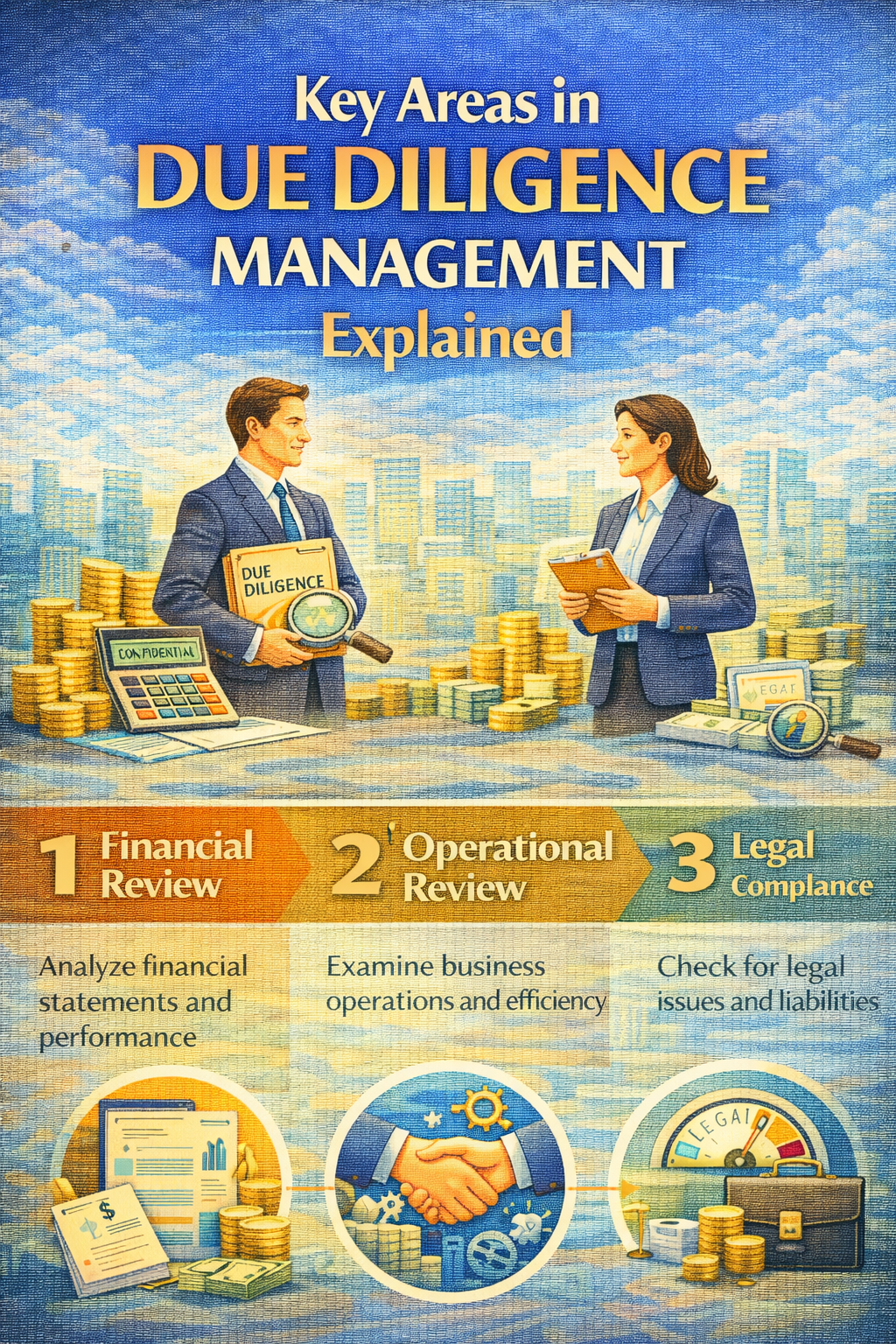
In the complex world of business transactions, due diligence management stands as a critical pillar for informed decision-making. Whether you're buying, selling, or partnering in a business, understanding the key areas covered in due diligence management can mean the difference between a successful deal and costly surprises. This comprehensive guide dives deep into the essential components, drawing from proven practices to help you navigate this vital process with confidence.
At Legacy Launch Business Brokers Expertise, we specialize in guiding clients through these intricacies, ensuring every angle is thoroughly examined. Our approach to due diligence management is methodical, leveraging years of hands-on experience in business brokerage to uncover hidden risks and opportunities.
What is Due Diligence Management?
Due diligence management refers to the systematic investigation and evaluation of a business or investment opportunity before finalizing a transaction. It encompasses a wide range of checks designed to verify information, assess risks, and validate the value proposition. Far from a mere formality, effective due diligence management protects stakeholders by revealing potential liabilities, confirming asset values, and ensuring regulatory compliance.
This process is particularly crucial in mergers, acquisitions, and business sales, where incomplete information can lead to financial losses or legal entanglements. Key to its success is a structured framework that covers financial health, operational efficiency, legal standing, and more. By methodically addressing these areas, parties can negotiate from positions of strength and knowledge.
Imagine acquiring a thriving enterprise only to discover undisclosed debts or operational bottlenecks post-closing—due diligence management prevents such scenarios. It involves gathering documents, interviewing key personnel, and analyzing data to build a complete picture. In today's fast-paced market, where deals move quickly, robust due diligence management ensures sustainability and growth potential.
Financial Due Diligence: The Foundation
Financial due diligence is often the cornerstone of any thorough review. This area focuses on scrutinizing the target company's financial statements, cash flows, revenues, expenses, and overall fiscal health. Auditors examine balance sheets, income statements, and cash flow reports over multiple years to identify trends, anomalies, or manipulations.
Key sub-areas include revenue recognition practices, where inconsistencies might signal aggressive accounting; debt obligations, ensuring all liabilities are accounted for; and working capital analysis to gauge liquidity. For instance, verifying accounts receivable aging reports helps assess collectability, while reviewing tax returns uncovers potential disputes with authorities.
Projections and forecasts come under intense scrutiny too. Are growth assumptions realistic? Do expense projections align with historical data? Financial due diligence also evaluates off-balance-sheet items like leases or contingent liabilities that could impact future profitability. In one case handled by experts in this field, a detailed review revealed overstated inventory values, saving the buyer millions in adjustments.
Beyond numbers, this phase assesses financial controls and internal audit processes. Strong governance here indicates reliability, while weaknesses signal red flags. Tools like ratio analysis—profit margins, return on equity, debt-to-equity—provide quantitative insights, complemented by qualitative reviews of management commentary.
Ultimately, financial due diligence quantifies the true enterprise value, informing purchase price negotiations and post-acquisition integration plans. Skipping or rushing this area risks overpaying for underperforming assets or inheriting unsustainable financial structures.
Legal Due Diligence: Safeguarding Against Liabilities
Legal due diligence delves into contracts, compliance, intellectual property, and litigation risks. This comprehensive review ensures the business operates within the law and that all representations are accurate. Contracts with customers, suppliers, and employees are pored over for termination clauses, penalties, or auto-renewals that could bind the new owner unexpectedly.
Intellectual property rights form a critical focus—are patents, trademarks, and copyrights valid and enforceable? Litigation history, ongoing suits, or threatened claims must be disclosed and evaluated for potential costs. Regulatory compliance checks cover industry-specific rules, environmental standards, and labor laws, identifying any past violations or fines.
Corporate structure review verifies ownership, share classes, and capitalization tables. Are there undisclosed shareholders or option pools diluting value? Employment agreements, non-competes, and benefit plans are assessed for continuity risks. In high-stakes deals, title searches on assets confirm clear ownership free of liens.
This area also flags insurance coverage gaps—directors and officers (D&O) policies, product liability—essential for protection. A thorough legal sweep mitigates post-deal disputes, ensuring smooth ownership transition. Experts emphasize documenting every finding in a detailed memo for negotiation leverage.
Operational Due Diligence: Efficiency and Scalability
Operational due diligence examines the day-to-day functioning of the business. This includes supply chain robustness, production processes, IT infrastructure, and human resources. Site visits or virtual tours reveal actual workflows, identifying bottlenecks or outdated equipment that hampers scalability.
Supply chain analysis maps key vendors, assessing dependency risks and diversification needs. IT systems are evaluated for cybersecurity measures, data integrity, and ERP effectiveness. Human resources review covers organizational charts, turnover rates, key person dependencies, and culture fit.
Customer concentration is a red flag—losing a major client could devastate revenues. Operational metrics like inventory turnover, order fulfillment times, and quality control benchmarks indicate efficiency. Improvement opportunities, such as automation or process reengineering, add value propositions.
In practice, this diligence uncovers hidden costs, like pending maintenance or skill gaps. For service-based businesses, client satisfaction surveys and retention rates provide insights. Strong operations support sustained performance, making this area indispensable for long-term success.
Commercial and Market Due Diligence: Strategic Fit
Commercial due diligence assesses market position, competitive landscape, and growth prospects. Market size, share, and trends are analyzed using industry reports and sales data. Competitor benchmarking reveals pricing power, differentiation, and barriers to entry.
Sales pipeline scrutiny validates backlog and lead quality. Marketing strategies, channel effectiveness, and brand strength are evaluated. Customer demographics, churn rates, and lifetime value inform retention strategies. Expansion potential—new products, geographies, or verticals—is weighed against execution risks.
This phase confirms strategic alignment with the acquirer's goals. SWOT analysis (Strengths, Weaknesses, Opportunities, Threats) synthesizes findings. In dynamic markets, adaptability to disruptions like technological shifts or regulatory changes is key.
Human Resources and Cultural Due Diligence
People are the heart of any business, making HR due diligence essential. This covers compensation structures, benefits, pension liabilities, and union relations. Key talent retention plans post-transaction prevent disruptions.
Cultural assessment gauges values alignment, employee engagement via surveys or interviews. Diversity, training programs, and succession planning indicate maturity. High turnover or morale issues signal underlying problems.
Post-deal integration planning starts here, outlining communication strategies and change management. Retaining institutional knowledge preserves value.
Risk Management and Compliance in Due Diligence
Risk management identifies environmental, cybersecurity, reputational, and geopolitical exposures. Compliance with anti-bribery laws (e.g., FCPA), data privacy (GDPR equivalents), and ESG standards is verified. Third-party risk assessments review subcontractors and partners.
Scenario planning tests resilience to economic downturns or supply shocks. Insurance adequacy and disaster recovery plans are checked. A robust risk framework enhances investor confidence.
For deeper insights into specialized Due Diligence Management Services, explore proven methodologies that streamline these processes.
Environmental and ESG Due Diligence
Environmental due diligence evaluates contamination risks, waste management, and sustainability practices. Phase I and II environmental site assessments detect hazards. ESG factors—environmental, social, governance—are increasingly scrutinized for stakeholder appeal and regulatory alignment.
Carbon footprint, diversity metrics, and ethical sourcing build long-term viability. Investors prioritize ESG-compliant businesses for resilience and premium valuations.
Technology and IP Due Diligence
Tech diligence audits software, hardware, and data assets. IP portfolios are validated for ownership and infringement risks. Cybersecurity audits reveal vulnerabilities, while tech roadmaps assess innovation capacity.
Cloud dependencies, SaaS contracts, and scalability are reviewed. In tech-driven sectors, this diligence protects core competitive advantages.
Tax Due Diligence: Minimizing Fiscal Surprises
Tax reviews uncover exposures from audits, transfer pricing, or international operations. NOLs (net operating losses), credits, and deferred taxes are quantified. Structuring opportunities optimize post-deal tax efficiency.
Historical filings and nexus analyses prevent surprises. Expert tax advisors ensure compliance and savings.
Integration Planning in Due Diligence
Due diligence extends to Day 1 readiness—synergies identification, cost savings modeling, and cultural bridging. Transition service agreements outline support periods. This forward-looking view maximizes deal value.
Discover how Business Valuation Services complement due diligence for accurate pricing.
Best Practices for Effective Due Diligence Management
Success hinges on clear scoping, multidisciplinary teams, timelines, and technology like virtual data rooms. Regular updates and issue tracking maintain momentum. Post-diligence reporting informs decisions.
Common pitfalls—rushing, siloed reviews, over-reliance on seller data—are avoided through independence and verification. Experienced brokers like those at Legacy Launch Business Brokers bring battle-tested protocols.
Challenges and How to Overcome Them
Challenges include data access resistance, time pressures, and complexity. Solutions: NDAs for cooperation, phased approaches, and expert outsourcing. Technology accelerates reviews while AI flags anomalies.
Global deals add cross-border nuances, requiring local expertise. Proactive communication builds trust.
Conclusion
Mastering the key areas of due diligence management equips you for confident transactions. From financials to operations, each pillar contributes to holistic assessment. Partnering with seasoned professionals ensures nothing is overlooked.
Frequently Asked Questions
What is the primary purpose of due diligence management?
The primary purpose of due diligence management is to thoroughly investigate a business opportunity to identify risks, verify financials, ensure legal compliance, and assess operational viability before committing to a transaction. This process minimizes surprises, supports accurate valuations, and facilitates informed negotiations. It covers financial audits, legal reviews, market analysis, and more, providing a 360-degree view. By systematically addressing potential issues, due diligence management protects investments and enhances deal success rates. In practice, it involves document reviews, expert consultations, and on-site evaluations, tailored to the deal's scale and complexity. Effective management leads to better post-acquisition outcomes and sustainable growth.
How long does due diligence management typically take?
Due diligence management duration varies from 4-12 weeks, depending on business size, complexity, and deal type. Smaller deals may wrap in weeks, while large mergers extend months. Factors include data availability, team coordination, and issue depth. Phased approaches—initial screening to detailed audits—optimize timelines. Virtual data rooms speed document sharing. Experienced teams accelerate without compromising thoroughness. Post-discovery extensions handle surprises. Planning upfront with milestones ensures efficiency. In fast-paced markets, parallel tracks for financial and legal reviews save time. Ultimately, rushing undermines value; balanced pacing yields optimal results.
What documents are essential for financial due diligence?
Essential documents for financial due diligence include audited financial statements (3-5 years), tax returns, bank statements, accounts receivable/payable ledgers, debt schedules, cap tables, and management accounts. Budgets, forecasts, and variance analyses provide forward insights. Contracts impacting finances, like leases or royalties, are key. Inventory valuations, customer concentrations, and working capital details round out the list. Seller-prepared teasers supplement but require independent verification. Organizing via data rooms facilitates review. Analysts cross-check for consistency, flagging discrepancies early. Comprehensive access ensures accurate enterprise value determination.
Why is legal due diligence critical in business sales?
Legal due diligence is critical to uncover liabilities, validate contracts, protect IP, and confirm compliance, preventing post-sale litigation or penalties. It reviews material agreements, litigation history, regulatory filings, and ownership structures. Undisclosed issues like liens or disputes can erode value. Non-competes, licenses, and insurance gaps are scrutinized. This diligence informs indemnities and price adjustments. Expert lawyers mitigate risks, ensuring clean title transfer. In interconnected operations, overlooked vendor clauses bind unexpectedly. Thorough checks build buyer confidence and seller credibility.
How does operational due diligence identify inefficiencies?
Operational due diligence identifies inefficiencies through process mapping, KPI analysis, site visits, and stakeholder interviews. Metrics like cycle times, yield rates, and downtime reveal bottlenecks. Supply chain audits assess vendor reliability and costs. IT evaluations spot legacy systems hindering scalability. Employee feedback highlights morale or training gaps. Benchmarking against peers quantifies opportunities. Recommendations for automation, outsourcing, or reorganization unlock synergies. This diligence quantifies quick wins and long-term improvements, justifying premiums or adjustments. Proactive fixes enhance post-deal performance.
What role does market analysis play in due diligence?
Market analysis in due diligence validates growth prospects, competitive positioning, and demand sustainability. It examines TAM (total addressable market), share trends, pricing dynamics, and entry barriers. Customer surveys gauge loyalty and churn. Competitor profiling reveals differentiation. Macro trends—tech disruptions, regulations—inform risks. Sales funnel audits confirm pipeline quality. This informs synergy potential and expansion viability. Misjudged markets lead to stranded assets; accurate analysis supports strategic fit. Data from industry reports and proprietary sources ensures reliability.
How can HR due diligence impact deal value?
HR due diligence impacts deal value by revealing talent risks, compensation excesses, pension shortfalls, or cultural mismatches. Key person dependencies threaten continuity. High turnover signals issues. Benefit liabilities like health plans or equity grants add costs. Union dynamics affect flexibility. Succession planning indicates depth. Post-deal retention bonuses preserve knowledge. Alignment accelerates integration, unlocking synergies. Overlooked people factors cause 30-50% value erosion. Detailed org charts, contracts, and engagement scores guide adjustments. Investing here sustains momentum.
What are common red flags in due diligence?
Common red flags include revenue recognition irregularities, customer concentration over 20%, pending litigation, weak internal controls, IP disputes, environmental hazards, and aggressive projections unsupported by data. Declining margins, high debt, key person reliance, or compliance lapses warrant scrutiny. Inconsistent documentation or seller evasiveness raises concerns. Cybersecurity vulnerabilities or outdated tech signal capex needs. Addressing via earn-outs or warranties mitigates. Experienced diligence turns flags into negotiation leverage, protecting downside.
How has technology transformed due diligence management?
Technology has transformed due diligence with AI-powered document analysis, virtual data rooms for secure sharing, and predictive analytics for risk scoring. Machine learning flags anomalies in financials faster. Blockchain verifies ownership chains. Collaboration platforms enable real-time team input. Drones aid site assessments. Big data aggregates market intelligence. These tools cut timelines 40-60%, enhance accuracy, and scale for complex deals. Adoption requires training but yields efficiency gains. Future integrations like VR tours expand access.
What should follow due diligence management?
Post-due diligence, compile findings into a report with recommendations, risks, and synergies. Negotiate adjustments, contingencies, or escrows. Develop integration plans covering Day 1 operations, comms, and KPIs. Secure financing with diligence-backed projections. Finalize SPA (sale purchase agreement) with reps/warranties. Monitor warranties post-closing. Celebrate milestones while planning cultural merges. Continuous oversight sustains value. Engaging brokers ensures seamless transition. This phase realizes diligence investments.