In the complex world of business transactions, matching buyers with businesses effectively is both an art and a science. This process ensures smooth transitions, maximized value, and continued success for the enterprise involved. As experts at Legacy Launch Business Brokers Excellence, we specialize in connecting qualified buyers with ideal business opportunities through a meticulous, proven methodology.
Understanding the Importance of Proper Buyer Matching
Matching buyers with businesses goes beyond simply finding someone willing to purchase. It involves aligning the buyer's goals, financial capability, industry knowledge, and vision with the business's unique strengths, culture, and future potential. A mismatched pairing can lead to operational disruptions, financial losses, or even failure post-sale. Conversely, a well-matched connection fosters growth, innovation, and long-term viability.
From our extensive experience facilitating hundreds of deals, we've seen firsthand how strategic matching elevates outcomes. Businesses thrive when handed to buyers who understand their nuances, while buyers gain confidence in investments that align with their expertise. This alignment minimizes risks and maximizes returns for all parties.
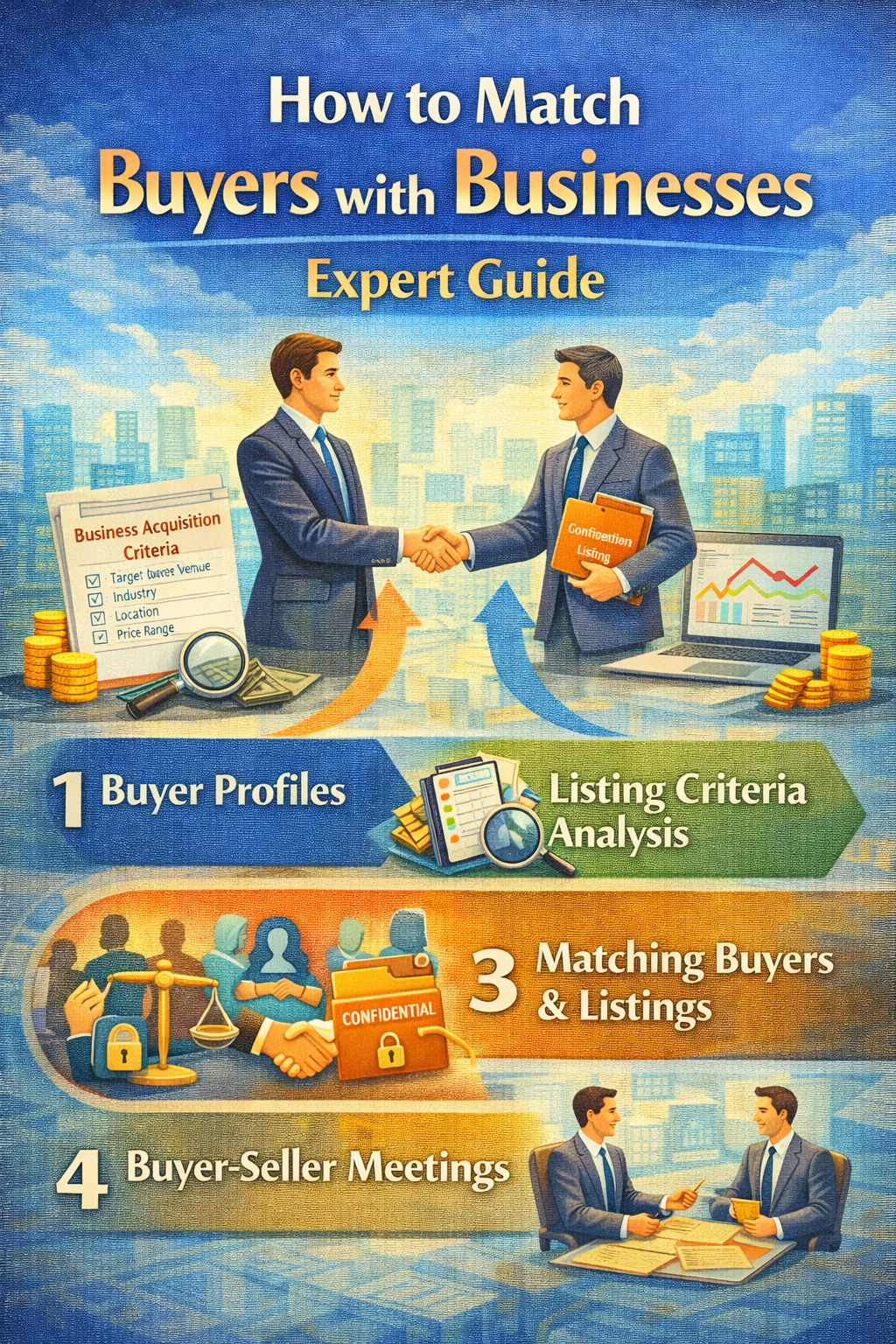
Key Steps in the Buyer Matching Process
The buyer matching process begins with a deep analysis of the business for sale. We evaluate financials, operations, market position, and growth trajectory to create a detailed profile. This profile serves as the foundation for identifying suitable buyers.
Next, we identify potential buyer types: strategic buyers seeking synergies, financial buyers focused on returns, or individual entrepreneurs with passion and resources. Each type requires tailored outreach.
Step 1: Business Profiling and Valuation
Creating a comprehensive business profile is crucial. This includes revenue streams, customer base, intellectual property, and competitive advantages. Accurate valuation using methods like discounted cash flow or comparable sales ensures realistic expectations. Our team employs proprietary tools to assess true worth, often uncovering hidden value that attracts premium buyers.
Step 2: Buyer Sourcing and Vetting
Sourcing buyers involves tapping into exclusive networks, databases, and targeted marketing. We pre-vet candidates for financial qualification, signing non-disclosure agreements before sharing sensitive information. This confidential approach protects the business while ensuring only serious prospects advance.
Step 3: Initial Matching and Screening
Initial matching compares buyer profiles against business needs. We screen for financial capacity, industry experience, and strategic fit. Tools like buyer profiles and financial statements help qualify leads efficiently, filtering out unqualified parties early.
Step 4: Facilitating Introductions and Negotiations
Once matched, we facilitate introductions, manage meetings, and guide negotiations. Our expertise ensures terms reflect the business's value, including earn-outs, non-competes, and transition support.
Step 5: Due Diligence and Closing
Due diligence verifies all claims, with our support streamlining the process. We coordinate legal, financial, and operational reviews to reach a seamless closing, typically within 2-4 months of letter of intent.
Types of Buyers and How to Match Them
Different buyers bring unique perspectives. Strategic buyers, often competitors or related firms, seek synergies for expansion. Financial buyers, like private equity, focus on profitability and scaling. Individual buyers offer passion but require more vetting.
Matching involves assessing each type's strengths. For example, a tech business pairs best with strategic buyers for innovation continuity, while a stable cash-flow business suits financial buyers.
Strategic Buyers: Synergy Seekers
These buyers integrate the acquired business into their operations, leveraging shared resources. Matching requires evaluating geographic fit, product complementarity, and cultural alignment.
Financial Buyers: Return Focused
Private equity or investment groups prioritize ROI. We match them with businesses showing strong EBITDA, scalable models, and exit potential within 3-7 years.
Individual or Family Buyers: Passion Driven
Entrepreneurs or families seek legacy businesses. Matching emphasizes management transition plans and personal compatibility.
Challenges in Buyer Matching and Solutions
Common challenges include confidentiality breaches, unqualified leads, and mismatched expectations. Solutions involve phased disclosure, rigorous screening, and expert mediation.
Market fluctuations can affect timing, so proactive strategies like teaser campaigns generate interest without revealing identity. Emotional attachments from sellers often complicate decisions; we provide objective guidance.
Role of Professional Brokers in Matching
Experienced brokers like those at Legacy Launch excel in matching through vast networks and deal expertise. We handle marketing, negotiations, and closing, allowing owners to focus on operations.
Our Buyer Representation Services Excellence ensure buyers receive unbiased advocacy, from opportunity identification to deal structuring.
Demonstrating Expertise: Real-World Examples
In one case, we matched a manufacturing firm with a strategic buyer, resulting in a 25% premium due to synergies. Another saw a service business paired with private equity, enabling rapid expansion.
These successes stem from our deep industry knowledge and buyer database exceeding thousands of vetted contacts. For sellers seeking similar outcomes, explore our Sell Your Business Services.
Building Trust Through Transparency
Trust is paramount. We maintain transparency via regular updates, detailed reporting, and client testimonials. Our process includes clear milestones, risk assessments, and contingency plans.
Future Trends in Buyer Matching
Technology like AI-driven matching and blockchain for secure data sharing is transforming the field. Virtual data rooms and predictive analytics enhance precision, reducing time-to-close.
Sustainability-focused buyers are rising, prioritizing ESG factors. Brokers adapting to these trends stay ahead.
Frequently Asked Questions
How long does the buyer matching process typically take?
The buyer matching process generally spans 6-12 months from initial engagement to closing, depending on business complexity, market conditions, and buyer readiness. Profiling and marketing take 1-3 months, sourcing and screening another 2-4 months, followed by negotiations and due diligence at 2-4 months. Expedited deals can close faster with prepared businesses and motivated buyers. Our structured approach at Legacy Launch minimizes delays through proactive management and extensive networks, ensuring efficient progression without compromising quality. Factors like financing or regulatory approvals may extend timelines, but expert guidance keeps things on track for optimal outcomes.
What qualifications do buyers need to be considered serious?
Serious buyers must demonstrate financial capability via proof of funds, pre-approval letters, or liquid assets covering the purchase price. They sign NDAs, provide buyer profiles detailing experience, and share financial statements for verification. Industry knowledge, a clear acquisition rationale, and integration plans are essential. We screen rigorously to ensure only qualified candidates proceed, protecting seller time and confidentiality. This vetting confirms ability to close, avoiding tire-kickers and focusing on those aligned with business goals for successful transitions.
How do you ensure confidentiality during matching?
Confidentiality is maintained through NDAs signed before any sensitive information is shared, anonymous marketing via teasers and blind profiles, and controlled data access in secure virtual rooms. We limit disclosures to phased releases based on buyer progress. Our protocols include encrypted communications and non-circumvention agreements. This approach has protected client businesses in every deal, building trust and allowing open-market reach without operational risks or competitor awareness.
What is the difference between strategic and financial buyers?
Strategic buyers, like competitors or adjacent firms, acquire for synergies such as market expansion, cost savings, or technology gains, often paying premiums for fit. Financial buyers, such as private equity, invest for ROI through operational improvements and resale, focusing on cash flow and scalability. Matching depends on business attributes: growth-oriented for strategic, stable for financial. Understanding these distinctions ensures optimal pairing, maximizing value and continuity.
Can individual buyers successfully acquire businesses?
Yes, individual buyers often succeed, particularly with lifestyle or family businesses matching their expertise and passion. They require thorough vetting for financing, often via SBA loans or seller financing. Success hinges on management transition plans and post-sale support. We've facilitated many such matches, emphasizing compatibility to ensure smooth handovers and sustained performance.
What role does valuation play in matching?
Valuation sets realistic pricing, attracts appropriate buyers, and benchmarks offers. Accurate assessments using multiples, DCF, or asset-based methods highlight value drivers, drawing qualified interest. Overvaluation deters buyers; undervaluation leaves money on the table. Our expertise uncovers hidden assets, justifying premiums and streamlining matching to ideal candidates.
How are negotiations handled in the matching process?
Negotiations involve balancing price, terms, contingencies, and transition support. We mediate objectively, leveraging market data and buyer insights for optimal outcomes. Multiple offers create competition, enhancing leverage. Skillful structuring includes earn-outs for performance ties, ensuring seller protections and buyer confidence.
What happens during due diligence?
Due diligence verifies financials, operations, legal status, and risks through document reviews, site visits, and expert audits. Sellers prepare organized data rooms; we facilitate to resolve issues swiftly. This phase confirms match viability, averting post-close surprises and paving the way for closing.
Why use a broker for buyer matching?
Brokers provide networks, expertise, confidentiality, and process management, increasing success rates and values by 20-30%. They handle complexities, negotiate professionally, and access hidden buyers, far outperforming DIY efforts. Our track record demonstrates superior results through specialized knowledge.
What are common pitfalls in buyer matching?
Pitfalls include poor vetting leading to unqualified buyers, emotional decisions overriding logic, inadequate preparation, or rushing processes. Solutions: rigorous screening, objective advice, business readiness, and phased approaches. Learning from these ensures higher success probabilities.
Conclusion
Mastering buyer-business matching unlocks exceptional transaction value. Partner with proven experts like Legacy Launch Business Brokers to navigate this intricately for optimal results.