In today's competitive business landscape, crafting an effective business marketing strategy is essential for sustainable growth and success. As a seasoned marketing expert with years of hands-on experience helping businesses scale through targeted strategies, I've seen firsthand how the right approach can transform revenue streams and customer engagement. Drawing from proven frameworks and real-world applications, this comprehensive guide will walk you through every step to build a strategy that delivers measurable results.
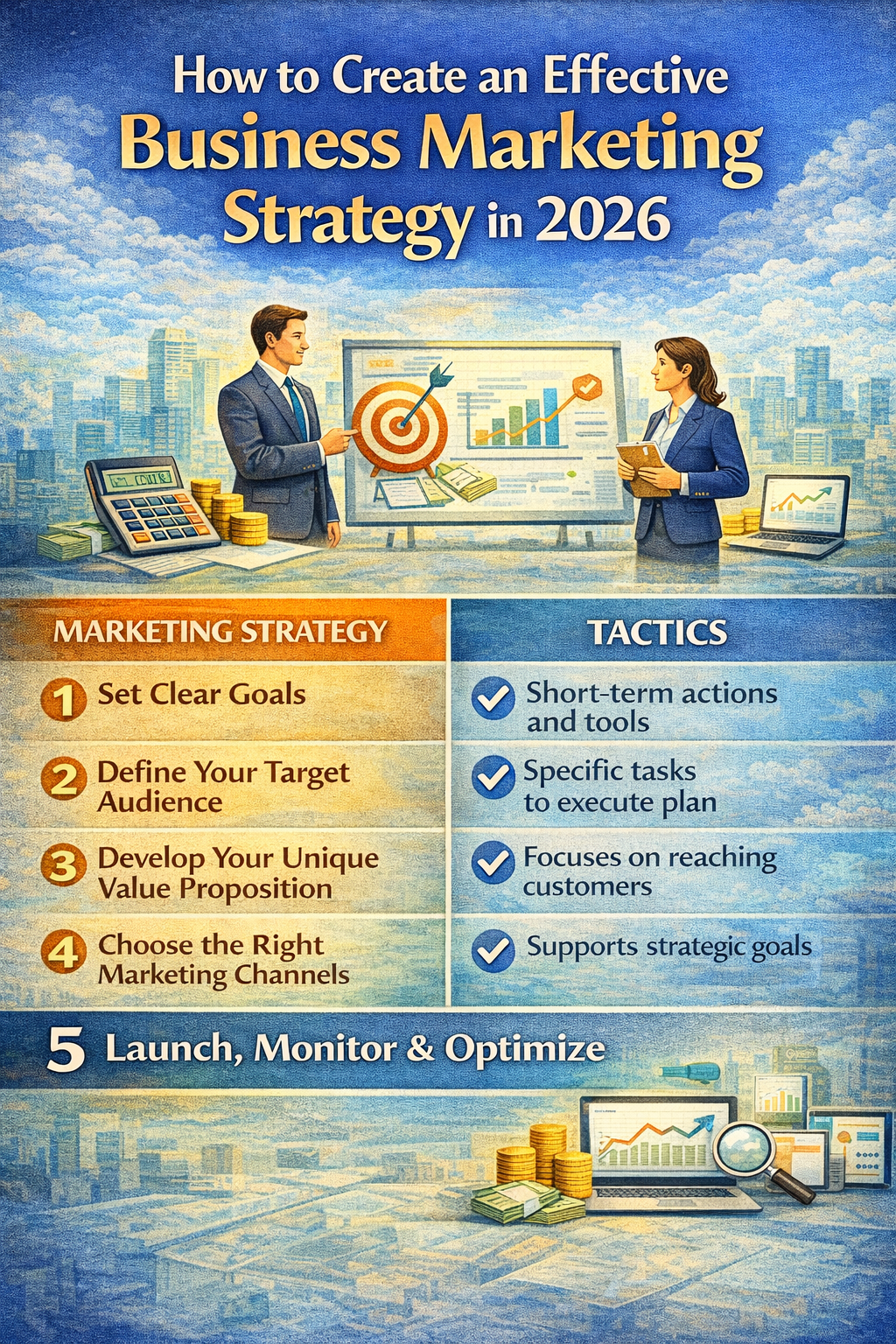
At Legacy Launch Business Brokers: Expert Business Growth Partners, we specialize in empowering entrepreneurs with strategies that not only attract customers but also position businesses for long-term success. Whether you're launching a new venture or scaling an existing one, understanding the core elements of a marketing strategy is key.
Understanding the Foundations of a Business Marketing Strategy
A business marketing strategy is more than a collection of tactics; it's a roadmap that aligns your marketing efforts with overarching business goals. It involves identifying your target audience, selecting the right channels, and measuring outcomes to ensure every dollar spent contributes to growth. According to industry insights, businesses with well-defined strategies see up to 20% higher sales growth compared to those without.
To begin, conduct a thorough audit of your current position. Analyze your strengths, weaknesses, opportunities, and threats (SWOT analysis). This foundational step ensures your strategy is grounded in reality rather than assumptions. For instance, if your business excels in product quality but struggles with visibility, your strategy should prioritize awareness-building tactics like content marketing and social media.
Next, define your unique value proposition (UVP). What sets you apart from competitors? Your UVP should be clear, concise, and compelling. It forms the backbone of all messaging, ensuring consistency across channels. Businesses that communicate a strong UVP experience 23% higher customer loyalty rates.
Step 1: Set Clear, Measurable Goals
The first step in creating an effective strategy is establishing SMART goals—Specific, Measurable, Achievable, Relevant, and Time-bound. Vague objectives like "increase sales" lead to scattered efforts, while specific ones like "boost qualified leads by 40% in six months through email nurturing" provide direction.
Align these goals with business objectives. If your company aims for 30% revenue growth, marketing might target generating 50% more leads. Track progress using key performance indicators (KPIs) such as customer acquisition cost (CAC), return on ad spend (ROAS), and conversion rates. Tools like Google Analytics and CRM software make this tracking seamless.
Consider short-term and long-term goals. Short-term might focus on quick wins like lead generation campaigns, while long-term emphasizes brand authority through content pillars. Regularly review and adjust goals quarterly to adapt to market changes.
Step 2: Identify and Profile Your Target Audience
Knowing your audience is crucial. Develop detailed buyer personas based on demographics, psychographics, pain points, and buying behaviors. Use data from customer surveys, website analytics, and social listening tools to build these profiles.
Prioritize 3-5 segments with the highest potential. Evaluate based on market size, revenue opportunity, and competitive landscape. For example, a B2B software company might target mid-sized enterprises in tech sectors where they have a strong edge.
Map the customer journey from awareness to advocacy. Identify touchpoints and friction points. This informs personalized content at each stage—educational blogs for awareness, case studies for consideration, and testimonials for decision-making.
Step 3: Choose the Right Marketing Channels
Not all channels are equal. Select based on where your audience spends time and which offer the best ROI. Common channels include:
- Content Marketing: Creates authority through blogs, videos, and ebooks.
- Email Marketing: Nurtures leads with personalized sequences, boasting 42:1 ROI.
- Paid Advertising: Google Ads and social platforms for targeted reach.
- Social Media: Builds community and drives traffic organically.
- SEO: Ensures long-term organic visibility.
Integrate channels for synergy. A blog post promoted via email and social media amplifies reach exponentially. In 2026, AI-driven personalization across channels is non-negotiable, enhancing engagement by 30% or more.
Step 4: Develop Compelling Content and Messaging
Content is king, but relevance is queen. Create a content calendar aligned with the customer journey. Focus on solving problems—answer questions your audience asks, provide actionable insights, and showcase expertise.
Use storytelling to make messages resonate. Share customer success stories to build trust. Optimize for SEO with keyword research, topic clusters, and structured data. For 2026, incorporate AI for content ideation while maintaining a human touch for authenticity.
Visuals matter: infographics, videos, and interactive elements boost engagement. Repurpose content across formats—one webinar becomes a blog, clips for social, and an ebook.
Step 5: Leverage Data and Analytics for Optimization
Data turns guesswork into precision. Implement tracking from day one. Use A/B testing for emails, ads, and landing pages to refine what works.
Focus on business-impact metrics: revenue attribution, lifetime value (LTV), and churn rates. Tools like HubSpot or Marketo provide dashboards for real-time insights. Predictive analytics forecast trends, allowing proactive adjustments.
Regular audits reveal underperforming areas. If organic traffic dips, refresh SEO; if conversions lag, optimize funnels.
Step 6: Budgeting and Resource Allocation
Effective strategies balance cost and impact. Allocate 7-12% of revenue to marketing, adjusting based on growth stage. Startups might invest more in acquisition, mature businesses in retention.
Break down budget: 40% content/SEO, 30% paid ads, 20% tools/email, 10% experiments. Track ROI meticulously to reallocate funds quarterly.
Consider in-house vs. outsourced. For complex strategies, partnering with experts like those at Legacy Launch Business Marketing Strategy Experts ensures execution excellence.
Step 7: Implementation, Testing, and Scaling
Launch with pilot campaigns to test assumptions. Scale winners and pivot from losers. Foster cross-team alignment—marketing, sales, and customer service must sync.
Account-based marketing (ABM) excels for high-value clients, personalizing across channels. For broader reach, omnichannel approaches unify experiences.
Stay agile. Monitor trends like AI personalization and social SEO. Annual strategy reviews keep you ahead.
Advanced Tactics for 2026 and Beyond
Incorporate emerging trends: AI for hyper-personalization, zero-party data for privacy compliance, and immersive experiences via AR/VR. Social commerce and influencer partnerships drive direct sales.
Build topical authority with content clusters. Optimize for voice search and visual discovery. Sustainability messaging resonates with conscious consumers.
Explore Legacy Launch Comprehensive Business Services for integrated support in strategy execution.
Common Pitfalls to Avoid
Avoid siloed channels, ignoring mobile optimization, or neglecting post-sale engagement. Don't chase shiny objects without strategy alignment. Consistency trumps perfection—regular execution builds momentum.
Measuring Long-Term Success
Beyond KPIs, gauge brand health via Net Promoter Score (NPS) and share of voice. Success is sustained growth, loyal customers, and market leadership.
Frequently Asked Questions
How long does it take to see results from a business marketing strategy?
Results vary by industry and execution, but initial traction often appears in 3-6 months, with significant ROI in 6-12 months. Focus on quick wins like paid ads for leads while building organic channels for longevity. Consistent effort compounds: businesses sticking to strategies see 2-3x growth yearly. Track weekly metrics and adjust to accelerate. Patience paired with data-driven tweaks ensures sustainable success.
What is the most important element of an effective marketing strategy?
Alignment with business goals tops the list. Without it, efforts scatter. Next, deep audience understanding drives relevance. Integrate channels and measure outcomes rigorously. In practice, personalization via AI boosts engagement 30%. Prioritize value delivery over sales pitches to foster loyalty. Regularly audit to stay relevant.
How do I choose the best marketing channels for my business?
Analyze audience habits via analytics and surveys. Test small budgets across options: email for nurturing, social for awareness, SEO for traffic. Calculate ROAS to prioritize. In 2026, omnichannel integration maximizes impact. Where your customers are active dictates choice—B2B favors LinkedIn, B2C leans Instagram. Scale proven performers.
What role does content play in a marketing strategy?
Content builds trust and authority, guiding buyers through journeys. Educational pieces attract, case studies convert. SEO-optimized content drives organic traffic, reducing CAC. Repurpose for efficiency. High-quality content yields 13x more ROI than traditional ads. Focus on solving pains with unique insights.
How can AI improve my business marketing strategy?
AI personalizes at scale, predicts behaviors, and optimizes campaigns. Automate segmentation, content creation, and A/B testing. Predictive analytics spot trends early. Chatbots handle queries 24/7. Businesses using AI see 20% higher conversions. Balance with human oversight for authenticity.
What KPIs should I track for my marketing strategy?
Core KPIs: CAC, LTV, ROAS, conversion rates, traffic sources, engagement metrics. Attribute revenue accurately. Monitor funnel drop-offs and NPS for health. Quarterly reviews refine focus. Business-impact metrics like revenue growth trump vanity ones like likes.
How do I budget for a marketing strategy?
Allocate 7-12% of revenue. Divide: 40% digital ads, 30% content/SEO, 20% tools, 10% innovation. Start conservative, scale with data. Factor in team/tools costs. Track spend vs. ROI monthly. Flexible budgets adapt to performance.
What is account-based marketing (ABM) and when to use it?
ABM targets high-value accounts with personalized campaigns. Ideal for B2B with long cycles, high ACV. Coordinate sales/marketing for tailored touchpoints. Yields 208% more pipeline. Use when 80/20 rule applies—focus on top 20% accounts.
How often should I update my marketing strategy?
Review quarterly, overhaul annually or post-major shifts. Market evolves; agility wins. Test new tactics continuously. Data reveals needs. Static strategies fail—adapt or lag.
Can small businesses create effective marketing strategies?
Absolutely. Start lean: free tools like Google Analytics, organic social, email. Focus on niches for outsized impact. Consistency beats budget. Many solopreneurs scale to 7-figures via smart strategies. Partner with experts for acceleration. Build gradually for sustainability.
Conclusion
Creating an effective business marketing strategy demands clarity, data, and execution. Follow these steps, stay adaptable, and watch your business thrive. Ready to elevate? Explore resources from Legacy Launch Business Brokers.