Curious about the acquisitions advisory process timeline? Whether you're a business owner eyeing expansion through acquisition or an entrepreneur seeking to buy your first company, understanding how long the entire process takes from start to finish is crucial for effective planning. In this comprehensive guide, we'll break down every phase, drawing from proven expertise in guiding clients through successful deals. As specialists at Legacy Launch Business Brokers for Seamless Acquisitions, we've helped numerous clients navigate this journey efficiently.
Understanding the Acquisitions Advisory Process
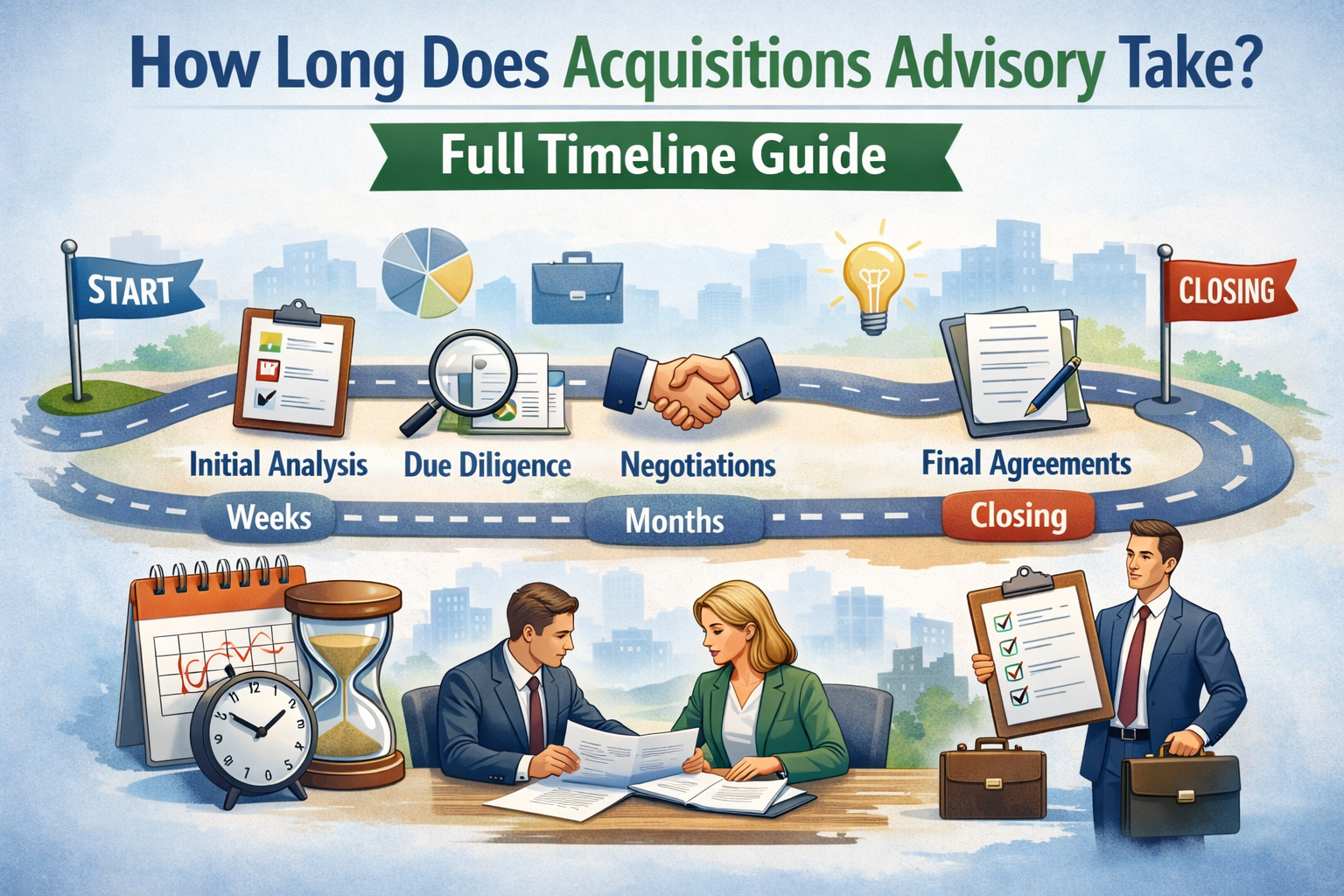
The acquisitions advisory process involves expert guidance to identify, evaluate, negotiate, and close business acquisitions. This service streamlines what can otherwise be a daunting task, ensuring you secure the right opportunity without unnecessary delays. Typically, the full timeline spans several months, but exact duration varies based on deal complexity, business size, market conditions, and preparation level. From initial consultation to deal closure, expect anywhere from 6 to 12 months on average, with some streamlined deals closing faster and complex ones extending longer.
Why does it take time? Each phase builds on the previous one, requiring thorough due diligence, negotiations, and regulatory checks to mitigate risks. Poor preparation can add weeks or months, while expert advisors accelerate progress by anticipating issues early. Our team at Legacy Launch Business Brokers emphasizes proactive strategies to compress timelines without compromising outcomes.
Phase 1: Initial Consultation and Preparation (4-12 Weeks)
The process kicks off with an initial consultation, where advisors assess your goals, financial capacity, and acquisition criteria. This phase, often lasting 4 to 12 weeks, involves assembling your advisory team, outlining strategic objectives, and preparing foundational documents. Key activities include cleaning up financial statements, developing a Confidential Information Memorandum (CIM), and identifying potential targets.
During preparation, advisors conduct preliminary valuations and benchmark your readiness against market standards. For instance, resolving any financial discrepancies or legal red flags early prevents later setbacks. In our experience guiding clients, businesses that invest time here—gathering historical financials, operational data, and growth projections—move faster through subsequent stages. Expect 1-2 months for smaller deals, extending to 3 months for those requiring extensive cleanup.
This stage sets the tone for efficiency. Advisors like those offering Comprehensive Acquisitions Advisory Services from Experts provide tailored strategies, leveraging industry networks to shortlist viable targets quickly. Without this groundwork, marketing efforts falter, prolonging the overall timeline.
Phase 2: Marketing and Buyer/Seller Outreach (3-8 Weeks)
Once prepared, the marketing phase begins, typically 3 to 8 weeks. Advisors reach out to qualified prospects, sharing teasers and requiring Non-Disclosure Agreements (NDAs) before distributing the full CIM. This targeted outreach gauges interest and narrows down serious parties.
Effective marketing involves follow-up calls, Q&A sessions, and refining pitches based on feedback. For acquisitions, this means contacting strategic buyers who align with your vision, such as competitors seeking synergies or investors eyeing growth potential. Data shows well-crafted CIMs can generate initial responses within 2 weeks, but building momentum takes the full phase.
Our hands-on approach includes leveraging proprietary databases and networks to maximize reach. Clients often see a shortlist of 5-10 strong candidates emerge here, setting up the next phase for success. Delays occur if targets are unresponsive or if market conditions shift, but expert advisors mitigate this through diversified outreach.
Phase 3: Receiving Offers and Letter of Intent (LOI) (2-4 Weeks)
Interest converts to action in this 2-4 week window, where initial offers or Indications of Interest (IOIs) arrive. Advisors evaluate these non-binding proposals, focusing on valuation ranges, deal structure, financing sources, and timelines. Selecting 2-4 top contenders leads to LOI negotiations.
The LOI outlines key terms like purchase price, payment structure, and exclusivity periods, often recommending 90 days for post-LOI activities to allow thorough review. Signing an LOI with the preferred party grants exclusivity, streamlining information sharing while protecting all sides.
Negotiation finesse is critical; advisors balance maximizing value with speed. In practice, this phase moves quickly if preparation was solid, but misaligned expectations can extend it. We've seen LOIs signed within days for hot targets, emphasizing the value of momentum from prior phases.
Phase 4: Due Diligence and Negotiations (6-12 Weeks)
The most intensive phase, due diligence spans 6-12 weeks. Buyers scrutinize financials, legal compliance, operations, IT systems, and more, often via a virtual data room. Advisors facilitate this, addressing queries and negotiating adjustments based on findings.
Common areas include verifying revenue streams, customer contracts, intellectual property, and employee matters. Any issues—like undisclosed liabilities—trigger price renegotiations or deal-breakers. A 90-day LOI window keeps this focused, avoiding endless loops.
Expert guidance shines here, as advisors preempt red flags and prepare contingency plans. For complex deals involving earnouts or escrows, this extends toward 12 weeks. Post-diligence, definitive agreements are drafted, refining terms for final approval. Streamlined processes, like pre-vetted data rooms, can shave weeks off.
Phase 5: Final Approvals and Closing (2-8 Weeks)
With diligence complete, focus shifts to finalizing contracts, securing regulatory nods, and board approvals—typically 2-8 weeks. Legal teams polish the purchase agreement, incorporating any last adjustments.
This phase includes financing arrangements and third-party consents. Closing involves signing documents, fund transfers, and initial transition planning. Simpler deals close in 2 weeks; those with regulatory hurdles take longer.
Advisors coordinate seamlessly, ensuring no loose ends. We've closed deals swiftly by aligning all parties early, highlighting preparation's payoff.
Phase 6: Post-Closing Integration (1-18 Months)
Though not always part of core advisory, integration follows, lasting 1-18 months. This involves cultural alignment, role streamlining, talent retention, and operational synergies. Advisors often extend support here via transition teams.
Success metrics include retained revenue and realized synergies. Proactive planning minimizes disruptions, turning acquisitions into growth engines.
Factors Influencing the Acquisitions Advisory Timeline
Several variables impact duration:
- Deal Size and Complexity: Smaller businesses close in 6 months; larger ones exceed 12 months due to deeper scrutiny.
- Preparation Quality: Ready sellers/buyers accelerate phases; disorganized ones add months.
- Market Conditions: High competition speeds offers; downturns slow them.
- Regulatory Needs: Industry-specific approvals extend timelines.
- Party Responsiveness: Aligned teams finish faster.
Advisors mitigate these through experience. For more on our tailored support, explore our Expert Business Brokerage Services for Buyers and Sellers.
Real-World Examples and Case Insights
Consider a mid-sized manufacturing acquisition: Preparation took 6 weeks, marketing 4, LOI 3, diligence 8, closing 4—total 6 months. Another tech deal hit 10 months due to IP reviews. These align with industry norms, where expert navigation compresses timelines.
Streamlining tips include early advisor engagement, clean records, and flexible terms. Avoid pitfalls like vague criteria or delayed responses, which inflate timelines by 20-50%.
Why Choose Expert Acquisitions Advisory?
DIY acquisitions risk prolonged timelines and suboptimal deals. Advisors bring networks, negotiation prowess, and process mastery, often shortening cycles by 20-30%. With proven track records in diverse sectors, firms like Legacy Launch deliver results.
Frequently Asked Questions
How long does the entire acquisitions advisory process typically take?
The full acquisitions advisory process from start to finish generally spans 6 to 12 months, depending on factors like deal complexity, business readiness, and market dynamics. Preparation and planning take 4-12 weeks, marketing 3-8 weeks, offer selection 2-4 weeks, due diligence 6-12 weeks, closing 2-8 weeks, and integration up to 18 months. Smaller, well-prepared deals can close in under 6 months, while larger or regulated ones extend beyond a year. Expert advisors streamline this by anticipating delays, conducting thorough pre-work, and leveraging networks for quick responses. In practice, clients with organized financials and clear goals see timelines at the shorter end, achieving efficient closures without compromising due diligence depth. Proactive management of each phase ensures momentum, turning potential 12-month processes into 7-9 month successes. Always factor in your specific circumstances for realistic planning.
What is the longest phase in the acquisitions advisory timeline?
Due diligence and negotiations often represent the longest phase, lasting 6-12 weeks or more. This involves exhaustive reviews of financials, legal documents, operations, and compliance, uncovering issues that require resolution. Buyers access data rooms, interview teams, and verify claims, potentially leading to renegotiations on price or terms. A structured 90-day LOI exclusivity helps contain this, but complexities like international elements or earnouts extend it. Advisors mitigate by pre-identifying risks during preparation, providing organized data, and facilitating smooth communication. High-quality preparation upfront can reduce this phase by 2-4 weeks, as fewer surprises arise. Post-diligence negotiations finalize the purchase agreement, ensuring all parties align. Understanding this phase's weight underscores the value of experienced guidance to navigate scrutiny efficiently and protect deal value.
Can the acquisitions advisory process be sped up?
Yes, the process can be accelerated through meticulous preparation, clear objectives, and expert involvement. Start with clean financials and a compelling CIM to shorten marketing to 3-4 weeks. Select responsive targets and negotiate concise LOI timelines, like 90 days for diligence. Use virtual data rooms for instant access and pre-address common diligence items. Advisors with strong networks generate quicker interest, potentially halving offer phases. Avoid pitfalls like incomplete docs or slow responses, which add months. In optimized cases, totals drop to 4-6 months. However, rushing risks oversights, so balance speed with thoroughness. Clients prioritizing advisor input from day one consistently achieve faster, higher-value closes without undue stress.
What role does preparation play in the acquisitions advisory timeline?
Preparation is foundational, often dictating overall timeline success, spanning 4-12 weeks. It includes assembling teams, goal-setting, financial cleanup, CIM creation, and target identification. Well-prepared businesses attract serious buyers faster, compressing marketing and offers. Resolving red flags early prevents diligence stalls. Advisors benchmark valuations and craft strategies, ensuring market-ready presentations. Poor prep leads to repeated requests, extending phases by weeks. Invest here for 20-30% timeline reductions. Real examples show prepared clients closing in 6 months versus 12 for others. This phase builds confidence, enabling smooth transitions to execution.
How does deal size affect the acquisitions advisory duration?
Deal size significantly impacts duration: smaller deals (under $5M) often wrap in 6 months or less due to simpler diligence and fewer approvals. Mid-sized ($5-50M) take 8-10 months, balancing complexity. Larger deals exceed 12 months with regulatory scrutiny, financing layers, and integration challenges. Scale correlates with documentation volume and stakeholder coordination. Advisors tailor processes, using efficient tools for smaller deals and robust teams for big ones. Understanding size helps set expectations; scale up resources accordingly for efficiency.
What happens after the LOI in acquisitions advisory?
Post-LOI focuses on exclusive diligence (6-12 weeks), where buyers verify details intensively. Advisors manage data rooms, answer queries, and negotiate findings impacting terms. This leads to definitive agreements, approvals, and closing (2-8 weeks). Exclusivity prevents competing bids, concentrating efforts. A 90-day window ensures focus without drag. Any issues prompt adjustments, maintaining momentum toward close.
Are there common delays in the acquisitions advisory process?
Common delays stem from incomplete preparation, slow diligence responses, regulatory hurdles, financing issues, or negotiation deadlocks. Unclean financials or hidden liabilities extend reviews by 4-6 weeks. Market shifts can cool interest. Advisors preempt via audits and contingency plans, minimizing impacts. Responsive communication keeps phases on track, turning potential 3-month delays into weeks.
How involved is the advisor during closing?
Advisors are deeply involved in closing (2-8 weeks), coordinating legal reviews, financing, approvals, and fund transfers. They ensure contract alignment, resolve last-minute issues, and plan transitions. Their oversight prevents slips, delivering smooth handovers. Post-close support aids integration.
Does integration count in the acquisitions advisory timeline?
Core advisory ends at close, but integration (1-18 months) often receives advisory input. This phase aligns operations, cultures, and teams for value realization. Including it holistically extends the 'full process' view, emphasizing long-term success.
Why hire acquisitions advisors for timeline management?
Advisors compress timelines by 20-30% via expertise, networks, and processes. They handle complexities, negotiate effectively, and avoid pitfalls, ensuring faster, better outcomes. Their track record delivers efficiency and maximized value.
Key Takeaways and Next Steps
Mastering the acquisitions advisory timeline empowers strategic decisions. From 4-12 week prep to multi-month integration, each phase demands focus. Partner with proven experts for optimal results. Ready to start? Contact Legacy Launch Business Brokers today.