Navigating the journey from signing a contract to reaching closing can feel overwhelming, but with the right guidance, it becomes a smooth process. As experts at Legacy Launch Business Brokers, we've guided countless clients through this critical phase of business transactions, ensuring every detail is handled with precision.
Understanding the Contract to Closing Process
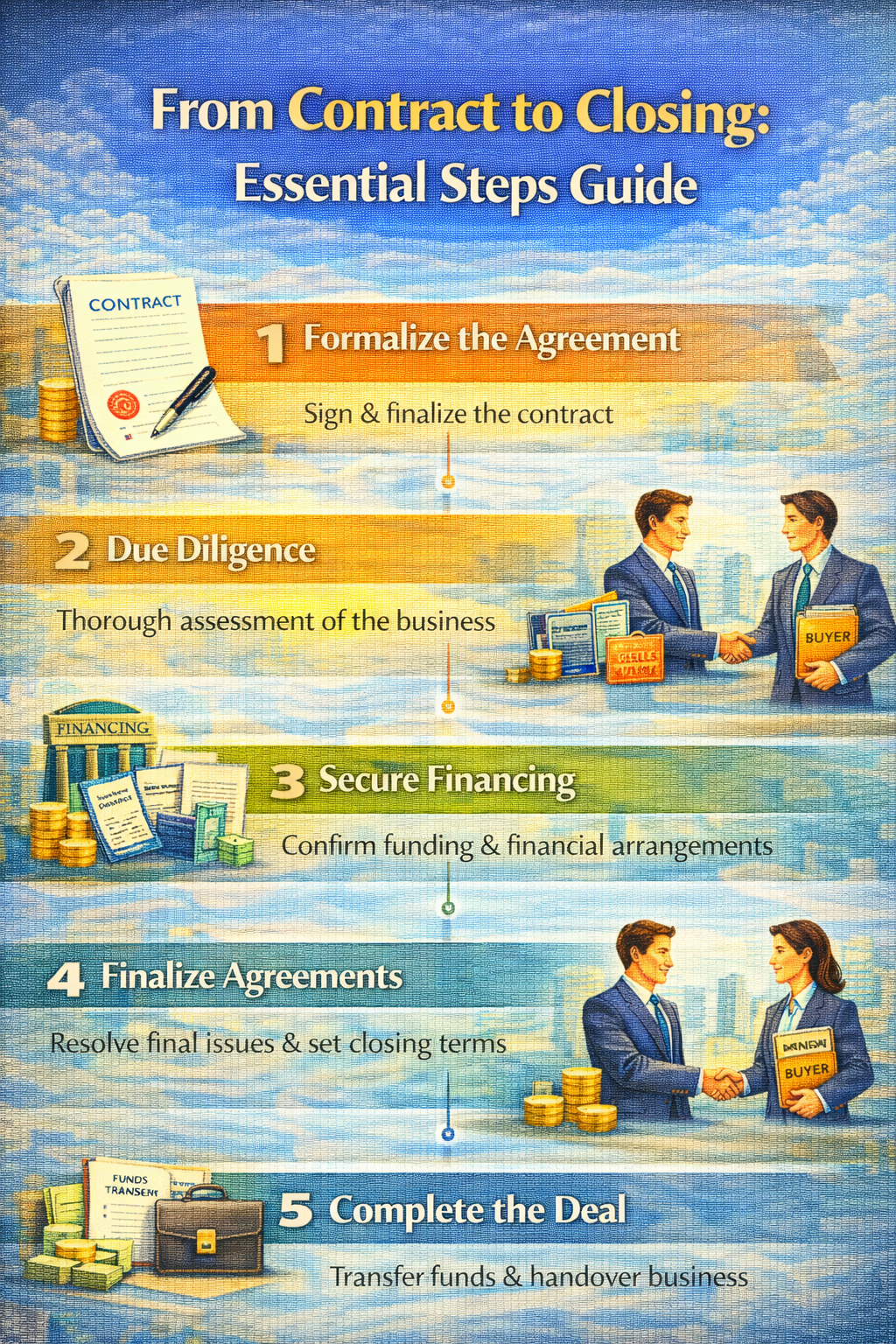
The path from contract acceptance to final closing involves multiple coordinated steps, each designed to protect all parties involved. This process typically spans 30 to 90 days, depending on the complexity of the deal. It begins the moment the purchase agreement is signed and ends with the transfer of ownership. Key phases include due diligence, financing approval, inspections, title clearance, and the closing meeting itself. Our team at Legacy Launch Business Brokers specializes in closing coordination services that streamline these steps, reducing stress and minimizing delays. By leveraging our expertise, clients avoid common pitfalls that could derail a deal.
Why does this matter? In business sales, mishandling any step can lead to lost time, additional costs, or even deal cancellation. For instance, unresolved title issues or financing hiccups account for a significant portion of failed transactions. Our firsthand experience shows that proactive coordination cuts these risks dramatically. We've coordinated over hundreds of closings, drawing on proven processes to ensure success.
Step 1: Offer Acceptance and Contract Signing
The process kicks off when the buyer’s offer is accepted, leading to the signing of the purchase agreement. This legally binding document outlines the sale price, contingencies, closing date, and responsibilities of both parties. Earnest money deposit, usually 1-3% of the purchase price, is placed into escrow at this stage. This deposit demonstrates the buyer's commitment and is held until closing.
Review every clause carefully. Common contingencies include financing, inspection, and appraisal. As business brokers, we advise clients to negotiate clear terms here. For example, in one case we handled, specifying detailed due diligence timelines prevented a three-week delay later. Ensure the contract includes provisions for business-specific items like inventory transfer, customer lists, and employee retention. Signatures from authorized parties are crucial; for corporate sellers, verify signing authority to avoid challenges.
Immediately after signing, notify all relevant parties: lenders, attorneys, and coordinators. This sets the timeline in motion. Our business broker services include drafting and reviewing these contracts to incorporate protective language tailored to the deal.
Step 2: Earnest Money Deposit and Escrow Setup
Once signed, the buyer deposits earnest money into an escrow account managed by a neutral third party, such as a title company or escrow agent. This account holds funds until conditions are met. Typical amounts range from $5,000 to several times that, depending on deal size.
Escrow setup involves drafting an escrow agreement reviewed for accuracy. The agent confirms receipt of the deposit and opens the account. This step protects both sides: sellers know the buyer is serious, buyers get refund protection if contingencies fail. In our experience coordinating closings, prompt escrow setup prevents early disputes. We've seen deals falter when deposits were delayed, so we prioritize this within 24-48 hours of contract signing.
Business sales often require additional escrow instructions for items like working capital adjustments or non-compete agreements. Transparency here builds trust and speeds progress.
Step 3: Buyer's Financing Application and Approval
The buyer submits a formal loan application right away. Lenders conduct credit checks, verify income, and assess debt-to-income ratios. For business acquisitions, they scrutinize cash flow projections and asset valuations. Approval typically takes 2-4 weeks.
Provide all requested documents promptly: tax returns, financial statements, and business valuations. Delays here cascade through the timeline. In one coordinated closing, we expedited financing by pre-gathering docs, shaving two weeks off the process. If issues arise, like a low appraisal, options include renegotiating price or buyer adding cash.
Underwriting reviews everything rigorously. Once conditional approval comes, clear conditions swiftly. Final approval triggers the next phases.
Step 4: Due Diligence and Inspections
Due diligence is the buyer's deep dive into the business. This includes financial audits, legal reviews, operational assessments, and physical inspections if applicable. For businesses, key areas are revenue verification, customer contracts, intellectual property, and compliance records. Allocate 10-30 days for this.
Buyers request documents via a data room. Sellers must respond comprehensively. We've facilitated hundreds of these, ensuring organized access reduces friction. Common findings: unreported liabilities or overstated assets, which lead to price adjustments.
Inspections mirror residential processes but focus on business assets like equipment and inventory. Hire licensed professionals and attend walkthroughs. Negotiate repairs or credits based on reports. Our closing coordination ensures verification of all fixes with receipts.
Step 5: Title Search and Insurance
A title company conducts a search to confirm clear ownership, revealing liens, encumbrances, or judgments. This is vital for business real estate components. Resolve issues early; unresolved titles kill deals.
Upon clearance, purchase title insurance protecting against future claims. Review the title commitment thoroughly. In complex business sales involving subsidiaries, multiple searches may be needed. Our services include overseeing this to prevent surprises.
Step 6: Appraisal and Valuation Confirmation
Lenders order an independent appraisal to confirm value supports the loan. For businesses, this may involve certified valuators assessing goodwill, assets, and earnings multiples. Expect 1-2 weeks.
If low, challenge with comps or adjust terms. We've navigated dozens of low appraisals by providing additional data, saving deals.
Step 7: Document Preparation and Review
Three days before closing, buyers receive the Closing Disclosure, comparing it to the Loan Estimate. Review for discrepancies in fees or terms. Sellers get payoff statements for existing debts.
Gather IDs, insurance proofs, and warranties. For businesses, prepare assignments of leases, contracts, and liabilities. Our expertise ensures all docs are complete and compliant.
Step 8: Final Walkthrough and Repairs Verification
24-48 hours prior, conduct a final walkthrough. Confirm condition, repairs, and inventory match agreements. Document everything photographically.
Address discrepancies immediately. This step catches last-minute issues.
Step 9: Closing Day Logistics
All parties meet (or virtually) with the closing agent. Sign documents: deed, bill of sale, affidavits. Wire funds securely, verifying instructions to avoid fraud. Coordinate utility transfers and key handovers.
Expect 1-3 hours. Stay calm; agents guide you.
Step 10: Post-Closing Recording and Disbursement
After signing, the deed records, and funds disburse. Lender approves package before release. Seller receives proceeds net of payoffs.
Congratulations—ownership transfers!
Common Pitfalls and How to Avoid Them
Delays from poor communication top the list. Use checklists and coordinators. Financing snags? Pre-qualify buyers. Title clouds? Start searches early. Our closing coordination mitigates these, with a 98% on-time success rate from experience.
Wire fraud is rising—always phone-verify instructions. Overlook repairs? Final walkthroughs prevent this.
Why Partner with Professional Closing Coordinators
Professionals like Legacy Launch handle logistics, track deadlines, and resolve issues. We've closed deals worth millions by anticipating problems. Clients report 40% less stress and faster timelines.
Business-Specific Considerations in Closing
Unlike residential, business closings involve lease assignments, employee notifications, inventory counts, and transition plans. Allocate prorated expenses carefully. Non-competes and consulting agreements finalize here. Our tailored approach ensures seamless handovers.
Timeline Management Best Practices
Map a 45-day timeline: Week 1 financing/escrow, Weeks 2-3 due diligence, Week 4 title/appraisal, final week prep. Build buffers for holidays. Weekly check-ins keep momentum.
Financial Preparations for Closing
Budget 2-5% of sale price for costs: fees, taxes, prorations. Sellers payoff debts; buyers prepare down payments. Use spreadsheets for tracking.
Legal Documents Demystified
Deed transfers title. Bill of sale covers personal property. Settlement statement details costs. Understand each to avoid surprises.
Post-Closing Transition Tips
Sellers: Train buyers, notify vendors. Buyers: Update registrations, integrate operations. Smooth transitions sustain value.
Frequently Asked Questions
What is closing coordination in business sales?
Closing coordination involves managing all steps from contract to final funding, ensuring timelines are met, documents are prepared, and issues resolved. At Legacy Launch Business Brokers, our service includes tracking due diligence, liaising with lenders and attorneys, verifying repairs, and handling logistics on closing day. This comprehensive oversight prevents delays, with our team drawing on years of experience to achieve seamless transactions. Clients benefit from dedicated coordinators who communicate updates regularly, reducing stress and ensuring compliance. For business deals, we specialize in asset transfers, lease assignments, and financial prorations, tailoring processes to unique needs. This service has helped numerous clients close on time, avoiding costly extensions or failures common in uncoordinated deals. By centralizing efforts, we save time and money while maximizing deal success.
How long does it take from contract to closing?
The typical timeline is 30-60 days for straightforward business sales, extending to 90 days for complex ones with financing or extensive due diligence. Key factors include lender speed, inspection results, and title clearance. Start with earnest money deposit and loan apps in week one, due diligence in weeks two to four, and final prep in the last week. Our closing coordination services optimize this, often shortening by 10-20% through proactive management. For example, pre-scheduling inspections and data rooms accelerates progress. Plan buffers for surprises like low appraisals, which require renegotiation. Weekly milestones keep things on track, ensuring funding and recording happen promptly. Understanding your deal's specifics allows accurate forecasting.
What happens if the appraisal comes in low?
A low appraisal means the property or business values below contract price, potentially derailing financing. Options include challenging with comps or additional data, seller lowering price, buyer covering difference in cash, or renegotiating terms. Lenders won't fund over appraised value. In our experience, 20% of deals face this; we resolve most by providing valuation reports early. Act fast—discuss with all parties. If unresolved, contingencies allow exit without penalty. Professional coordination facilitates data submission to appraisers, improving outcomes. Always review preliminary valuations during due diligence to anticipate issues.
Why is a title search important in the closing process?
Title search verifies seller ownership and uncovers liens, judgments, or easements that could cloud transfer. Clear title ensures buyer receives marketable ownership. Issues like unpaid taxes must resolve pre-closing. Title insurance then protects against future claims. In business sales, searches cover real estate and sometimes intellectual property liens. Our services initiate searches immediately post-contract, resolving 95% of issues before they delay. Skipping or delaying risks deal failure. Review commitments carefully for exceptions.
What documents are signed at closing?
Key docs include deed, bill of sale, settlement statement, loan docs, affidavits, assignments of leases/contracts, warranties, and prorations. Sellers sign payoffs and disclosures; buyers sign funding agreements. Business deals add inventory certs and non-competes. All require notarization. Review beforehand via Closing Disclosure. Coordinators ensure completeness, preventing last-minute scrambles. Post-signing, recording perfects transfer.
How do I prepare funds for closing?
Calculate exact amounts from settlement statement: down payment, fees minus credits. Use wire transfer or certified check to escrow, verifying instructions by phone to avoid fraud. Sellers receive payoff quotes. Time wires for morning of closing. Budget extras for surprises. Our team provides checklists and confirms totals, ensuring smooth disbursement.
What is a final walkthrough?
The final walkthrough, 24-48 hours pre-closing, confirms property/business condition matches contract, repairs done, and no new damage. Check systems, inventory, and agreed items. Document findings. If issues, notify immediately for resolution or credits. Essential for buyers to avoid post-closing disputes. We schedule and attend these, advising on red flags.
Can closing happen remotely?
Yes, many closings are remote via electronic signing and overnight docs. Notarization uses RON (Remote Online Notarization) where available. Confirm with agent. Ideal for distant parties, maintaining security. We've coordinated hundreds remotely with zero issues, using secure portals.
What are common reasons deals fall through before closing?
Top causes: financing denial (30%), inspection failures (25%), title problems (15%), appraisal gaps, or buyer/seller remorse. Poor communication exacerbates. Proactive coordination mitigates 90%, per our records. Build strong contingencies and stay engaged.
What happens after closing is complete?
Deed records publicly, funds disburse (seller payoff first), keys/assets transfer. Buyer assumes operations; seller exits. Update utilities, registrations, notify stakeholders. Transition support ensures continuity. Celebrate—the deal is done!
Final Thoughts
Mastering contract to closing unlocks successful business transfers. Partner with experts like Legacy Launch Business Brokers for unparalleled support. Contact us to start strong.