Determining the true value of your business is a critical step whether you're preparing to sell, seeking investment, or planning for succession. But what documents are needed for a business valuation? This comprehensive guide breaks down every essential document, drawing from years of hands-on experience helping business owners navigate this complex process. As experts at Legacy Launch Business Brokers Trusted Experts, we've conducted countless valuations, ensuring sellers get top dollar through meticulous preparation.
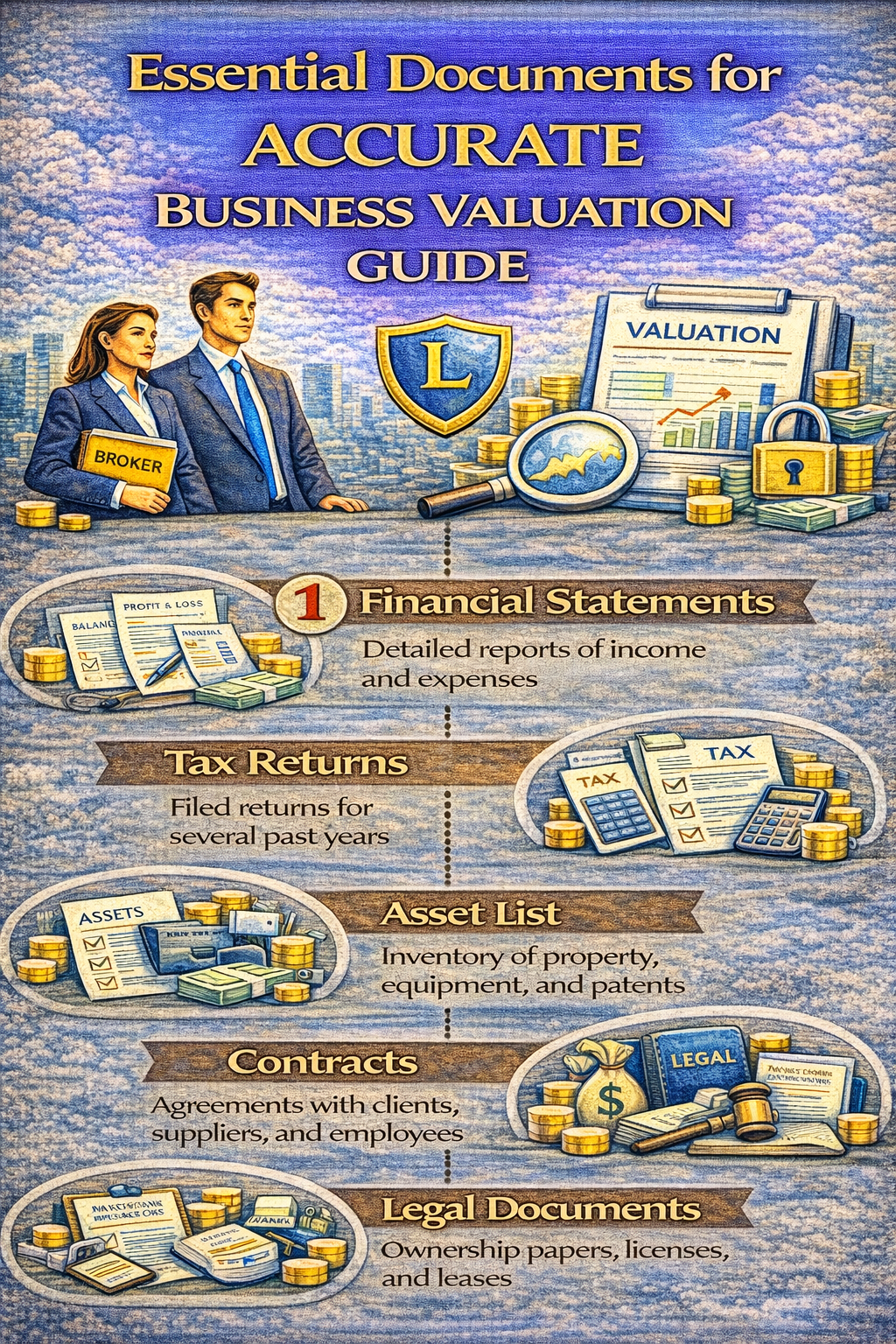
Why Document Preparation Matters in Business Valuation
Gathering the right documents isn't just busywork—it's the foundation of an accurate, defensible valuation. Without them, appraisers can't assess your company's financial health, operational strength, or growth potential. Incomplete records lead to undervaluation, missed opportunities, or prolonged sale processes. In our work, we've seen businesses gain 20-30% higher offers simply by presenting organized, audited financials upfront.
Business valuations typically use three core approaches: asset-based, income-based, and market-based. Each requires specific data points. For instance, the income approach demands detailed profit and loss statements to project future cash flows, while the asset approach needs inventories of physical and intangible assets. Starting early—ideally 6-12 months before a sale—allows time to compile, clean, and normalize these records.
Pro tip: Organize documents chronologically and digitally. Use folders labeled by category (financials, legal, operational) for easy access. This not only speeds up the valuation but impresses buyers, signaling a well-run operation.
Core Financial Documents for Business Valuation
Financial statements form the backbone of any valuation. Appraisers scrutinize them for trends, anomalies, and normalization adjustments—like removing owner perks to show true EBITDA.
1. Profit and Loss Statements (Income Statements)
These show revenues, expenses, and profitability over time. Provide statements for the past 3-5 years, plus year-to-date. Why 3-5 years? It reveals growth patterns, seasonality, and sustainability. For example, a consistent 15% annual revenue increase strengthens your multiple.
Ensure they're prepared on an accrual basis if possible, as cash-basis statements can distort timing. Normalize by adding back non-recurring expenses, like one-time legal fees or personal vehicle costs. In one case we handled, normalizing P&Ls boosted normalized EBITDA by 25%, directly increasing the sale price.
2. Balance Sheets
Snapshots of assets, liabilities, and equity at period-end. Past 3-5 years plus most recent month-end are essential. They highlight working capital needs, debt levels, and asset quality. Watch for red flags like high receivables aging or overstated inventory.
Reconcile balance sheets to tax returns. Discrepancies erode credibility. We've advised clients to get accountant-reviewed sheets, which often command higher valuations due to perceived reliability.
3. Cash Flow Statements
These track cash generation from operations, investing, and financing. Critical for income-based valuations using discounted cash flow (DCF) models. Provide 3-5 years' worth, showing free cash flow after capital expenditures.
Positive, growing cash flows signal a healthy business. If yours dip due to growth investments, explain with supporting docs like capex schedules.
4. Tax Returns
Federal (and state, if applicable) returns for 3-5 years, including all schedules. They corroborate financials and reveal tax strategies. Appraisers adjust for differences between book and tax accounting, like depreciation methods.
Include any amended returns. In valuations, tax returns are gold standards for verification—buyers trust IRS-filed data over internal statements.
Operational and Asset Documents
Beyond financials, operational docs paint the full picture of your business's value drivers.
5. Accounts Receivable and Payable Aging Reports
Current aged lists show collection efficiency and vendor terms. High days sales outstanding (DSO) can lower multiples. Provide top 10 customers' sales data for 3 years to assess concentration risk—if one client is 40% of revenue, that's a discount factor.
6. Inventory Reports
Detailed at-cost valuation, including turnover ratios. Segregate raw materials, work-in-progress, and finished goods. Obsolete inventory drags value; document write-downs.
7. Asset Schedules and Depreciation Details
List all fixed assets (equipment, vehicles, furniture) with purchase dates, costs, and book values. Include recent appraisals for high-value items. Leases for equipment or real estate must detail terms, renewal options, and payments.
8. Intellectual Property Inventory
Patents, trademarks, copyrights, domain names, proprietary software—list with registration dates and licenses. IP can add significant value, especially in tech or branded businesses. We've seen IP portfolios justify 2-3x higher multiples.
Legal and Corporate Documents
These protect against hidden liabilities and clarify ownership.
9. Corporate Governance Papers
Articles of incorporation/organization, bylaws/operating agreements, shareholder agreements, buy-sell pacts. Detail ownership percentages and any rights of first refusal.
10. Contracts and Agreements
Major customer/supplier contracts, franchise agreements (if applicable), employment contracts for key personnel, non-competes. Highlight recurring revenue contracts—they boost value.
11. Loan and Debt Documentation
All loans, lines of credit, with balances, terms, collateral. Seller notes or related-party loans need special scrutiny.
12. Lease Agreements
Current facility leases, including rent escalations and assignment clauses. Buyers assess transferability.
13. Litigation and Contingent Liabilities
Details of lawsuits, disputes, guarantees, warranties. Pending claims can slash value by 10-50%.
Human Resources and Organizational Documents
Your team is often the most valuable asset.
14. Payroll Reports and Org Charts
3-5 years' payroll summaries, including key employee comp (salaries, bonuses, benefits). Current org chart shows depth. Succession plans mitigate key-person risk.
15. Employee Agreements
Contracts for executives, non-competes, non-solicits. Strong retention tools enhance value.
Strategic and Forward-Looking Documents
Valuations aren't just backward-looking—future potential matters.
16. Business Plans and Projections
5-year forecasts of revenue, expenses, cash flow. Back with market data. Realistic projections supported by pipeline reports can justify premium pricing.
17. Budgets and Strategic Plans
Annual budgets, growth strategies, market analyses. Show scalability.
18. Customer and Supplier Lists
Top 10 by revenue/purchases for 3 years, with contact info (anonymized if sensitive). Reveals dependency risks.
Leveraging Expert Business Appraisal Services
Compiling these documents is daunting, which is why partnering with seasoned professionals pays off. At Legacy Launch Business Appraisal Experts Guide, our team specializes in thorough valuations that maximize your business's worth. We've helped owners prepare airtight document packages, leading to faster sales and better terms. For personalized advice on readying your business, explore our Legacy Launch Comprehensive Brokerage Services.
Common Pitfalls and How to Avoid Them
Avoid these mistakes: disorganized files, unnormalized financials, ignoring intangibles, or outdated docs. Always get a pre-valuation audit. In our experience, proactive owners close deals 40% faster.
Digital tools like secure portals streamline sharing. Encrypt sensitive data and use NDAs.
Step-by-Step Checklist to Prepare Your Documents
- Week 1: Gather financials and tax returns.
- Week 2: Compile asset and IP lists.
- Week 3: Collect legal and contracts.
- Week 4: Normalize financials with your accountant.
- Week 5: Prepare projections and org docs.
- Week 6: Review with a broker or appraiser.
Advanced Tips for Maximizing Valuation Through Documents
Highlight recurring revenue in contracts. Quantify customer retention rates. Benchmark against industry multiples—use tools like BizBuySell data. For service businesses, emphasize backlog and pipeline docs.
In manufacturing, provide detailed equipment maintenance logs to prove asset longevity. Retailers should include foot traffic and sales-per-square-foot metrics.
Our brokerage firm has seen firsthand how comprehensive docs turn average offers into competitive bids. One client, with polished financials and IP audits, achieved a 4.5x EBITDA multiple versus the industry 3.2x.
The Role of Professional Valuations
DIY valuations risk inaccuracy. Certified appraisers use standardized methods, providing defensible reports for banks, IRS, or courts. Expect to pay $5,000-$25,000 depending on complexity, but it protects against lowball offers.
Post-Valuation Next Steps
Once valued, use insights to boost worth—increase EBITDA, diversify customers, formalize processes. Time your sale to fiscal year-end for clean financials.
Frequently Asked Questions
What are the most critical documents for a business valuation?
The most critical documents include 3-5 years of profit and loss statements, balance sheets, cash flow statements, and tax returns. These provide the financial backbone for all valuation methods. Aged accounts receivable/payable, asset schedules, and major contracts add depth. Without them, appraisers can't accurately project cash flows or assess risks. In practice, we've found that clients with audited financials receive offers 15-25% higher. Organize them digitally, normalize for owner add-backs, and cross-reference with bank statements for credibility. Additional items like IP lists and customer concentrations prevent surprises. Preparing early ensures a smooth process and maximizes your business's perceived value. Always consult experts to identify nuances specific to your industry.
How far back should financial statements go for valuation?
Typically 3-5 years, capturing full economic cycles. This shows trends in revenue growth, margins, and expenses. Year-to-date statements bridge to current performance. For cyclical businesses, extend to 7 years. Shorter histories raise flags about sustainability. Normalize by adjusting non-operating items—personal expenses, one-time costs—to reveal true earning power. Our experience shows 5-year sets support stronger DCF models, justifying higher multiples. Pair with monthly trailing 12-month statements for recency. If records are incomplete, reconstruct via bank statements or accountant workpapers, but expect discounts until verified.
Do I need to normalize financial statements before valuation?
Yes, normalization is essential to present sustainable earnings. Add back owner salaries above market rates, personal perks (vehicles, travel), non-recurring expenses, and market-rate rent adjustments. This calculates adjusted EBITDA, the key metric for most valuations. Unnormalized books undervalue your business. Engage your CPA early; document every adjustment with receipts. In one engagement, normalizations increased EBITDA by 35%, lifting the valuation significantly. Buyers scrutinize these—transparency builds trust. Provide a detailed add-back schedule alongside statements.
What if my business lacks some required documents?
Gaps happen, especially in bootstrapped firms. Reconstruct using bank statements, credit card records, invoices, and vendor payments. Software like QuickBooks exports help. For missing tax returns, file extensions or amendments. Communicate proactively with your appraiser—they'll guide alternatives. However, incompleteness can lower multiples by 10-20% due to perceived risk. Invest in forensic accounting if needed. We've assisted clients in piecing together histories, often uncovering hidden value. Prioritize core financials first, then fill operational gaps.
How do contracts impact business valuation?
Contracts are pivotal, especially recurring revenue ones like subscriptions or long-term clients. They reduce risk, boosting multiples by 0.5-1.5x. Supplier agreements show cost stability; employment contracts retain talent. Franchise deals add brand value. Poor transferability (non-assignable leases) deducts value. Provide full copies, highlighting auto-renewals and penalties. Concentration—over 20% from one client—triggers discounts. In valuations we've conducted, strong contract portfolios justified premiums, proving predictable cash flows.
Why are intellectual property documents important?
IP represents untapped value, often 20-50% of total worth in knowledge businesses. Patents block competitors; trademarks protect brands; copyrights cover content. List all with filings, licenses, and revenue attribution. Undocumented IP gets overlooked, slashing value. Appraisals or royalty analyses quantify worth. We've seen tech firms double valuations via IP audits. Even non-tech businesses benefit—proprietary recipes or processes count. Register lapsed items pre-valuation to maximize.
What role do projections play in valuation?
Projections forecast 3-5 years of growth, critical for DCF and guideline company methods. Base on historical trends, pipeline, market expansion. Conservative, data-backed forecasts impress; pie-in-sky hurts credibility. Include scenarios (base, optimistic, pessimistic). Sensitivity analysis shows robustness. Our clients with pipeline docs supporting 20% growth achieve higher offers. Tie to capex needs and working capital. Appraisers discount unsupported optimism.
How does debt affect the valuation process?
Debt is subtracted from enterprise value to get equity value. Provide all docs: balances, terms, covenants, collateral. Seller financing can bridge gaps post-sale. High leverage signals risk, lowering multiples. Refinance pre-valuation if possible. Related-party loans require fair market terms. In deals, clean debt structures facilitate smoother closings. We've negotiated payoffs, preserving value.
Do I need an organizational chart for valuation?
Yes, it illustrates structure, key roles, and succession depth. Key-person risk depresses value if reliant on owners. Include bios, comp, contracts. Strong teams signal scalability, adding 10-15% uplift. For small firms, highlight cross-training. We've advised building benches pre-sale, enhancing attractiveness.
When should I start preparing documents for sale?
6-12 months ahead. Time for audits, normalizations, gap-filling. Rushed prep leads to lower prices, longer timelines. Align with fiscal year-end. Engage brokers early for checklists. Our firm guides phased prep, resulting in 30% faster closings and better terms. Proactive owners command premiums.
Final Thoughts
Mastering these documents positions your business for maximum value. With thorough preparation, you unlock opportunities others miss. Contact Legacy Launch Business Brokers to start your journey confidently.