In the high-stakes world of mergers and acquisitions, even seasoned executives can stumble into pitfalls that derail deals worth millions. As experts at Legacy Launch Business Brokers, we've guided countless transactions to successful closes by identifying and sidestepping these errors early. This comprehensive guide reveals the most common mistakes in M&A deals, drawing from real-world experience to help you navigate complexities with confidence.
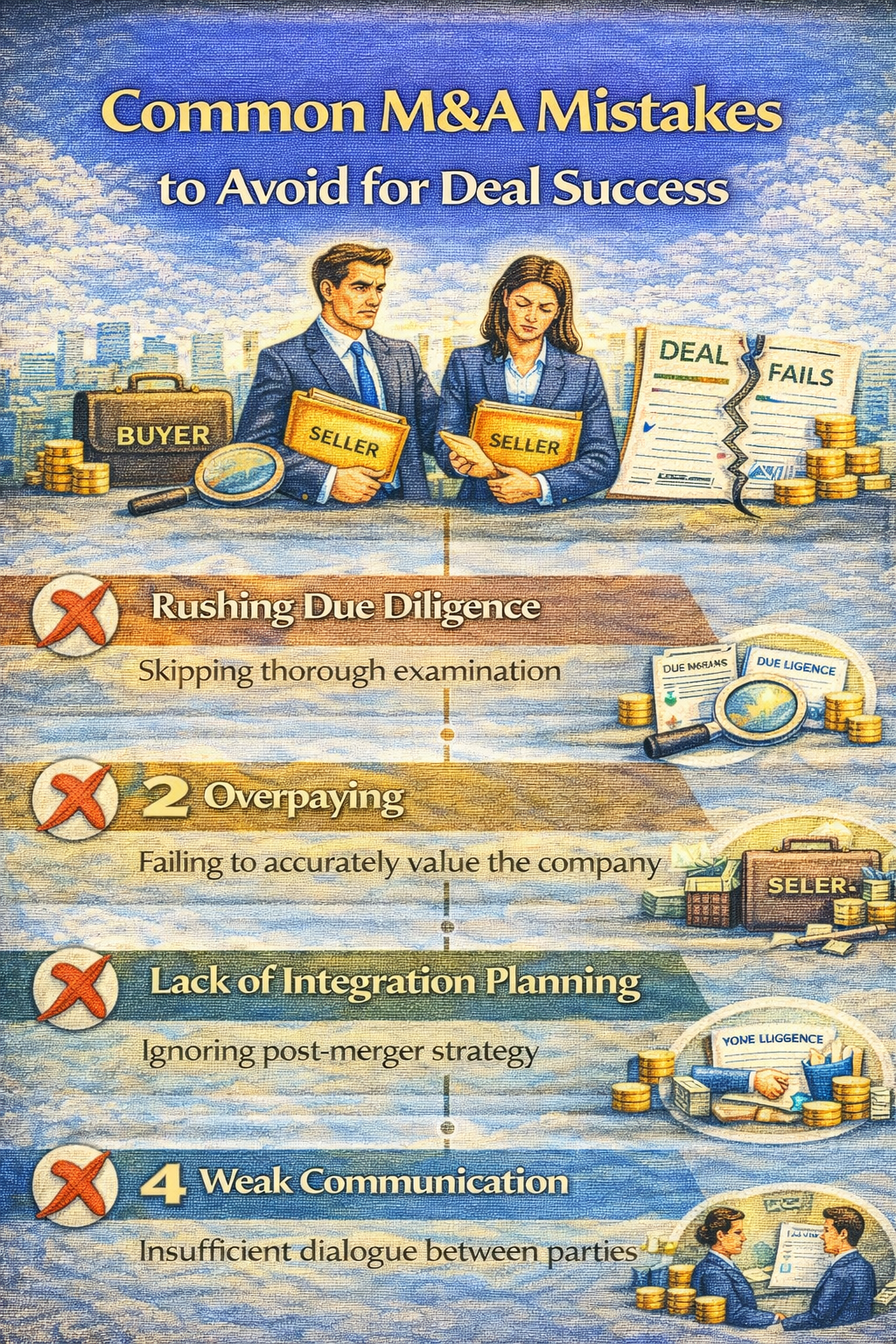
Why M&A Deals Fail: The Big Picture
Mergers and acquisitions represent transformative opportunities for growth, expansion, and value creation. Yet, statistics show that up to 70-90% of deals fail to deliver expected results. The reasons are multifaceted, often stemming from overlooked details during preparation, due diligence, negotiation, and integration. Our team at Legacy Launch Business Brokers has seen firsthand how small oversights cascade into major setbacks. By understanding these common mistakes, business owners and executives can position their deals for success.
From inadequate preparation to post-deal integration woes, the journey is fraught with challenges. In this post, we'll break down the top pitfalls, provide actionable countermeasures, and share insights from our mergers advisory services that have helped clients achieve optimal outcomes. Whether you're buying, selling, or merging, arming yourself with this knowledge is crucial.
Mistake 1: Inadequate Due Diligence
One of the most prevalent errors in M&A transactions is skimping on due diligence. Buyers and sellers alike often accept financial statements at face value without digging deeper. This oversight can uncover hidden liabilities such as off-balance-sheet debts, pending litigation, unresolved tax issues, or brittle IT systems. For instance, unreconciled add-backs in financials or missing contracts and intellectual property documentation are red flags that scream inadequate preparation.
Consider a scenario where a buyer projects $1 million in cost savings from synergies but fails to validate the sources. Without a line-item plan, this optimism leads to overpayment and disappointment. Sellers make this mistake too by not organizing a virtual data room (VDR) with watermarking, read-only access, and logs. The result? Deals stall or collapse under scrutiny.
To counter this, implement a comprehensive diligence workplan covering financials, legal, IT, and operations. Engage third-party quality of earnings (QoE) reports and legal reviews of key contracts. Our business valuation services emphasize thorough QoE analysis to ensure numbers hold up under pressure. This structured approach not only mitigates risks but also builds buyer confidence, accelerating the process.
Expanding on financial red flags, poor cash flow management or questionable revenue recognition practices often hide beneath polished balance sheets. Buyers must probe historical trends, normalize earnings, and stress-test projections with sensitivity analyses. Sellers should anticipate these inquiries by preparing normalized financials in advance, excluding one-time gains or non-recurring expenses. In one case we handled, early identification of tax notices prevented a multi-million-dollar escrow holdup, saving the deal.
Mistake 2: Flawed Valuation and Deal Structure
Valuation missteps rank high among M&A failures. Relying on single-point forecasts without downside scenarios or insisting on all-cash deals ignores market realities. Misaligned earnout metrics or undefined working capital pegs further complicate matters. Sellers frequently underestimate how structure impacts net proceeds after adjustments for cash, debt, and taxes.
A common trap is overlooking net working capital (NWC) dynamics. Formulas agreed upon in purchase agreements often require a true-up 90-120 days post-closing, when operations normalize. Without clarity on the 'why' and 'how much,' disputes arise, eroding trust. Buyers push for escrows to cover potential shortfalls, reducing seller payouts.
Our advisory experience shows that flexible structures—earnouts tied to controllable levers, seller notes, and escrows—align incentives. Independent valuations providing a range, rather than a point estimate, foster realistic expectations. Define NWC pegs early, monitor throughout the process, and negotiate terms transparently. This prevents re-trades that scuttle deals. In practice, we've structured earnouts based on verifiable revenue growth, ensuring both parties win.
Deal fatigue exacerbates these issues. Transactions stretch longer than anticipated, incurring tangible and intangible costs. Sellers presuming a handshake or LOI seals the deal ignore that structure often trumps price. Always model multiple scenarios: asset vs. stock sales, impacts on taxes, and post-closing adjustments.
Mistake 3: Poor Strategic and Cultural Fit
Not all deals make strategic sense, yet fuzzy investment theses lead to mismatched acquisitions. Customer or brand misalignment, diversion from core capabilities, or overconcentration in shrinking markets spell trouble. Cultural clashes amplify this, with integration failures cited in 70-90% of underperforming deals.
Buyers must draft a written investment thesis, map synergies (revenue, cost, capex), and set explicit no-go criteria. Board checkpoints before letters of intent (LOIs) prevent commitment to poor fits. Sellers overlook buyer due diligence, assuming funds and capability without verification, wasting time on unqualified suitors.
Cultural assessment goes beyond buzzwords. Evaluate management concentration—indispensable owners deter buyers fearing post-sale exodus. Analyze customer retention, market trends, and diversification. In our mergers advisory work, we've facilitated synergy maps that quantified upsell potential, validating strategic fits and boosting valuations by 15-20%.
Post-LOI performance dips are another pitfall. Distracted teams underperform, triggering material adverse change clauses. Maintain operations as usual, communicate transparently, and prepare transition plans early.
Mistake 4: Ignoring Regulatory and Tax Hurdles
Regulatory oversights, especially in concentrated markets or regulated industries, blindside parties. Antitrust screens, compliance histories, and state/local tax (SALT) exposures derail deals. Nexus evolution post-Wayfair ruling means undisclosed liabilities in sales or income taxes across jurisdictions.
Sellers fail to quantify SALT, prompting buyer escrows or walkaways. Poor accounting practices—disorganized records or lack of audits—erode credibility. Legal due diligence misses lawsuits, IP disputes, or non-compliant contracts.
Mitigate with early antitrust counsel, specialist advisors, and remedy planning (divestitures, commitments). For SALT, map nexus, register, and remit correctly. Annual audits signal strong governance. Our services include compliance checklists that flag these issues pre-LOI, smoothing paths to close.
Mistake 5: Neglecting IT, Cybersecurity, and Integration Planning
Modern M&A demands IT scrutiny. Outdated systems, cybersecurity vulnerabilities, or unassessed third-party risks expose buyers to breaches and fines. Integration preparation is often an afterthought, leading to operational chaos.
Conduct dedicated assessments of tech stacks, data privacy (GDPR/CCPA analogs), software licenses, and vendor risks. Plan IT harmonization pre-close. Sellers should clean 'the room' first—organize financials, secure data rooms, and document processes.
We've advised on cybersecurity audits that uncovered legacy vulnerabilities, negotiated remediation credits, and preserved deal value. Poor integration stems from cultural neglect; foster communication to align teams.
Mistake 6: Seller-Side Oversights and Deal Fatigue
Sellers presume deals post-LOI, ignore buyer vetting, or overlook earnings quality. Concentrated management or unsustainable EBITDA components prompt re-trades. Deal fatigue sets in as timelines drag, emotions fray.
Counter by knowing SALT intricacies, diversifying management, and validating future cash flows. Engage advisors for objectivity. Our track record includes processes yielding multiple bids, minimizing fatigue through efficient management.
Mistake 7: Post-Merger Integration Failures
The real failure rate hits post-close. Without integration playbooks, synergies evaporate. Address cultural integration, customer retention, and change management from day one.
Our advisory extends to post-merger support, ensuring seamless transitions and realized value.
How Legacy Launch Business Brokers Prevents These Mistakes
With deep expertise in mergers advisory, we bring proven methodologies. Our process includes diligence workplans, valuation ranges, strategic mapping, and compliance reviews. Clients benefit from our hands-on guidance, turning potential pitfalls into strengths. Trusted for transparency and results, we deliver deals that endure.
Frequently Asked Questions
What is the most common mistake in M&A due diligence?
The most common mistake is inadequate due diligence, particularly accepting financials without probing hidden liabilities like off-balance-sheet debts, litigation, or tax issues. Buyers often skip detailed QoE reports or IT assessments, while sellers fail to prepare organized data rooms. This leads to surprises that erode value or kill deals. To avoid it, create a functional workplan, use third-party experts, review contracts and IP thoroughly, and implement VDRs with access controls. In our experience, early diligence uncovers 20-30% valuation adjustments, protecting all parties. Comprehensive checks on customer dynamics, market trends, and cybersecurity further safeguard transactions, ensuring sustainable post-deal performance.
How does flawed valuation impact M&A deals?
Flawed valuation, relying on optimistic single-point forecasts without sensitivity analysis, results in overpayment or re-trades. Misaligned structures like rigid all-cash terms or undefined working capital pegs create disputes. Earnouts with uncontrollable metrics frustrate sellers. Flexible approaches—ranges from independents, earnouts on verifiable KPIs, seller notes—align interests. Monitor NWC diligently for true-ups. Poor structures reduce net proceeds after taxes and adjustments. We've structured deals with downside protections, delivering 10-15% higher effective values by negotiating escrows and contingencies thoughtfully.
Why is strategic fit crucial in mergers and acquisitions?
Poor strategic fit arises from vague theses, causing customer misalignment or capability diversion. Cultural clashes compound issues, contributing to 70-90% failure rates. Map synergies explicitly—revenue upsells, cost savings, capex efficiencies—and set no-go criteria. Assess management key-person risks and market dynamics. Pre-LOI board reviews prevent bad commitments. In practice, validated fits boost synergies realization by 25%. Sellers must vet buyers' capabilities to avoid time-wasters. This holistic evaluation ensures long-term value creation beyond the transaction.
What role do taxes play in M&A mistakes?
Tax oversights, especially SALT nexus post-Wayfair, create unknown liabilities leading to escrows or deal breaks. Sellers unaware of multi-jurisdictional exposures face renegotiations. Structure impacts after-tax proceeds—asset vs. stock sales. Quantify exposures early, register appropriately, and model scenarios. Poor accounting hides issues. Annual audits and tax specialists mitigate risks. Our processes include SALT mappings, preventing surprises and maximizing seller equity in every deal.
How can sellers avoid deal fatigue in M&A?
Deal fatigue stems from prolonged timelines, unexpected costs, and emotional tolls. Sellers presume LOIs finalize deals, ignoring structure details. Prepare for 6-12 month processes with advisors managing communications. Set milestones, maintain operations, and secure multiple buyers for leverage. Transparent expectations on true-ups and adjustments curb frustration. We've streamlined processes, closing deals 20% faster by proactive management and clear playbooks.
What are red flags in M&A financials?
Red flags include unreconciled add-backs, revenue recognition anomalies, unsustainable EBITDA components, poor cash flows, and hidden debts. Buyers must normalize earnings, excluding one-offs. Sellers overlooking QoE quality invite re-trades. Third-party validations confirm sustainability. Detailed reviews of historicals and projections reveal true health, avoiding overvaluations.
Why neglect cybersecurity in M&A?
Ignoring cybersecurity exposes to breaches, fines, and integration costs. Outdated stacks, vendor risks, data privacy gaps are common. Dedicated assessments pre-close identify fixes. Plan IT merges early. This oversight dooms modern deals amid rising threats.
How to handle working capital in M&A?
Undefined NWC pegs lead to post-close disputes. Agree formulas early, estimate accurately, true-up after normalization. Monitor during process to deliver targets. Advisors align expectations, minimizing adjustments and preserving value.
What causes post-M&A integration failures?
Integration fails from cultural neglect, poor planning, synergy shortfalls. Develop playbooks covering teams, systems, customers. Communicate vision, retain talent. Proactive management realizes 80% of projected benefits.
Do all M&A deals need advisors?
Yes, advisors prevent pitfalls through expertise in diligence, valuation, negotiations. They vet parties, structure optimally, manage fatigue. DIY risks failures; pros enhance outcomes significantly.
Final Thoughts
Avoiding these common M&A mistakes requires foresight, preparation, and expert guidance. Partner with proven advisors like Legacy Launch Business Brokers to transform risks into opportunities. Start your journey to a successful deal today.