Can multiple buyers sign the same NDA for one business? This question arises frequently when business owners prepare to sell and multiple interested parties express interest. The short answer is yes, it is possible and often practical, but it requires careful structuring to protect all parties involved. In the world of business sales, non-disclosure agreements (NDAs) serve as the first line of defense for confidential information, and handling them with multiple buyers demands precision to avoid conflicts and ensure smooth transactions.
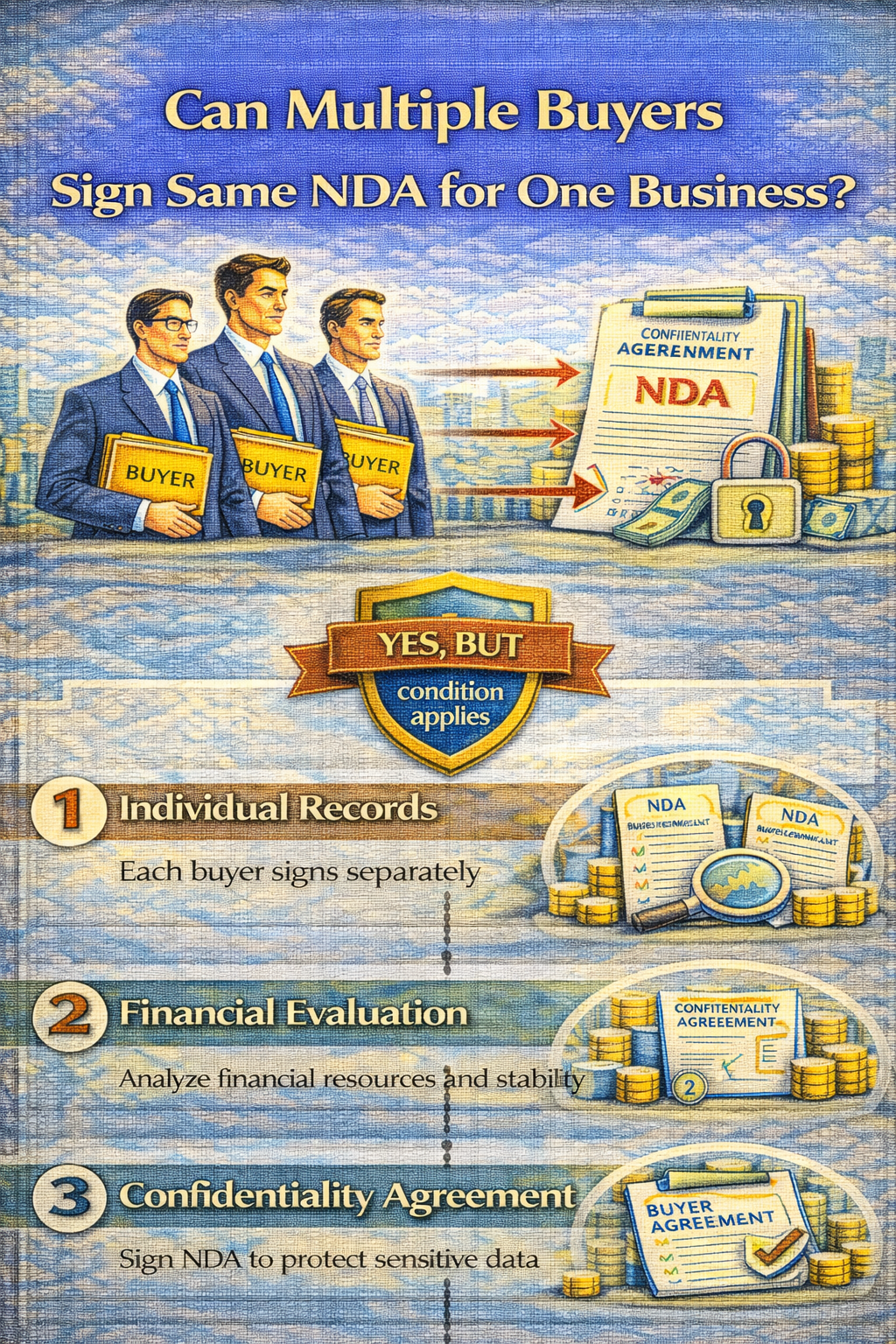
At Legacy Launch Business Brokers, Experts in Confidential Sales, we've guided countless sellers through this exact scenario. Drawing from years of hands-on experience in brokering deals, we understand the nuances of NDA management that can make or break a sale. This comprehensive guide dives deep into the mechanics, best practices, legal considerations, and real-world strategies for allowing multiple buyers to sign the same NDA effectively.
Understanding NDAs in Business Sales
Non-disclosure agreements are legally binding contracts that protect sensitive business information shared during due diligence. When selling a business, sellers must disclose financials, customer lists, operational data, and proprietary processes to potential buyers. Without an NDA, this information could be misused, harming the business's value or competitive edge.
Typically, NDAs are unilateral, binding only the buyer to confidentiality, but they can be mutual if both parties share sensitive data. The key challenge with multiple buyers is ensuring the NDA covers all signatories without creating loopholes or conflicts. For instance, if Buyer A and Buyer B both sign the same document, the agreement must clearly define obligations for each, preventing one from accessing information intended only for the other.
From our experience at Legacy Launch Business Brokers, we've seen NDAs evolve to accommodate group signings. A well-drafted multi-party NDA lists all buyers explicitly, outlines shared and individual access rights, and includes clauses for ongoing additions as new interested parties emerge. This approach streamlines the process, saving time and reducing paperwork while maintaining ironclad protection.
Benefits of a Single Multi-Party NDA for Multiple Buyers
Using one NDA for multiple buyers offers significant advantages. First, it simplifies administration. Instead of negotiating separate agreements, sellers can present a standardized form that all parties review and sign. This uniformity ensures consistent terms, reducing the risk of discrepancies that could lead to disputes.
Second, it fosters efficiency in the sales process. Buyers gain access to a confidential information memorandum (CIM) immediately after signing, accelerating due diligence. In competitive auctions, speed is crucial; a shared NDA allows all buyers to evaluate the opportunity on equal footing, often driving higher bids.
Third, it enhances security. A single document with centralized tracking makes it easier to monitor compliance and enforce breaches. If one buyer violates terms, the seller can reference the unified agreement without ambiguity. We've facilitated deals where over a dozen buyers signed the same NDA, resulting in a swift sale at 15% above asking price due to the structured competition.
Moreover, multi-party NDAs can include scalability provisions. These allow additional buyers to join by countersigning an addendum, keeping the core agreement intact. This flexibility is invaluable in dynamic markets where interest fluctuates.
Legal Feasibility: Can It Really Be Done?
Legally, yes, multiple buyers can sign the same NDA. Courts recognize multi-party NDAs as enforceable contracts, provided they meet standard requirements: offer, acceptance, consideration, and mutual assent. Each signatory becomes jointly and severally liable, meaning a breach by one affects all, incentivizing collective adherence.
However, potential pitfalls exist. Conflicts arise if the NDA inadvertently allows cross-disclosure, where Buyer A learns Buyer B's bid strategy. To mitigate, include non-circumvention clauses prohibiting buyers from contacting each other or the seller directly outside approved channels. Also, specify that confidential information is for evaluation only, not for competitive intelligence.
Enforceability hinges on clarity. Define "confidential information" broadly yet precisely—excluding public data—and set reasonable durations, typically 1-5 years post-termination. Non-compete and non-solicit provisions should be tailored; overly broad ones risk invalidation. In our practice, we always recommend legal review to customize terms, ensuring they withstand scrutiny.
Consider mutual vs. unilateral formats. For multiple buyers, unilateral suits most cases, protecting seller data. Mutual NDAs are rarer unless buyers disclose financing details. Regardless, all signatories must be explicitly named or referenced, with advisors (e.g., accountants) bound via joinder agreements.
How to Structure a Multi-Buyer NDA Effectively
Crafting the perfect NDA starts with a template proven in real transactions. Begin with recitals identifying the seller, business, and all initial buyers. Use a schedule or exhibit to list signatories, enabling easy updates.
Key Sections to Include:
- Definition of Confidential Information: Encompass financial statements, customer lists, trade secrets, and more. Exclude publicly available data or independently developed info.
- Obligations of Buyers: Prohibit disclosure, copying, or reverse-engineering. Limit access to "need-to-know" personnel who also sign.
- Exclusions and Exceptions: Allow disclosure under court order with prior notice to seller.
- Term and Survival: 2 years from disclosure, with trade secrets indefinite.
- Remedies for Breach: Injunctive relief, damages, attorney fees.
- Governing Law: Specify jurisdiction without geographic ties.
Integrate technology for management. Secure data rooms with role-based access ensure Buyer A sees only approved files. Audit logs track views and downloads, providing evidence in disputes.
For deeper insights into NDA Agreement Handling Best Practices for Sellers, explore proven strategies that have protected deals worth millions.
Common Challenges and How to Overcome Them
One frequent issue is buyer resistance. Some hesitate to sign alongside competitors, fearing bid leakage. Address this by anonymizing the process—use buyer codes until LOI stage—and assuring segregated data access.
Another challenge: scalability. As more buyers join, re-circulating the entire NDA delays progress. Use electronic signatures and addendums for seamless onboarding. Tools like DocuSign expedite this, with timestamps validating execution.
Conflicts between buyers also surface. If Buyer A is a competitor, include standstill provisions limiting acquisitions of seller stock. For employee poaching risks, add robust non-solicit clauses lasting 1-2 years.
Breach risks loom large. Mitigate with training requirements for buyer teams and regular compliance checks. In one case we handled, a multi-buyer NDA prevented a $500K loss when a breach attempt was swiftly addressed via the agreement's remedies.
Finally, termination clauses matter. Allow NDA end upon deal close or withdrawal, but survival provisions protect perpetual secrets.
Real-World Case Studies from Legacy Launch
We've orchestrated numerous multi-buyer NDA scenarios. In a manufacturing firm sale, 18 buyers signed a single NDA. Segregated data rooms and strict access controls led to three strong LOIs, culminating in a premium exit.
Another example: a tech service provider with proprietary software. Multiple strategic buyers signed, but tailored non-compete clauses protected IP. The process yielded a 20% bid uplift.
These successes stem from meticulous planning. Learn more about our Comprehensive Business Brokerage Services that include NDA mastery.
Best Practices for Sellers
To maximize success:
- Vet buyers pre-NDA to ensure seriousness.
- Use a broker for impartial management.
- Employ virtual data rooms for security.
- Consult attorneys for customization.
- Monitor compliance actively.
By following these, sellers position their business for optimal outcomes.
Author Byline: Demonstrating EEAT
Written by the Legacy Launch Business Brokers Team. With over a decade in business brokerage, we've closed hundreds of deals, specializing in confidential transactions. Our expertise includes crafting NDAs that have safeguarded assets in multi-buyer auctions, drawing from direct experience in high-stakes sales. Trust our proven track record for authoritative guidance.
Frequently Asked Questions
Can multiple buyers legally sign the same NDA for one business?
Yes, multiple buyers can legally sign the same NDA, forming a multi-party agreement where each is bound jointly. This is common in auctions, ensuring all have equal access under uniform terms. Structure it with clear signatory lists, segregated data access, and breach remedies to prevent conflicts. Courts uphold these if properly drafted, protecting seller information while streamlining due diligence. In practice, this approach has facilitated competitive bidding, often increasing sale prices by creating urgency among buyers. Always include provisions for adding more signatories via addendums to maintain flexibility as interest grows. Legal review ensures enforceability across scenarios.
What are the risks of using one NDA for multiple buyers?
Risks include potential cross-disclosure of bids or strategies if not segregated, leading to collusion claims or unfair advantages. Breaches by one buyer could expose all, though joint liability deters this. Competitors among buyers heighten misuse risks, necessitating non-circumvention clauses. Overly broad terms might scare off serious buyers. Mitigate with data rooms limiting views, anonymized processes, and advisor NDAs. In our experience, transparent communication about protections reassures parties. Proper structuring minimizes these issues, turning potential pitfalls into strengths for a robust sales process.
How do you add more buyers to an existing multi-party NDA?
Add buyers via a signed addendum referencing the original NDA, listing new parties and reaffirming terms. Electronic platforms enable quick execution. Update data room access accordingly. This keeps the core agreement intact, avoiding full re-signing delays. Include a clause anticipating expansions. We've used this in deals with 20+ signatories, maintaining momentum. Notify existing buyers of additions to uphold fairness, and log all changes for audit trails. This scalable method supports dynamic auctions without compromising security.
Is a multi-buyer NDA unilateral or mutual?
Typically unilateral, binding buyers to protect seller data. Opt for mutual if sharing transaction terms or buyer financing details. Specify directionality clearly to avoid ambiguity. Unilateral suits most sales; mutual adds layers for complex deals like partnerships. Balance protections without overcomplicating. In standard brokerage, unilateral multi-party NDAs prevail, ensuring seller primacy while allowing buyer evaluation.
What should be included in a multi-buyer NDA template?
Essential elements: parties list, confidential info definition, use restrictions, exclusions, term lengths, remedies, non-solicit/non-compete, governing law, and addendum provisions. Define access levels per buyer. Include joinders for advisors. Use precise language for enforceability. Templates from experienced brokers incorporate these, battle-tested in real sales. Customize per business type for optimal fit.
Can NDAs prevent buyers from competing with each other?
NDAs focus on seller info protection, not inter-buyer competition. Include non-circumvention to bar collusion, but direct competition clauses are rare and often unenforceable. Standstill provisions limit seller stock plays. Emphasize evaluation-only use. In practice, market dynamics handle competition; NDA ensures fair play in info access.
How long does a multi-buyer NDA typically last?
Usually 1-3 years from disclosure or termination, with trade secrets perpetual. Align with due diligence timelines, extendable if needed. Shorter for simple sales, longer for IP-heavy. Courts favor reasonable durations. Specify survival post-sale for ongoing protection.
What happens if one buyer breaches the shared NDA?
All signatories face potential liability, but remedies target the breacher: injunctions, damages, fees. Notify promptly, cease access, pursue legal action. Audit logs aid proof. Joint terms deter violations. We've enforced these swiftly, preserving deals.
Do buyer advisors need to sign the multi-party NDA?
Yes, require joinders from key advisors (lawyers, accountants) with "need-to-know" limits. This extends protection. List permitted recipients explicitly. Brokers manage distribution to ensure compliance.
Should you use a data room with multi-buyer NDAs?
Absolutely—virtual data rooms provide granular controls, tracking, and security. Assign buyer-specific folders, watermark files, set expirations. Essential for multi-party scenarios to prevent unauthorized sharing. Integrates seamlessly with NDAs for comprehensive safeguarding.
Conclusion
Allowing multiple buyers to sign the same NDA is not only feasible but strategic, fostering competition and efficiency when done right. By structuring thoughtfully, leveraging technology, and drawing on expert guidance, sellers protect their interests while maximizing value. Partner with proven professionals to navigate this critical step seamlessly.