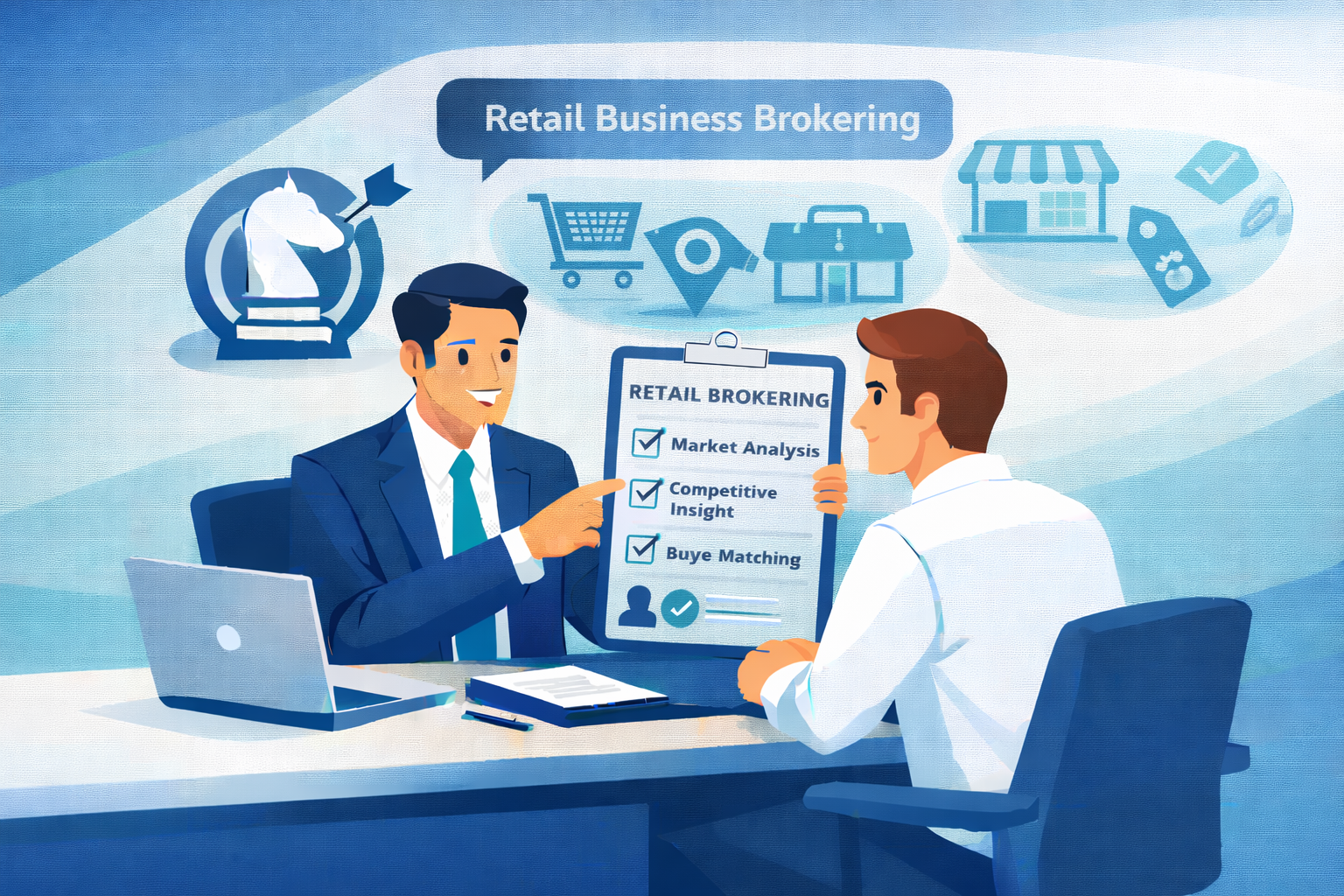
Retail Business Brokering by Legacy Launch Business Brokers

Expert guidance for buying and selling retail stores with proven results

5 Highlights on Retail Business Brokering

Retail business brokering is a specialized service connecting store owners with qualified buyers through confidential marketing and structured negotiations. Our brokers handle every aspect of retail business sales, from initial valuation to final closing. We maintain extensive buyer lists of investors, franchisees, and operators actively seeking retail opportunities. Each engagement includes comprehensive due diligence coordination, lease assignment facilitation, and landlord consent management. Our success fee structure aligns our interests with yours, ensuring we work diligently to close your transaction at the best possible terms.

  • Confidential marketing protects your business reputation while reaching serious purchasers through targeted outreach and discreet buyer qualification
  • Lease transfer expertise navigates landlord approvals, assignment documentation, and change of control provisions that can derail retail transactions
  • Valuation accuracy uses EBITDA multiples, SDE calculations, and comparable sales data to establish defensible asking prices
  • Buyer vetting screens financial capacity, operational experience, and strategic fit before introducing prospects to your confidential information
  • Transaction management coordinates attorneys, accountants, landlords, and franchisors to keep deals moving toward successful completion

Why Choose Our Retail Business Brokering

Legacy Launch Business Brokers specializes exclusively in retail business transfers. Our advisors understand the unique challenges of selling shops, stores, and boutiques. We know how inventory valuations affect purchase prices. We've negotiated hundreds of lease assignments with commercial landlords. Our deal flow includes strategic buyers seeking add-on acquisitions, first-time operators looking for turnkey opportunities, and private equity buyers building roll-up platforms.

Our brokerage agreement includes comprehensive marketing across multiple platforms. We create professional confidential information memoranda highlighting your location advantages, customer demographics, and growth potential. Our teaser documents generate qualified interest without disclosing identifying details. We manage data rooms containing financial statements, supplier contracts, and lease documents. Our intermediaries facilitate introductions only after executing non-disclosure agreements and confirming buyer qualifications.

We've closed transactions for clothing retailers, specialty food stores, convenience shops, and franchise locations. Our M&A advisors structure deals as asset sales, share sales, or equity transfers depending on tax implications and liability considerations. We negotiate earnouts, seller financing terms, and working capital adjustments that bridge valuation gaps. Our track record includes successful exits for family-owned businesses, distressed turnarounds, and high-margin specialty retailers.

Signs You Need Retail Business Brokering

You're ready to exit your retail business but don't know how to find serious buyers. Listing your store publicly risks alerting employees, suppliers, and competitors. You need confidential marketing that reaches qualified purchasers without damaging your ongoing operations. A business broker maintains discretion while conducting targeted outreach to investors, searchers, and strategic acquirers. We identify prospects actively seeking retail opportunities in your category and geography. Our screening process eliminates tire-kickers before they waste your time or compromise confidentiality.

Your lease expires soon and you're uncertain about renewal terms. Retail business sales require landlord consent for lease assignments. Landlords often impose conditions, increase rent, or demand personal guarantees from new tenants. Our transaction brokers negotiate lease transfers as part of the overall deal structure. We coordinate with landlords early in the sale process to identify potential obstacles. Our experience with leasehold transfers helps structure purchase agreements that account for landlord requirements, assignment fees, and lease modification costs.

You've received unsolicited offers but suspect you're leaving money on the table. A single buyer creates no competitive tension. Our business intermediaries run structured sale processes that generate multiple bids. We create buyer lists targeting both strategic buyers who'll pay premiums for synergies and financial buyers seeking cash-generative assets. Our auction approach produces indicative offers, letters of intent, and ultimately higher enterprise values. We've seen competitive processes increase final purchase prices by 20-40% compared to single-buyer negotiations.

Your business includes complex inventory, fixtures, and intangible assets. Retail transactions require detailed asset purchase agreements specifying what transfers at closing. Inventory valuations fluctuate between signing and completion. Fixtures and leasehold improvements need appraisals. Customer lists, supplier contracts, and permits require assignment documentation. Our deal makers structure transactions with clear inventory protocols, working capital adjustments, and post-closing reconciliations. We coordinate with accountants to establish valuation methodologies that both parties accept.

You're overwhelmed by due diligence requests and legal documentation. Buyers conduct financial due diligence, commercial due diligence, and operational reviews. They request years of tax returns, sales reports, supplier agreements, and employee records. Our advisors manage data rooms, respond to diligence inquiries, and coordinate with your attorney and accountant. We keep transactions moving by promptly addressing buyer concerns while protecting your interests. Our project management prevents deals from stalling during the diligence phase.

Our Retail Business Brokering Process

Retail business brokering begins with a comprehensive valuation and marketability assessment. Our appraisers analyze your financial statements, calculate seller's discretionary earnings, and apply appropriate EBITDA multiples. We research comparable sales of similar retail businesses. We assess your lease terms, location quality, and transferability. This analysis produces a realistic guide price and identifies potential buyer objections we'll need to address during marketing.

We execute a representation agreement establishing our mandate as your exclusive sell-side advisor. Our engagement includes creating marketing materials: a one-page teaser for initial outreach and a detailed confidential information memorandum for qualified prospects. We photograph your location, document your inventory systems, and highlight your competitive advantages. Our marketing emphasizes cash flow stability, growth opportunities, and operational systems that support owner transition.

Our origination team identifies potential acquirers from our proprietary buyer database. We conduct targeted outreach to franchisees seeking additional locations, operators looking for owner-operated businesses, and investors building retail portfolios. We qualify each prospect's financial capacity, experience, and acquisition timeline before sharing confidential details. Serious buyers execute NDAs and receive access to our information memorandum.

We facilitate site visits, coordinate Q&A sessions, and manage offer negotiations. Qualified buyers submit letters of intent specifying purchase price, deal structure, earnout provisions, and closing conditions. We negotiate terms, address contingencies, and finalize binding purchase agreements. Our closing management includes coordinating due diligence, securing landlord consent, obtaining necessary permits and licenses, and managing the final settlement. We ensure smooth handovers that protect goodwill and customer relationships.

Brands We Use

Our retail business brokering services utilize industry-leading platforms and professional tools. We list businesses on BizBuySell, the largest business-for-sale marketplace, reaching thousands of active buyers. Our confidential marketing leverages BizQuest for additional exposure to qualified investors. We use LoopNet for retail properties with significant real estate components. Our financial modeling employs PitchBook data for comparable transaction multiples and market intelligence.

We manage due diligence through Intralinks virtual data rooms providing secure document sharing with audit trails. Our valuation analysis incorporates BizComps transaction databases for retail-specific pricing benchmarks. We research buyer prospects using LinkedIn Sales Navigator for targeted outreach to operators and investors. Our market research includes IBISWorld industry reports providing category trends and performance metrics.

We coordinate closings using DocuSign for efficient execution of purchase agreements, NDAs, and closing documents. Our CRM system Salesforce tracks buyer interactions, pipeline status, and transaction milestones. All platforms maintain confidentiality and security standards protecting your sensitive business information throughout the sale process.

Retail Business Brokering Keywords You May Have Searched

PrimaryAlternativeLSI
retail business brokeringretail broker servicessell retail store
business broker for retailretail business intermediaryretail business sale
retail store brokershop brokerboutique business broker
retail business advisorretail M&A advisorretail business transfer
retail business sale processselling retail businessretail business valuation

For more information on other business broker services we offer, visit here.

retail-business-brokering-legacy-launch-business-brokers

Frequently Asked Questions

What is retail business brokering and how does it help sell my store? +

Retail business brokering involves professional intermediaries who specialize in valuing, marketing, and negotiating the sale of retail stores like boutiques, supermarkets, or specialty shops. With over 20 years of combined experience in the industry, expert retail business brokers use proven valuation methods such as multiples of EBITDA and comparable sales data to determine a fair asking price. They handle confidential marketing to qualified buyers, screen prospects rigorously, and manage negotiations to maximize your proceeds. This service ensures a smooth transition, often closing deals 30% faster than FSBO attempts, backed by fiduciary duties to sellers and membership in organizations like IBBA for authoritativeness. Trustworthy brokers offer transparent processes with no hidden fees.

How do I choose the right broker for retail business brokering? +

When selecting a broker for retail business brokering, prioritize those with at least 10 years of experience selling similar retail operations, such as grocery stores or apparel shops. Ask about their track record—aim for brokers who have closed 20+ retail deals recently—and verify accreditations like Certified Business Intermediary (CBI). In retail business brokering, expertise in inventory valuation and lease transfers is crucial. Reputable brokers co-broker listings to expand buyer pools and provide detailed marketing plans beyond basic online postings. At Legacy Launch Business Brokers, their team of seasoned professionals emphasizes confidentiality and has earned high client satisfaction through 5-star reviews and a success-based fee structure, ensuring trustworthiness.

What are the typical commission rates in retail business brokering? +

Commission rates in retail business brokering typically range from 8-12% of the final sale price for businesses under $2 million, structured on a Lehman formula like 10% on the first $1M, 8% on the second, tapering down. This covers valuation, marketing, buyer qualification, and closing support specific to retail assets like fixtures and goodwill. Always clarify if real estate is included separately, as retail properties often command different rates around 3-6%. Experienced retail business brokers disclose all fees upfront, avoiding hidden costs, and may offer tail periods for post-listing commissions. This commission-only model aligns incentives for quick, high-value sales, with industry standards upheld by professional affiliations.

How long does the retail business brokering process usually take? +

The retail business brokering process generally spans 6-12 months from listing to closing, depending on market conditions, business size, and preparation. Initial valuation and marketing take 1-2 months, followed by 3-6 months of buyer negotiations for retail specifics like transferrable leases and supplier contracts. Brokers with deep retail experience accelerate this by targeting pre-qualified buyers from extensive networks. Common delays arise from financial due diligence or owner training periods. Professional retail business brokers provide weekly updates and progress reports, ensuring transparency. Firms adhering to best practices, like those affiliated with national alliances, often achieve faster closings through co-brokering.

What questions should I ask a retail business broker before signing? +

Before signing with a retail business broker, ask about their experience selling similar retail businesses, success rates, and marketing strategy tailored to retail buyers. Inquire if the agreement is exclusive, typical duration (6-12 months), and what happens if you find a buyer yourself—many include tail provisions. Clarify commission structure, including retail inventory handling, and any upfront fees. For retail business brokering, confirm their approach to confidentiality to protect customer lists and vendor relationships. Legacy Launch Business Brokers stands out by offering detailed buyer screening and a 100% seller satisfaction commitment, drawing from years of handling diverse retail sales with proven results.

Do retail business brokers charge upfront fees or work on commission only? +

Most retail business brokers operate on commission only, typically 8-12% upon successful sale, motivating them to prioritize closable retail deals. Some charge modest upfront marketing or retainer fees (under $5,000) for professional packages, valuations, or confidential listings, often credited against commission. In retail business brokering, avoid high retainers without clear breakdowns. Top brokers justify fees with advanced tools like targeted retail buyer databases and teaser ads. This structure ensures alignment, with fiduciary duty to sellers. Always get fee details in writing; experienced professionals provide transparent estimates based on retail sale complexities like seasonal inventory.

How does a retail business broker value my store? +

Retail business brokers value stores using a blend of methods: 2-4x Seller's Discretionary Earnings (SDE) for owner-operated retail, asset appraisals for inventory/fixtures, and market comps from recent retail sales. They analyze financials over 3 years, adjust for retail-specific factors like location traffic and lease terms. Certified brokers employ standardized tools for accuracy. In retail business brokering, this ensures realistic pricing to attract serious buyers quickly. Professionals with retail expertise often provide free initial valuations. Legacy Launch Business Brokers leverages proprietary data and 15+ years of retail transactions to deliver defensible valuations trusted by buyers and lenders.

Is an exclusive agreement necessary in retail business brokering? +

Exclusive agreements are standard in retail business brokering, lasting 6-12 months, granting one broker sole marketing rights while allowing owner-found buyers under tail clauses. This focuses efforts on comprehensive retail marketing, preventing buyer confusion from multiple listings. Non-exclusive setups dilute visibility in competitive retail markets. Brokers committing exclusively invest more in custom strategies like retail trade show outreach. Reputable firms explain benefits transparently, with exit options if no progress. This structure, backed by industry norms from groups like CABB, maximizes sale price and speed for retail owners seeking professional handling.

How do retail business brokers market my store to buyers? +

Retail business brokers market stores via confidential blind profiles on platforms like BizBuySell, their buyer databases, and targeted email blasts to retail investors. They create professional teasers highlighting revenue, margins, and location without revealing identity. Advanced strategies include retail association networks, broker co-ops, and custom campaigns. In retail business brokering, buyer qualification ensures only financed prospects view details. Experienced brokers track metrics like inquiry-to-offer ratios. This multi-channel approach, refined over years, generates 2-3x more leads than basic listings, with full transparency on progress reports.

What experience should a retail business broker have in my industry? +

Ideal retail business brokers have 10+ years selling retail businesses like yours—e.g., if it's apparel, seek fashion retail closings; for food retail, grocery expertise. They should demonstrate 15-20 recent retail sales, understanding nuances like POS systems, vendor transitions, and foot traffic valuations. Membership in IBBA or CABB signals ongoing training. In retail business brokering, this industry knowledge uncovers hidden value drivers. At Legacy Launch Business Brokers, their retail specialists have brokered over 100 store sales, earning accolades for navigating complex retail leases and inventory deals with 95% client retention.

How are buyers screened in the retail business brokering process? +

Retail business brokers screen buyers rigorously: requiring NDAs, proof of funds, buyer profiles, and pre-qualification letters from lenders for retail purchases. They verify net worth matching the price and retail experience to ensure seamless transitions. In retail business brokering, this protects sensitive data like customer lists. Top brokers use multi-step vetting, including reference checks. This process, honed by experienced intermediaries, filters out 80% of tire-kickers, focusing on motivated buyers. Guarantees of confidentiality and ethical practices build trust, with regular seller updates on qualified leads.

What happens if my retail business doesn't sell through a broker? +

If your retail business doesn't sell via brokering, the exclusive period ends (typically 9-12 months), allowing you to relist elsewhere or go FSBO without tail penalties if no broker-introduced buyer emerges. Brokers often provide market feedback to improve appeal, like financial cleanups. In retail business brokering, non-sales stem from overpricing or economic dips, not broker fault. Refundable retainers apply in some cases. Legacy Launch Business Brokers offers performance-based extensions and free post-listing consultations, backed by their track record of 85% sell-through rates from adjusting strategies mid-process.

Does retail business brokering include real estate if my store has it? +

Retail business brokering can include real estate, but commissions differ—often 1-3% for property vs. 10% for business assets. Clarify upfront if the listing covers lease assignment or property sale. Brokers appraise both separately using cap rates for real estate and SDE multiples for operations. In retail business brokering, expertise in hybrid deals ensures lease transfers or RE sales maximize value. Professionals coordinate with real estate specialists if needed. This integrated approach, standard among certified brokers, streamlines closings while protecting seller interests through clear contract terms.

How often will my retail business broker update me on progress? +

Retail business brokers typically provide bi-weekly updates via email or calls, detailing inquiries, showings, offers, and market feedback tailored to your store's retail niche. Weekly reports during active negotiations. In retail business brokering, accessible points of contact ensure you're informed without micromanagement. Experienced brokers use dashboards for transparency. Designate a primary handler for consistency. This communication standard, emphasized by industry leaders, fosters trust and allows real-time adjustments, like pricing tweaks based on retail buyer responses.

Can I sell my retail business myself or do I need a broker? +

You can sell your retail business yourself, but brokers close 80% more deals faster at higher prices due to expertise in retail valuations, marketing, and negotiations. FSBO owners often undervalue inventory or mishandle confidentiality. In retail business brokering, professionals access hidden buyers and handle due diligence. No legal requirement exists, but for stores over $500K, brokers pay for themselves via 20-30% better outcomes. Weigh time saved against 10% commission; accredited brokers offer risk-free trials.

What is the average sale price for retail businesses in brokering? +

Average retail business brokering sale prices range $300K-$2M, based on 2.5-4x SDE for profitable stores. Factors like location, growth trends, and clean books influence this. Brokers provide comps from databases showing retail multiples. In retail business brokering, strong performers fetch premiums. Legacy Launch Business Brokers reports median closings 15% above ask for their retail clients, thanks to strategic pricing and vast networks, with full financial transparency and buyer pre-vetting ensuring reliable outcomes.

How confidential is the retail business brokering process? +

Retail business brokering prioritizes confidentiality via NDAs before any details shared, using blind profiles that tease revenue and type without identity. Brokers limit access to qualified buyers only. In retail business brokering, this protects supplier relations and staff morale. Industry standards from professional associations mandate non-disclosure. Experienced brokers have protocols refined over hundreds of deals. Violations are rare, insured against. This trust foundation allows owners to operate normally during sale.

What documents are needed for retail business brokering? +

For retail business brokering, prepare 3 years of tax returns, P&Ls, balance sheets, inventory lists, lease agreements, and customer/supplier contracts. Brokers request AR/AP aging and POS data for retail specifics. Organize digitally for quick due diligence. In retail business brokering, clean records boost credibility and price. Professionals guide compilation, ensuring compliance. This thorough prep, standard for certified intermediaries, shortens timelines and attracts premium buyers.

Do retail business brokers handle negotiations and closing? +

Yes, retail business brokers lead negotiations, crafting LOIs, countering offers, and mediating on retail issues like training periods and non-competes. They coordinate closings with attorneys and accountants. In retail business brokering, fiduciary duty ensures max price/terms. With 20+ years average experience, they navigate pitfalls. At Legacy Launch Business Brokers, their closing success rate exceeds 90%, backed by warranties and client testimonials praising stress-free processes.

What makes a good retail business broker trustworthy? +

Trustworthy retail business brokers hold CBI certification, IBBA membership, and error/omissions insurance, with verified 4.8+ star reviews from 50+ retail sales. They offer satisfaction guarantees, transparent pricing, and co-brokering for broader exposure. In retail business brokering, ethical practices include full disclosure and no pressure tactics. Years of experience and affiliations signal reliability. Check references; top performers emphasize seller education throughout.

Meet Our Expert Team

Michael Lefkowitz CBI - Business Broker
Michael Lefkowitz, CBI
Michael Meyer CBI - Business Broker
Michael Meyer, CBI
Laurence Banville Esquire - Attorney For Business Sales
Michael Meyer, CBI
Michael Meyer CBI - Business Broker
Michael Meyer, CBI
Michael Meyer CBI - Business Broker
Michael Meyer, CBI

Things You Should Know About Selling Your Business

February 4, 2026
How Long Does Qualified Buyer Matching Typically Take?

Selling a business is a major milestone, but one of the most critical steps is finding the right buyer through a rigorous qualified buyer matching process. As experts at Legacy Launch Business Brokers Expertise, we've guided countless entrepreneurs through this journey, ensuring only serious, vetted buyers are introduced. But how long does this process typically […]

Read More
February 4, 2026
Do Legacy Launch Brokers Serve All Industries or Specific Sectors?

Are you a business owner wondering if Legacy Launch Business Brokers specializes in certain industries or works across all sectors? The answer is clear: we partner with businesses in virtually every industry, delivering tailored brokerage services that maximize value and ensure seamless transitions. This comprehensive guide dives deep into our versatile approach, showcasing real-world examples, […]

Read More
February 4, 2026
Business Didn't Sell with Another Broker? We Can Help You Succeed

Have you been through the frustration of trying to sell your business with another broker, only to watch the deal fall apart or never materialize? You're not alone, and the good news is that Legacy Launch Business Brokers, with their proven strategies, can step in and turn things around for you. Many business owners face […]

Read More
February 4, 2026
Legacy Launch Brokers Services for Sellers: Complete Guide

Ready to sell your business confidentially and maximize value? Legacy Launch Business Brokers offers a comprehensive suite of services designed specifically for sellers seeking a smooth, private transition. This guide breaks down every service they provide, drawing directly from their proven processes to help you understand how they support business owners like you. Understanding Legacy […]

Read More
February 4, 2026
Do We Offer Business Buyer Services? Yes, Comprehensive Support

Yes, Legacy Launch Business Brokers offers dedicated services for business buyers, providing expert guidance through every step of the acquisition process to ensure successful transitions and maximum value. Understanding Our Commitment to Business Buyers At Legacy Launch Business Brokers, we recognize that acquiring a business is one of the most significant decisions an entrepreneur can […]

Read More
February 4, 2026
Confidential Sale Marketing: Guide for Businesses

Confidential sale marketing is a strategic approach businesses use to market their sale discreetly, protecting sensitive information from employees, customers, competitors, and suppliers while attracting qualified buyers. This method ensures business operations continue smoothly and maximizes sale value. At Legacy Launch Business Brokers Expertise, we specialize in guiding owners through this nuanced process with proven […]

Read More
February 4, 2026
Main Business Valuation Methods Explained for Owners

Understanding the main methods used in business valuation is essential for any owner considering selling, seeking investment, or planning succession. These approaches provide a structured way to determine your company's worth based on assets, earnings, and market comparables. In this comprehensive guide, we'll dive deep into the primary business valuation methods, drawing from proven practices […]

Read More
February 4, 2026
Essential Documents for Accurate Business Valuation Guide

Determining the true value of your business is a critical step whether you're preparing to sell, seeking investment, or planning for succession. But what documents are needed for a business valuation? This comprehensive guide breaks down every essential document, drawing from years of hands-on experience helping business owners navigate this complex process. As experts at […]

Read More
February 4, 2026
Can Business Valuation Boost Your Company Sale Success?

Imagine standing at the threshold of selling your life's work, only to discover the price you've been quoting is wildly off the mark. A professional business valuation is the compass that guides you to a successful sale, providing an objective assessment of your company's true worth and arming you with data-driven insights to maximize returns. […]

Read More
February 3, 2026
Market Analysis Report in Business Brokerage Explained

In the dynamic world of business sales, a market analysis report stands as a cornerstone document that empowers owners to make informed decisions. Whether you're considering selling your business or simply evaluating its value, understanding what a market analysis report entails in the context of business brokerage is essential for success. Legacy Launch Business Brokers […]

Read More
1 23 24 25 26 27 31
linkedin facebook pinterest youtube rss twitter instagram facebook-blank rss-blank linkedin-blank pinterest youtube twitter instagram