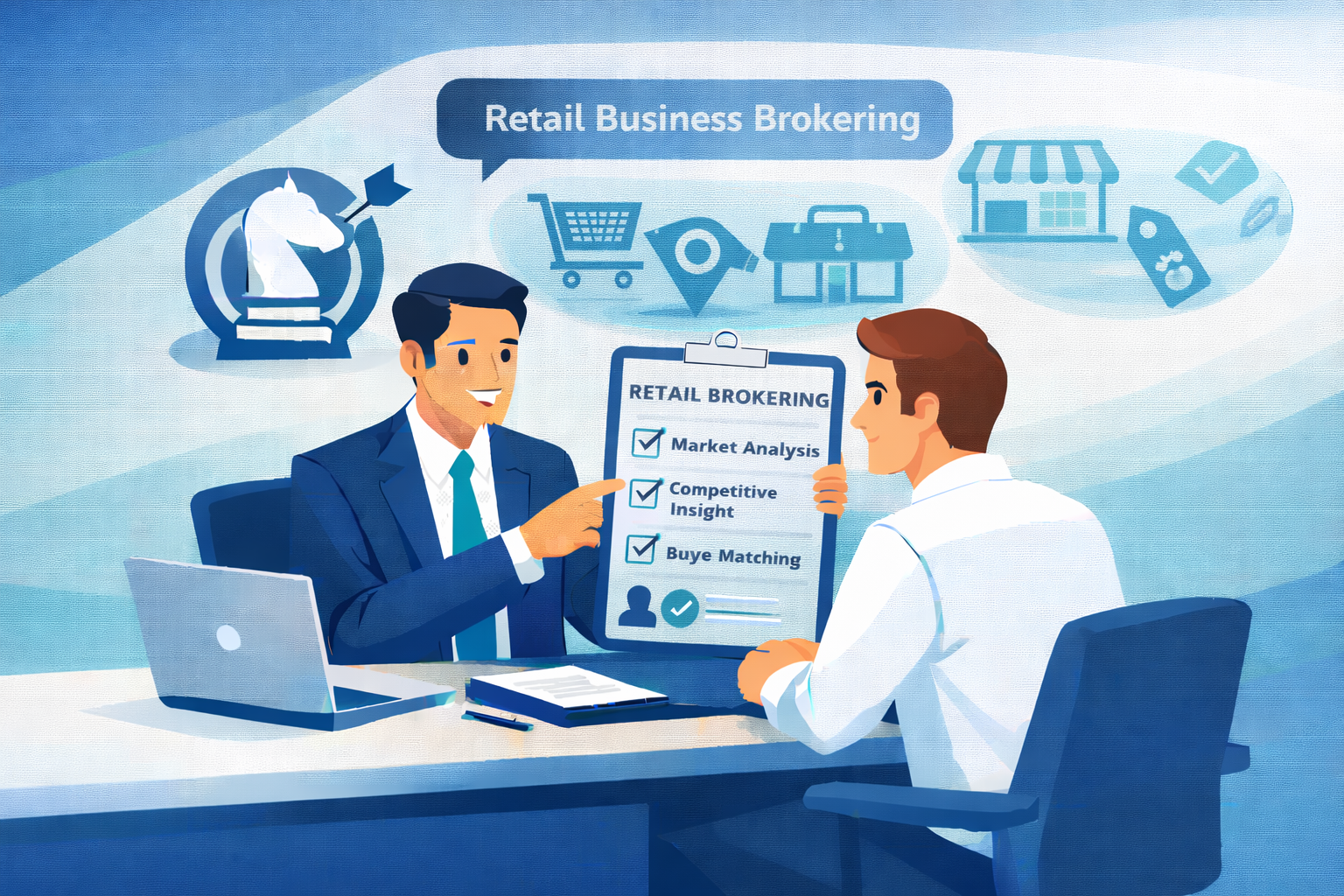
Expert guidance for buying and selling retail stores with proven results
5 Highlights on Retail Business Brokering
Retail business brokering is a specialized service connecting store owners with qualified buyers through confidential marketing and structured negotiations. Our brokers handle every aspect of retail business sales, from initial valuation to final closing. We maintain extensive buyer lists of investors, franchisees, and operators actively seeking retail opportunities. Each engagement includes comprehensive due diligence coordination, lease assignment facilitation, and landlord consent management. Our success fee structure aligns our interests with yours, ensuring we work diligently to close your transaction at the best possible terms.
- Confidential marketing protects your business reputation while reaching serious purchasers through targeted outreach and discreet buyer qualification
- Lease transfer expertise navigates landlord approvals, assignment documentation, and change of control provisions that can derail retail transactions
- Valuation accuracy uses EBITDA multiples, SDE calculations, and comparable sales data to establish defensible asking prices
- Buyer vetting screens financial capacity, operational experience, and strategic fit before introducing prospects to your confidential information
- Transaction management coordinates attorneys, accountants, landlords, and franchisors to keep deals moving toward successful completion
Why Choose Our Retail Business Brokering
Legacy Launch Business Brokers specializes exclusively in retail business transfers. Our advisors understand the unique challenges of selling shops, stores, and boutiques. We know how inventory valuations affect purchase prices. We've negotiated hundreds of lease assignments with commercial landlords. Our deal flow includes strategic buyers seeking add-on acquisitions, first-time operators looking for turnkey opportunities, and private equity buyers building roll-up platforms.
Our brokerage agreement includes comprehensive marketing across multiple platforms. We create professional confidential information memoranda highlighting your location advantages, customer demographics, and growth potential. Our teaser documents generate qualified interest without disclosing identifying details. We manage data rooms containing financial statements, supplier contracts, and lease documents. Our intermediaries facilitate introductions only after executing non-disclosure agreements and confirming buyer qualifications.
We've closed transactions for clothing retailers, specialty food stores, convenience shops, and franchise locations. Our M&A advisors structure deals as asset sales, share sales, or equity transfers depending on tax implications and liability considerations. We negotiate earnouts, seller financing terms, and working capital adjustments that bridge valuation gaps. Our track record includes successful exits for family-owned businesses, distressed turnarounds, and high-margin specialty retailers.
Signs You Need Retail Business Brokering
You're ready to exit your retail business but don't know how to find serious buyers. Listing your store publicly risks alerting employees, suppliers, and competitors. You need confidential marketing that reaches qualified purchasers without damaging your ongoing operations. A business broker maintains discretion while conducting targeted outreach to investors, searchers, and strategic acquirers. We identify prospects actively seeking retail opportunities in your category and geography. Our screening process eliminates tire-kickers before they waste your time or compromise confidentiality.
Your lease expires soon and you're uncertain about renewal terms. Retail business sales require landlord consent for lease assignments. Landlords often impose conditions, increase rent, or demand personal guarantees from new tenants. Our transaction brokers negotiate lease transfers as part of the overall deal structure. We coordinate with landlords early in the sale process to identify potential obstacles. Our experience with leasehold transfers helps structure purchase agreements that account for landlord requirements, assignment fees, and lease modification costs.
You've received unsolicited offers but suspect you're leaving money on the table. A single buyer creates no competitive tension. Our business intermediaries run structured sale processes that generate multiple bids. We create buyer lists targeting both strategic buyers who'll pay premiums for synergies and financial buyers seeking cash-generative assets. Our auction approach produces indicative offers, letters of intent, and ultimately higher enterprise values. We've seen competitive processes increase final purchase prices by 20-40% compared to single-buyer negotiations.
Your business includes complex inventory, fixtures, and intangible assets. Retail transactions require detailed asset purchase agreements specifying what transfers at closing. Inventory valuations fluctuate between signing and completion. Fixtures and leasehold improvements need appraisals. Customer lists, supplier contracts, and permits require assignment documentation. Our deal makers structure transactions with clear inventory protocols, working capital adjustments, and post-closing reconciliations. We coordinate with accountants to establish valuation methodologies that both parties accept.
You're overwhelmed by due diligence requests and legal documentation. Buyers conduct financial due diligence, commercial due diligence, and operational reviews. They request years of tax returns, sales reports, supplier agreements, and employee records. Our advisors manage data rooms, respond to diligence inquiries, and coordinate with your attorney and accountant. We keep transactions moving by promptly addressing buyer concerns while protecting your interests. Our project management prevents deals from stalling during the diligence phase.
Our Retail Business Brokering Process
Retail business brokering begins with a comprehensive valuation and marketability assessment. Our appraisers analyze your financial statements, calculate seller's discretionary earnings, and apply appropriate EBITDA multiples. We research comparable sales of similar retail businesses. We assess your lease terms, location quality, and transferability. This analysis produces a realistic guide price and identifies potential buyer objections we'll need to address during marketing.
We execute a representation agreement establishing our mandate as your exclusive sell-side advisor. Our engagement includes creating marketing materials: a one-page teaser for initial outreach and a detailed confidential information memorandum for qualified prospects. We photograph your location, document your inventory systems, and highlight your competitive advantages. Our marketing emphasizes cash flow stability, growth opportunities, and operational systems that support owner transition.
Our origination team identifies potential acquirers from our proprietary buyer database. We conduct targeted outreach to franchisees seeking additional locations, operators looking for owner-operated businesses, and investors building retail portfolios. We qualify each prospect's financial capacity, experience, and acquisition timeline before sharing confidential details. Serious buyers execute NDAs and receive access to our information memorandum.
We facilitate site visits, coordinate Q&A sessions, and manage offer negotiations. Qualified buyers submit letters of intent specifying purchase price, deal structure, earnout provisions, and closing conditions. We negotiate terms, address contingencies, and finalize binding purchase agreements. Our closing management includes coordinating due diligence, securing landlord consent, obtaining necessary permits and licenses, and managing the final settlement. We ensure smooth handovers that protect goodwill and customer relationships.
Brands We Use
Our retail business brokering services utilize industry-leading platforms and professional tools. We list businesses on BizBuySell, the largest business-for-sale marketplace, reaching thousands of active buyers. Our confidential marketing leverages BizQuest for additional exposure to qualified investors. We use LoopNet for retail properties with significant real estate components. Our financial modeling employs PitchBook data for comparable transaction multiples and market intelligence.
We manage due diligence through Intralinks virtual data rooms providing secure document sharing with audit trails. Our valuation analysis incorporates BizComps transaction databases for retail-specific pricing benchmarks. We research buyer prospects using LinkedIn Sales Navigator for targeted outreach to operators and investors. Our market research includes IBISWorld industry reports providing category trends and performance metrics.
We coordinate closings using DocuSign for efficient execution of purchase agreements, NDAs, and closing documents. Our CRM system Salesforce tracks buyer interactions, pipeline status, and transaction milestones. All platforms maintain confidentiality and security standards protecting your sensitive business information throughout the sale process.
Retail Business Brokering Keywords You May Have Searched
| Primary | Alternative | LSI |
|---|
| retail business brokering | retail broker services | sell retail store |
| business broker for retail | retail business intermediary | retail business sale |
| retail store broker | shop broker | boutique business broker |
| retail business advisor | retail M&A advisor | retail business transfer |
| retail business sale process | selling retail business | retail business valuation |
For more information on other business broker services we offer, visit here.
FAQs About Retail Business Brokering
What does a retail business broker do? A retail business broker markets your store confidentially to qualified buyers, manages negotiations, and coordinates the transaction from listing to closing. We handle valuation, buyer screening, due diligence coordination, and lease assignment facilitation. Our intermediaries protect confidentiality while maximizing exposure to serious purchasers.
When should I hire a retail business broker? Engage a broker 6-12 months before your desired exit date. This timeline allows proper valuation, marketing preparation, buyer identification, and transaction completion. Earlier engagement helps address transferability issues like lease terms, supplier contracts, or operational documentation that affect marketability and pricing.
Why can't I sell my retail business myself? Owner-marketed businesses face confidentiality risks, limited buyer reach, and negotiation challenges. Public listings alert employees and competitors. Most owners lack access to qualified buyer networks. Negotiations become emotional when dealing directly with purchasers. Brokers provide market knowledge, buyer databases, and objective transaction management that typically result in higher prices and smoother closings.
How do retail business brokers charge fees? Most brokers work on success fee arrangements, typically 8-12% of the transaction value for smaller retail businesses. Some engagements include upfront retainers credited against success fees. Our commission structure aligns our compensation with achieving the best possible outcome for your sale.
Can a broker help with lease assignments? Lease transfer facilitation is central to retail business brokering. We coordinate with landlords early in the process, negotiate assignment terms, and structure deals accounting for landlord requirements. Our experience with commercial leases helps navigate consent provisions, personal guarantee issues, and lease modification negotiations that often complicate retail transactions.
Does retail business brokering include valuation? Comprehensive valuation is the foundation of our brokerage service. We analyze financial statements, calculate adjusted EBITDA or SDE, apply market multiples, and assess comparable transactions. Our appraisals account for inventory, fixtures, leasehold improvements, and intangible assets. Accurate pricing attracts serious buyers and supports successful negotiations.
How long does it take to sell a retail business? Typical retail business sales require 6-9 months from engagement to closing. Marketing and buyer identification take 2-4 months. Negotiations, due diligence, and landlord consent add another 3-4 months. Timeline varies based on business size, asking price, lease complexity, and market conditions. Well-prepared businesses with clean financials and transferable leases sell faster.
What makes retail business brokering different from other business sales? Retail transactions involve unique considerations: lease assignments, inventory valuations, location-dependent goodwill, and landlord approvals. Retail brokers understand these specialized issues. We know how to value inventory at cost versus retail. We've negotiated countless lease transfers. We understand how location, foot traffic, and demographics affect retail business values and buyer interest.