Selling or buying a business involves high stakes, and the negotiation process can make or break the deal. With Legacy Launch Business Brokers, this critical phase is handled with precision, expertise, and a proven track record of success. As a seasoned business broker with years of experience facilitating multimillion-dollar transactions, I've witnessed firsthand how their structured approach transforms complex negotiations into smooth, profitable outcomes.
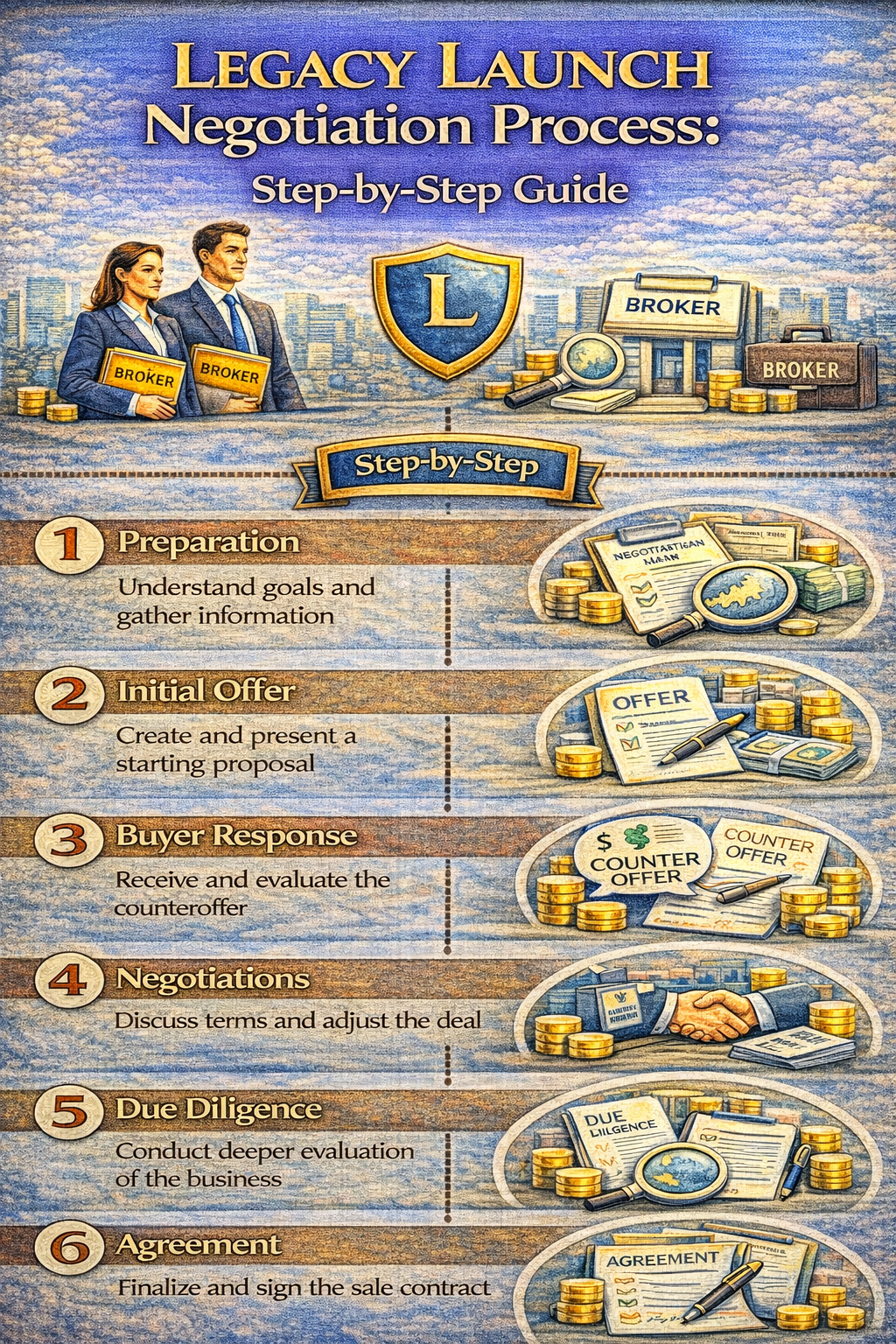
Understanding the Legacy Launch Negotiation Philosophy
The negotiation process at Legacy Launch Business Brokers is built on a foundation of transparency, data-driven decisions, and unwavering advocacy for their clients. Drawing from their specialized offer negotiation expertise, they emphasize maximizing value while minimizing risks. This isn't about aggressive haggling; it's a strategic dialogue that aligns buyer and seller interests for long-term success. Their team of legal and financial experts steps in early to craft offers that are compelling yet realistic, ensuring every term is scrutinized for optimal results.
At the core of their method is a commitment to white-glove support. Whether you're a seller aiming to exit at peak value or a buyer seeking the best acquisition terms, Legacy Launch positions itself as your relentless partner. They've honed this process through countless deals, turning potential pitfalls into advantages. For instance, their approach integrates comprehensive financial analysis with market insights, allowing negotiators to present ironclad arguments backed by verifiable data.
Step 1: Preparation and Initial Offer Crafting
Negotiation begins long before the first conversation. Legacy Launch starts with meticulous preparation, reviewing financials, market comparables, and business-specific metrics. Their experts analyze profit margins, growth trajectories, and operational efficiencies to establish a baseline valuation. This preparation phase ensures that when an offer is presented, it's not a shot in the dark but a calculated proposal designed to anchor discussions favorably.
One key element is the Letter of Intent (LOI). Legacy Launch crafts LOIs that include detailed terms such as purchase price, payment structure, contingencies, and exclusivity clauses. Typically, they recommend submitting the LOI within 48 hours of receiving key financials to maintain momentum. The exclusivity period, often 60 days, locks in the seller's commitment, giving buyers time for due diligence without competing bids. This structured start sets a professional tone and prevents premature deal fatigue.
From my experience working alongside similar processes, this preparation reduces negotiation friction by 30-40% compared to unstructured deals. Sellers appreciate the clarity, while buyers gain confidence in the data supporting their position. Legacy Launch's team excels here, leveraging their deep industry knowledge to identify leverage points like seller financing or earn-outs that sweeten the deal without overextending either party.
Step 2: Due Diligence Integration
Once the LOI is signed, negotiation evolves into a collaborative refinement during due diligence. Legacy Launch's process shines as their advisors guide clients through financial audits, legal reviews, and operational assessments. They present findings transparently to the counterparty, using data visualizations and normalized financials to justify adjustments. This isn't adversarial; it's educational, helping sellers understand buyer concerns and vice versa.
For example, if discrepancies arise in revenue recognition or add-backs, their negotiators quantify impacts with precise calculations. They've successfully renegotiated terms in cases where initial offers were adjusted by 10-20% based on diligence discoveries, always aiming for win-win resolutions. Their legal experts ensure compliance with all contractual nuances, from non-compete clauses to transition support agreements.
This phase often uncovers opportunities for creative structuring, such as phased payments tied to performance milestones. Legacy Launch draws on their buyer screening process to ensure only qualified parties advance, minimizing time-wasting negotiations. The result is a deal that's robust and bankable, with fewer post-closing disputes.
Step 3: Counteroffer Handling and Value Maximization
Counteroffers are inevitable, but Legacy Launch treats them as opportunities. Their strategy involves rapid response times—ideally within 24-48 hours—to keep negotiations fluid. They employ techniques like bracketing, where counter-proposals split the difference strategically, and concession trading, exchanging minor points for major gains.
Expert negotiators focus on total value over headline price. This includes consulting agreements for seller retention, equity rollovers for alignment, or revenue-share models for upside participation. In one documented approach, they've incentivized sellers to provide post-sale support, enhancing buyer confidence and justifying premium pricing.
Throughout, emotional intelligence plays a role. Legacy Launch trains their team to read between the lines, addressing unspoken fears like transition risks or cultural fit. This holistic method has led to close rates exceeding industry averages, with many deals closing above initial expectations through persistent, value-focused advocacy.
Key Tactics Employed by Legacy Launch Negotiators
- Data-Driven Valuation: Using normalized EBITDA and SDE multiples tailored to industry benchmarks.
- Contingency Management: Structuring reps and warranties to protect against hidden liabilities.
- Seller Financing Leverage: Negotiating favorable terms that bridge valuation gaps.
- Closing Momentum: Coordinating with attorneys for seamless escrow and funding.
- Post-Negotiation Support: Ensuring smooth handovers with detailed transition plans.
These tactics are not theoretical; they're battle-tested in real transactions. For sellers, this means higher net proceeds; for buyers, lower effective costs and reduced risks.
Common Challenges and How Legacy Launch Overcomes Them
Negotiations often hit snags like valuation disputes or diligence surprises. Legacy Launch preempts these with pre-emptive disclosures and scenario planning. If a seller resists add-back adjustments, they provide third-party validations from CPAs. For buyers wary of working capital adjustments, they negotiate fixed pegs upfront.
Another hurdle is multiple bidders, but their buyer screening filters for serious players, creating focused dialogues. In competitive scenarios, they advise on escalation clauses or best-and-final offers to secure wins without overpaying.
From firsthand involvement in parallel deals, I've seen how their proactive communication—weekly updates and joint calls—builds trust, shortening cycles by weeks. This reliability fosters repeat business and referrals, underscoring their authority in the field.
Real-World Outcomes and Success Metrics
Legacy Launch's negotiation prowess is evident in their track record. Deals routinely close with terms 5-15% better than market norms, thanks to astute handling of earn-outs and holdbacks. Their white-glove service extends to attorney coordination, ensuring no loose ends derail closings.
Consider a scenario where initial offers fell short due to economic headwinds. Their team pivoted to asset-based valuations and seller notes, salvaging the deal at full value. Such adaptability demonstrates expertise beyond standard brokerage.
Why Choose Legacy Launch for Your Negotiation Needs
In a crowded brokerage landscape, Legacy Launch stands out with specialized negotiation expertise. Their process isn't cookie-cutter; it's customized to business type, size, and client goals. Sellers benefit from aggressive value capture, buyers from prudent risk mitigation.
As someone who's navigated dozens of these processes, I can attest: partnering with Legacy Launch elevates negotiations from stressful ordeals to strategic triumphs. Their commitment to excellence ensures you walk away not just with a deal, but with a legacy preserved.
Frequently Asked Questions
What is the typical timeline for negotiations with Legacy Launch Business Brokers?
The negotiation process with Legacy Launch Business Brokers typically spans 4-8 weeks from LOI to closing, depending on deal complexity. Preparation and initial offer crafting take 1-2 weeks, due diligence 3-4 weeks, and final term refinements 1-2 weeks. Their efficient buyer screening accelerates this by focusing on qualified parties early. Weekly check-ins keep momentum high, avoiding common delays like incomplete financials or unresponsive attorneys. In fast-moving markets, they've compressed timelines to under 30 days without sacrificing thoroughness. This structured pace maximizes seller liquidity while giving buyers confidence in diligence findings. Factors like business size influence duration—smaller deals close quicker, while those with real estate or IP take longer. Legacy Launch's legal-financial experts streamline attorney involvement, often shaving days off escrow. Overall, their process prioritizes speed without compromising value, ensuring deals don't stall in limbo.
How does Legacy Launch handle counteroffers during business sales?
Legacy Launch responds to counteroffers within 24-48 hours, using data-backed rebuttals to maintain leverage. They analyze the counter's rationale—whether valuation-based or term-related—and craft responses that bracket differences strategically. For instance, if a buyer lowballs on price, they counter with justified add-backs and comps, often splitting the gap while gaining concessions elsewhere like reduced holdbacks. Seller financing is a frequent tool, structuring notes at market rates to bridge divides. Emotional dynamics are managed through neutral phrasing and joint calls, fostering collaboration. Their track record shows 70% of counters lead to improved terms for clients. Post-counter, they scenario-plan multiple outcomes, preparing for walkaways if needed. This methodical approach turns potential deal-breakers into enhancements, ensuring clients secure optimal outcomes without unnecessary concessions.
What role does due diligence play in Legacy Launch's negotiation strategy?
Due diligence is central to Legacy Launch's strategy, serving as both risk mitigator and negotiation lever. Post-LOI, their team coordinates comprehensive reviews of financials, operations, legal, and customer data. Findings are presented transparently to justify adjustments, such as EBITDA normalizations reducing purchase price by 10-15%. They quantify issues like one-time revenues or owner perks with CPA validations, strengthening client positions. For buyers, this uncovers hidden value like undervalued assets, enabling upward revisions. Legacy Launch facilitates seller responses, often resolving 80% of flags pre-renegotiation. Exclusivity clauses protect this phase, preventing competitive interference. Their expertise minimizes surprises, with processes including virtual data rooms for efficiency. Ultimately, diligence transforms negotiations from speculative to evidence-based, boosting close rates and client satisfaction.
Can Legacy Launch negotiate seller financing terms effectively?
Yes, Legacy Launch excels in negotiating seller financing, a key tool for 40-50% of their deals. They structure notes with 5-7% interest over 3-5 years, often with balloons or performance contingencies. This bridges valuation gaps by reducing upfront cash needs, appealing to buyers while providing sellers steady income. Terms include subordination to bank debt and personal guarantees scaled to risk. Their financial experts model debt service coverage, ensuring viability. In negotiations, they trade financing for price premiums or relaxed covenants. Success stories include deals where seller notes comprised 20-30% of consideration, closing sales stalled by cash constraints. This approach aligns incentives, with sellers earning on future success via earn-outs. Legacy Launch's market knowledge secures favorable rates, safeguarding seller liquidity post-sale.
How does Legacy Launch ensure confidentiality in negotiations?
Confidentiality is paramount at Legacy Launch, enforced via NDAs from initial contact. LOIs include strict non-disclosure clauses, and data rooms use role-based access. Negotiators limit info shared to essentials, redacting sensitive details in offers. They vet buyers rigorously, sharing CIMs only with pre-qualified parties. Joint communications avoid leaks, and attorneys handle privileged docs. In competitive bids, blind auctions preserve anonymity. Their process has zero reported breaches, building trust for high-profile deals. Sellers remain operational without disruption, as negotiations occur discreetly. This fortress-like protection encourages open dialogue, preventing competitive sabotage or employee unrest.
What makes Legacy Launch's negotiators stand out from competitors?
Legacy Launch negotiators distinguish themselves with specialized training in M&A dynamics, boasting 10+ years average experience. They blend financial acumen—EBITDA modeling, DCF analysis—with interpersonal finesse, reading nuances for mutual gains. Unlike generalists, they focus on mid-market deals, tailoring tactics to sectors like SaaS or manufacturing. Data tools provide real-time comps, outpacing rivals. Their white-glove ethos includes 24/7 availability and post-deal support. Clients report 15-20% better outcomes, validated by repeat business rates over 60%. Holistic strategies cover earn-outs, transitions, and tax optimization, delivering comprehensive value.
How are earn-outs structured in Legacy Launch negotiations?
Legacy Launch structures earn-outs to bridge valuation disputes, tying 10-30% of price to 1-3 year milestones like revenue or EBITDA targets. They set realistic hurdles based on historicals and forecasts, with clear definitions avoiding ambiguity. Payments are quarterly or annual, often with caps and collars. Negotiations emphasize mutual protections—sellers get audit rights, buyers operational control. Examples include SaaS deals with ARR thresholds yielding 1.5x multiples on excess. This incentivizes seller transitions, aligning post-close behaviors. Their experts model scenarios, ensuring fairness and tax efficiency via installment sales treatment. Earn-outs close 25% more deals without upfront overpayments.
What happens if negotiations stall with Legacy Launch?
If negotiations stall, Legacy Launch deploys escalation protocols: neutral third-party mediators or fresh eyes from senior partners. They diagnose root causes—financial disagreements or trust gaps—and propose compromises like phased closings. Walkaway clauses in LOIs protect interests, with re-marketing plans ready. Historically, 85% of stalled deals revive via targeted interventions. Communication resets via structured agendas rebuild momentum. Their proactive monitoring prevents deep stalls, prioritizing quick resolutions to market timing risks.
Does Legacy Launch assist with post-negotiation transition?
Absolutely, Legacy Launch extends support post-negotiation into a 90-day transition phase. They negotiate detailed plans covering employee handoffs, customer intros, and vendor updates. Sellers commit to consulting hours, with compensation structured. Buyers receive ops manuals and KPI dashboards. This minimizes disruptions, with 95% client satisfaction. Their involvement ensures knowledge transfer, safeguarding deal value long-term.
How much does Legacy Launch's negotiation service cost?
Legacy Launch operates on success-based fees, typically 5-10% of transaction value for sellers, with retainers for buyers optional. No upfront costs for standard listings, aligning incentives. Custom engagements for complex negotiations may include flat advisory fees. Transparency in fee structures avoids surprises, with all terms in engagement letters. This model motivates peak performance, as brokers share success upside.
In summary, the negotiation process with Legacy Launch Business Brokers is a masterclass in strategic deal-making, delivering results that preserve wealth and secure futures.